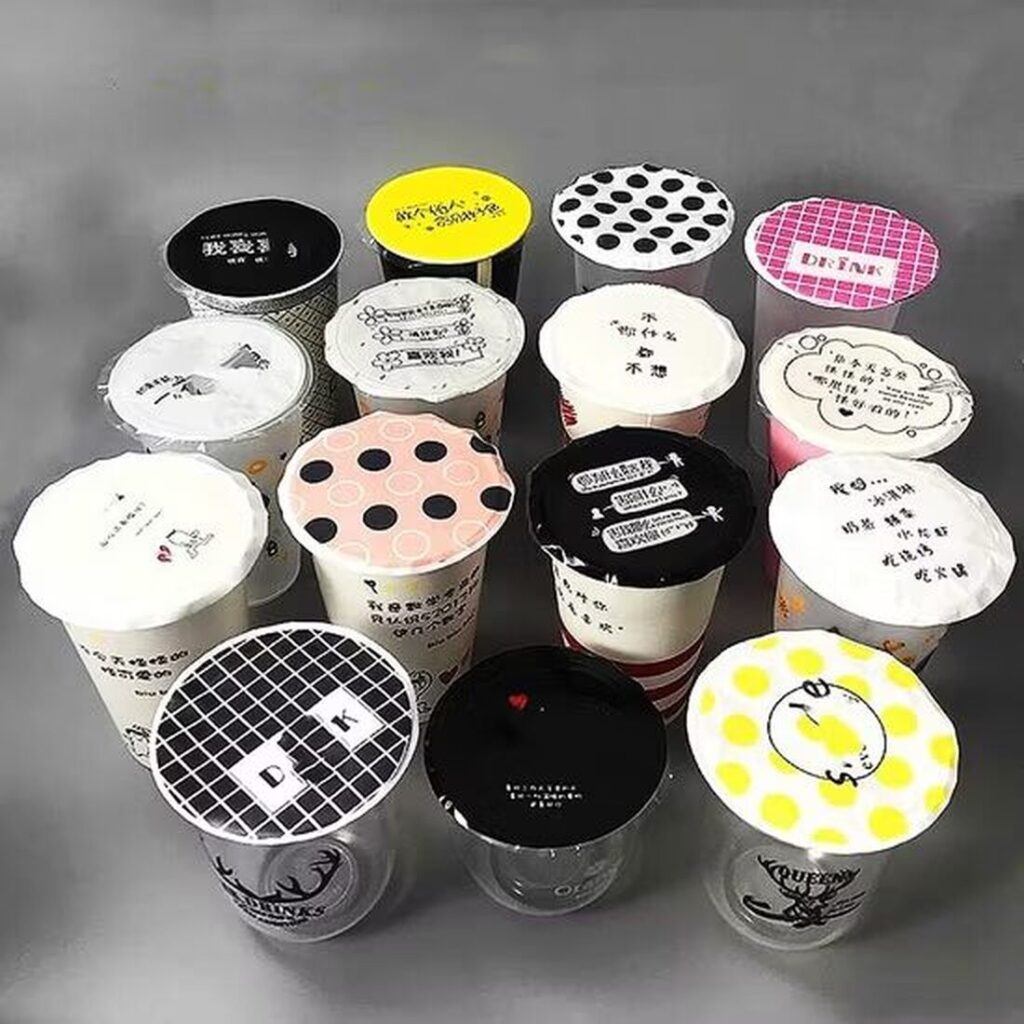
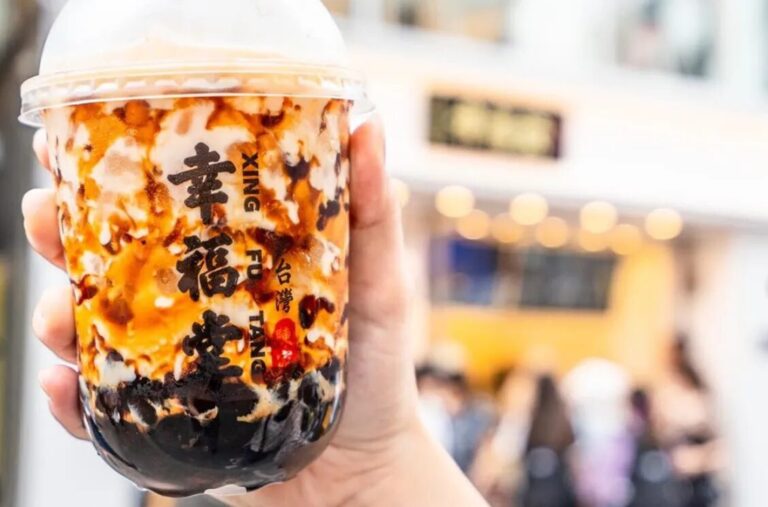
A Taiwanese takeaway drink often leaves the counter with no opening at all: its top is a taut sheet of film, meant to be pierced by a straw and shaken before the first sip. It may then hang in a plastic bag from a moving scooter, still sealed.
At a Taipei intersection, the noise of waiting traffic has a steady rhythm.
Click.
Whirr.
Pshh.
It is the sound of clear film being pulled tight over a cup.
Heat passes.
The lid is closed.
On these streets, the sound is ordinary.
It has blended into the city so completely that it is rarely noticed.
Without it, the drink culture here would not look the way it does.
A small failure
In the mid-1980s, a young man on military leave went out on a date.
He bought a drink.
He got on his scooter.
At a bump in the road, the lid came loose.
The liquid went onto his companion’s clothes.
Words stopped.
The air changed.
An engineer saw it happen.
His name was Yeh Yi-fang, who would later build a company for sealing machines.
He thought the problem was not the drink.
It was the lid.
In Taiwan, people move on scooters.
Things tilt.
They shake.
A lid that only rests on top cannot survive that.
Closing instead of covering
Factories already had a different method.
Tofu and pudding were sealed with film.
The machines were large.
They did not belong on a counter.
What he imagined was a smaller version.
Something that could sit in a shop.
Something anyone could use.
Something that would close every cup the same way.
A lid relies on friction.
Film relies on heat.
That difference was enough.
Liquids stopped being something that spills.
They became something that travels.
A city that moves
In this city, drinks are not held.
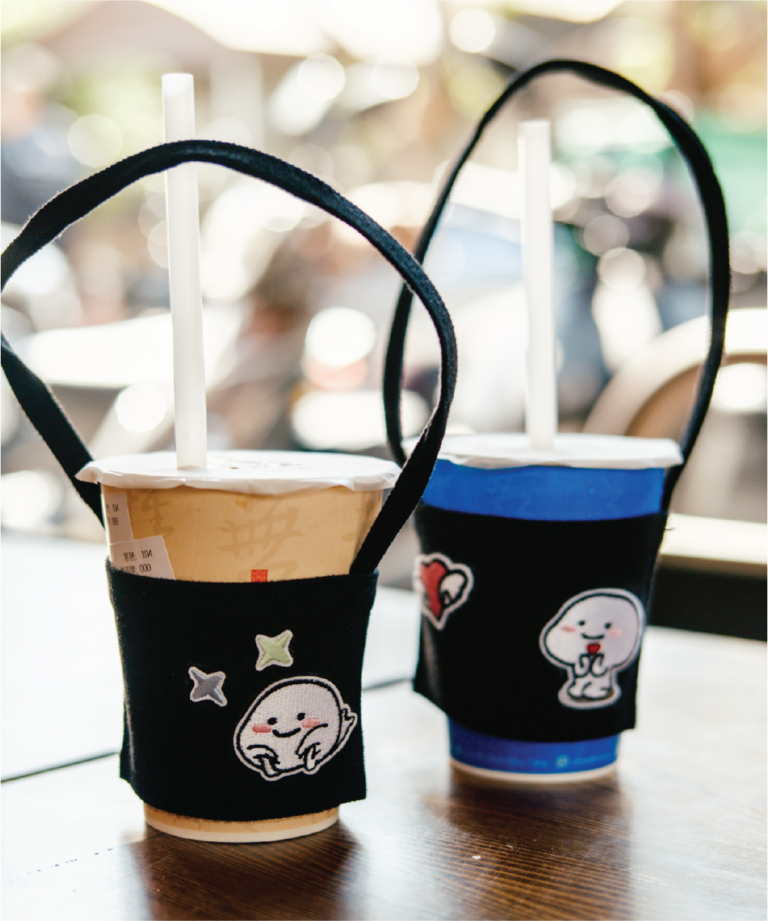
They go into plastic bags.
They hang from hooks on scooters.
They swing.
They face the wind.
They do not come out.
That scene depends on sealing.
Without it, this way of carrying would be unsafe.
The click is a signal that it is now stable.

Sealing after the order
There was another change.
Bottles are filled and then closed.
Here it is reversed.
The order is taken.
The sugar level.
The ice.
The toppings.
Only then is it sealed.
Because the cup will be closed completely, it can be adjusted until the last moment.
If lids were loose, this would not work.
The complexity of orders would not have spread.
A factory’s final step moved to the counter.

Two new gestures
Sealing created two new actions.
First, a way to open.
A normal straw is not enough.
The tip becomes sharp.
It is shaped to pierce.
Second, a way to mix.
Once closed, the cup can be shaken hard.
The wrist strikes.
The liquid moves.
This creates fine bubbles.
It blends tea and sweetness evenly.
The reason milk tea tastes the same in many places is not the recipe.
It is this motion.

A shared diameter
The system traveled.
Chinatowns.
Malls.
Airports.
Cups began to share the same mouth.
Ninety-five millimeters.
No one declared it.
It became so by use.
The sound is still there.
Click.
A single spill became a method that does not spill again.

— Detour —
a little further to walk
- Notes on Drink Holders in Taiwan
- Notes on Taiwan’s Anything-Goes Breakfast
- Notes on Bubble Milk Tea and Its Quiet Revolutions in Taiwan