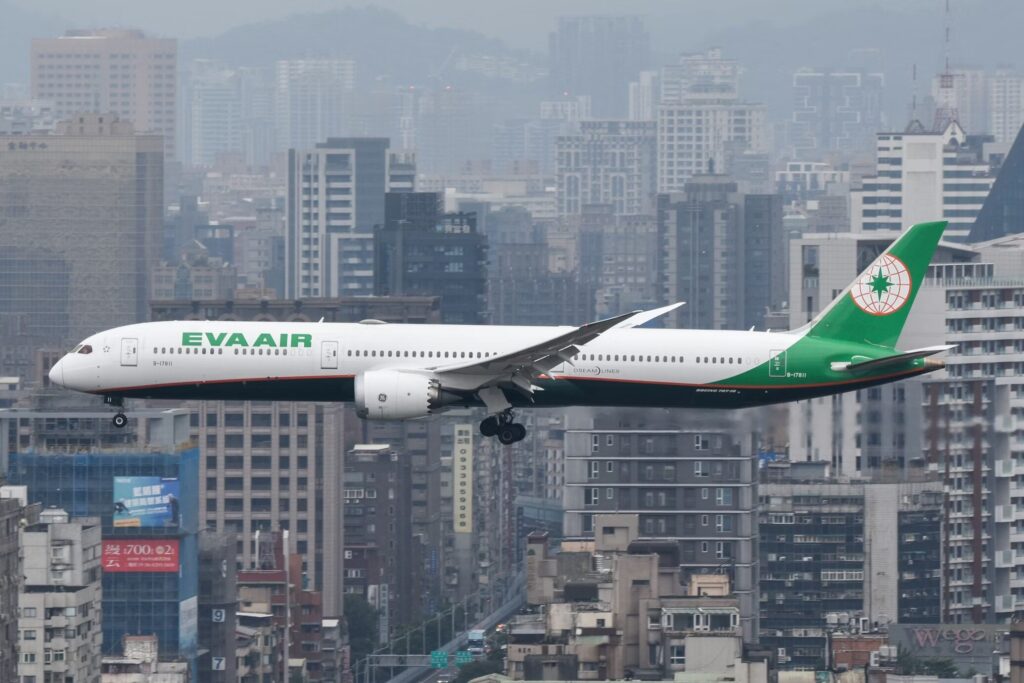
Lu rou fan belongs to humid alleys, metal spoons, and small stools—until it appears on a tray ten thousand meters above the ground. In the dry cabin of an EVA Air flight, the familiar bowl enters a setting built to make ordinary food behave differently.
I try to recall the places where braised pork rice (lu rou fan) has traditionally existed.
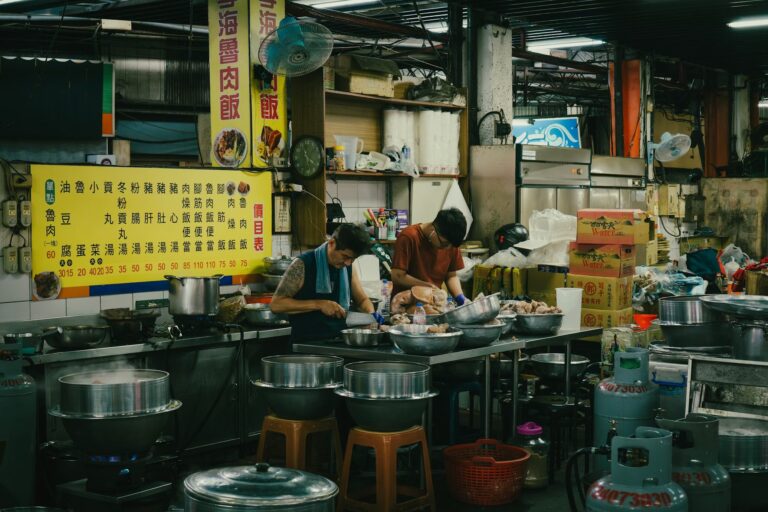
Humid alleys.
Air thick with motorcycle exhaust and steam.
A small round stool, a metal spoon, a bowl pulled close.
For a long time, the dish lived inside scenes like these.
Yet its name appears somewhere entirely different.
Ten thousand meters above the ground.
Inside the dry cabin of a passenger aircraft.
There, one finds the involvement of Formosa Chang.
Why would a bowl that began at a street stall be carried into the sky?
It seems less like a simple corporate collaboration and more like a sign that Taiwan’s small eats have passed through a test of modernity.
What the Mustached Logo Signals
There is a restaurant known as Formosa Chang, a nationwide chain built around lu rou fan.
It began in 1960 as a small street stall in Taipei.
Today, it is often treated as a reference point within Taiwanese food culture.
Inside, the lighting is bright.
The floors are dry.
Air-conditioning runs steadily.
Staff move in uniform.
The flow from ordering to serving is clear.
The dish comes from the world of street cooking.
The environment, however, feels corporate.
For many people, the name signals a meal unlikely to deviate far from expectation.
It may be one of the places that gave a stable outline to a dish once defined by variation.
Yet what is notable is this:
The presence of Formosa Chang does not end at the restaurant door.

Lu Rou Fan as Taiwanese Everyday Life
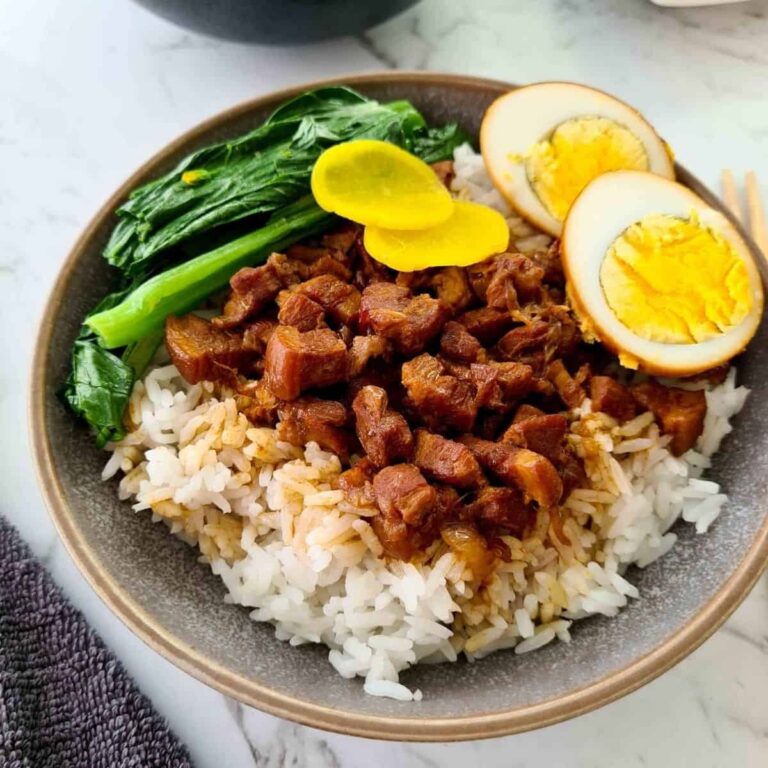
Lu rou fan is often described as a national dish of Taiwan.
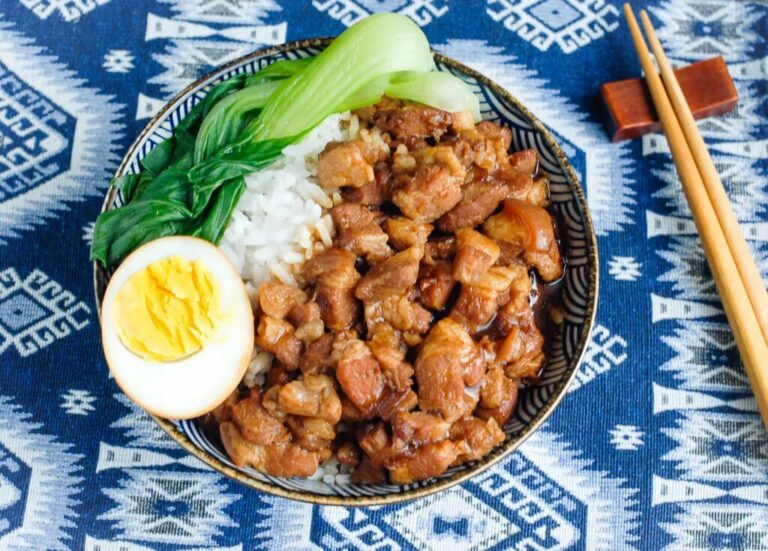
Finely chopped pork is simmered in a soy-based sauce with a restrained sweetness.
It is then poured over white rice.
The structure is simple.
Differences between shops remain visible.
The ratio of fat to lean meat shifts.
Sweetness rises or recedes.
Sometimes star anise lingers at the edge.
Even so, most people picture roughly the same bowl.
The portion is modest.
The price is usually restrained.
Some finish it alone.
Others add greens or soup and let it become a full meal.
In Taiwan, this bowl rarely marks an occasion.
It sits closer to a baseline —
something that quietly supports the rhythm of ordinary days.
EVA Air’s Decision
EVA Air, one of Taiwan’s major airlines, chose to serve Formosa Chang’s version as an in-flight meal, largely from the mid-2000s onward.
Airline food once followed a predictable grammar.
Beef or chicken.
Or a neatly composed Chinese entrée.
The idea of introducing an oil-rich rice bowl might have seemed unusual.
Yet the airline selected it.
One reason may have been its role as a taste of home for Taiwanese passengers.
Another, its clarity for foreign travelers.
This is what Taiwan tastes like.
Food served above the clouds becomes a calling card for the land below.
The bowl was asked to carry that role.
Entering the Graveyard of Flavor
Aircraft cabins are not gentle environments for cooking.
Meals are rapidly chilled after preparation.
Later, they are reheated in onboard ovens.
Meat can stiffen.
Vegetables lose color.
Cabin pressure and noise dull the human palate.
Saltiness and sweetness are said to register about thirty percent weaker than on the ground.
Above all, hygiene standards are strict.
Foodborne illness is not tolerated.
A dish tied to the logic of the street cannot simply be placed on a tray.
Meals that separate under heat are not chosen.
To fly, the dish had to be translated into another form.
Collagen, Calculated
Why, then, could Formosa Chang cross this environment?
The answer appears relatively clear.
The company already possessed a structure closer to manufacturing.
Pouch technology refined through off-site sales.
Careful control over the balance of fat and lean meat.
Adjustment of gelatin concentration.
The composition was calculated so that reheating would not cause separation.
Flavor followed the same logic.
Rather than increasing salt, depth was built through the ingredients themselves.
When the package is opened, aroma rises immediately.
The slight adhesion on the lips — that familiar texture — remains.
Not an accident.
A result of design.
A Bowl as National Emblem
On an international flight, passengers lean toward small trays.
Business travelers and tourists move their spoons in similar rhythms.
It is also the moment when a dish once associated with leaner times boards the nation’s wings.
Here, the bowl becomes more than a meal.
It approaches the condition of a symbol.
For some Taiwanese travelers, encountering this taste on the return journey may quietly signal that they are already home.
The brown sauce seems capable of summoning the memory of land.
From Stall to Stratosphere
A stall in Shuanglian, 1960.
From there the restaurant spread across cities,
reached the provinces through franchising,
entered homes through retort packaging,
and eventually moved into the sky.
Tracing this path reveals a process by which food is released from place.
The steam of the stall now exists inside a pressurized cabin.
A bowl that flew.
It records how an ordinary meal was refined by system and transformed into something that could travel far.
No grand emotion is required.
After the spoon is set down, what remains is only a quiet realization:
this dish has come a long way.

— Detour —
a little further to walk
- Notes on Formosa Chang Beyond the Dining Room
- Notes on Lu Rou Fan in Taiwan
- Notes on the Long Memory Inside a Bowl of Braised Pork Rice