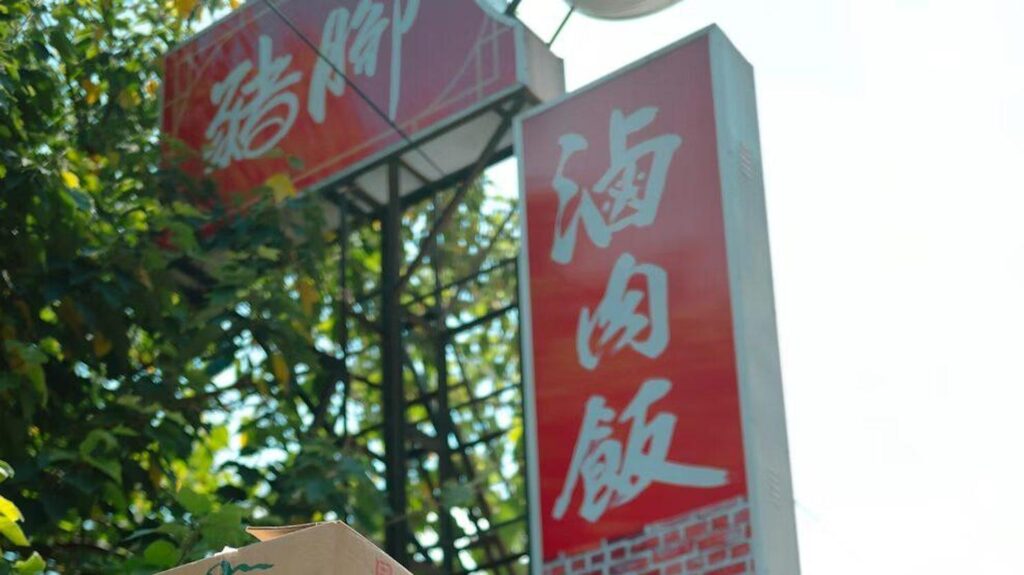
Across Taipei Bridge, a short stretch of crowded streets holds five braised pork rice shops famous enough to be counted together. One piles cubes of fat into the bowl, another serves pork knuckle, while others draw customers with shrimp soup, pickled greens, or an early-morning opening.
New Taipei City, Sanchong District.
Only a single crossing of the Tamsui River separates it from Taipei City. Yet this area, though not a tourist destination, holds a dense concentration of renowned shops serving braised pork rice (lu rou fan).
Among local residents, one phrase circulates with familiarity: the Five Great Braised Pork Rice of Sanchong.
Jin Da Lu Rou Fan, known for its cubes of fat.
Dian Xiao Er Lu Rou Fan, balanced with shrimp soup.
Wu Deng Jiang Pork Knuckle Lu Rou Fan, marked by sweetness from stewed trotters.
Wei Feng Lu Rou Fan, accompanied by pickled mustard greens.
Lian Wu Lu Rou Fan, shaped by the rhythm of breakfast.
What these establishments share is not merely flavor. Each reflects the formation of Sanchong itself.
The district did not become a working-class food enclave by chance. Waves of migration, pig farming, factory labor, and shift-based lives accumulated here. Over time, the culture of this bowl settled deeply into the streets.
Lu Rou Fan as Taiwanese Everyday Life
Lu rou fan is often described as a national dish of Taiwan.
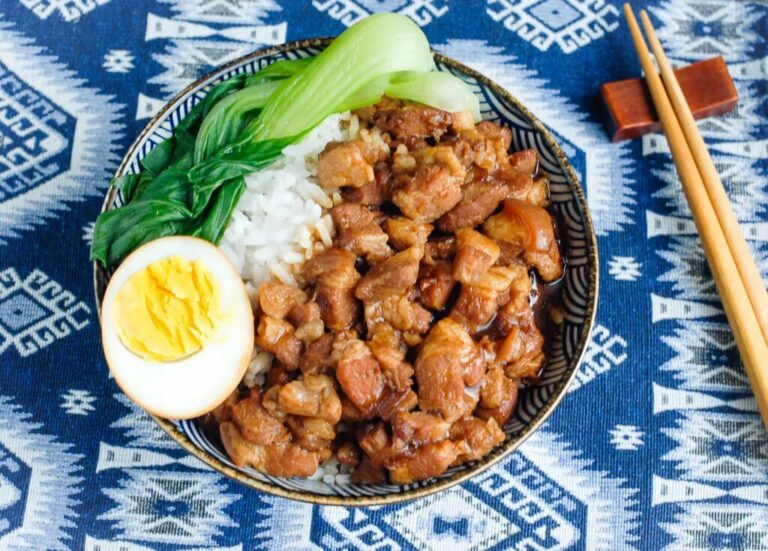
The structure of the bowl is simple. Finely chopped pork is simmered in a soy-based sauce and placed over white rice. Between shops, the differences are small but steady. The balance of fat, the level of sweetness, and the trace of spice shift slightly from one counter to the next.
Despite this, most people picture the same dish when its name appears.
The bowls are modest in size and low in price. Some eat only that. Others add vegetables or soup to shape a full meal. In Taiwan, this food marks routine rather than occasion.

Across Taipei Bridge, a District of Black Gold
Cross the river by MRT. Or pass Taipei Bridge at rush hour, when scooters flow like a waterfall. On the other side, the density shifts. That place is Sanchong.
The distance from Taipei Main Station is only a few kilometers in straight line. Yet here there are no glass towers like those in Xinyi District, no carefully arranged pedestrian plazas.
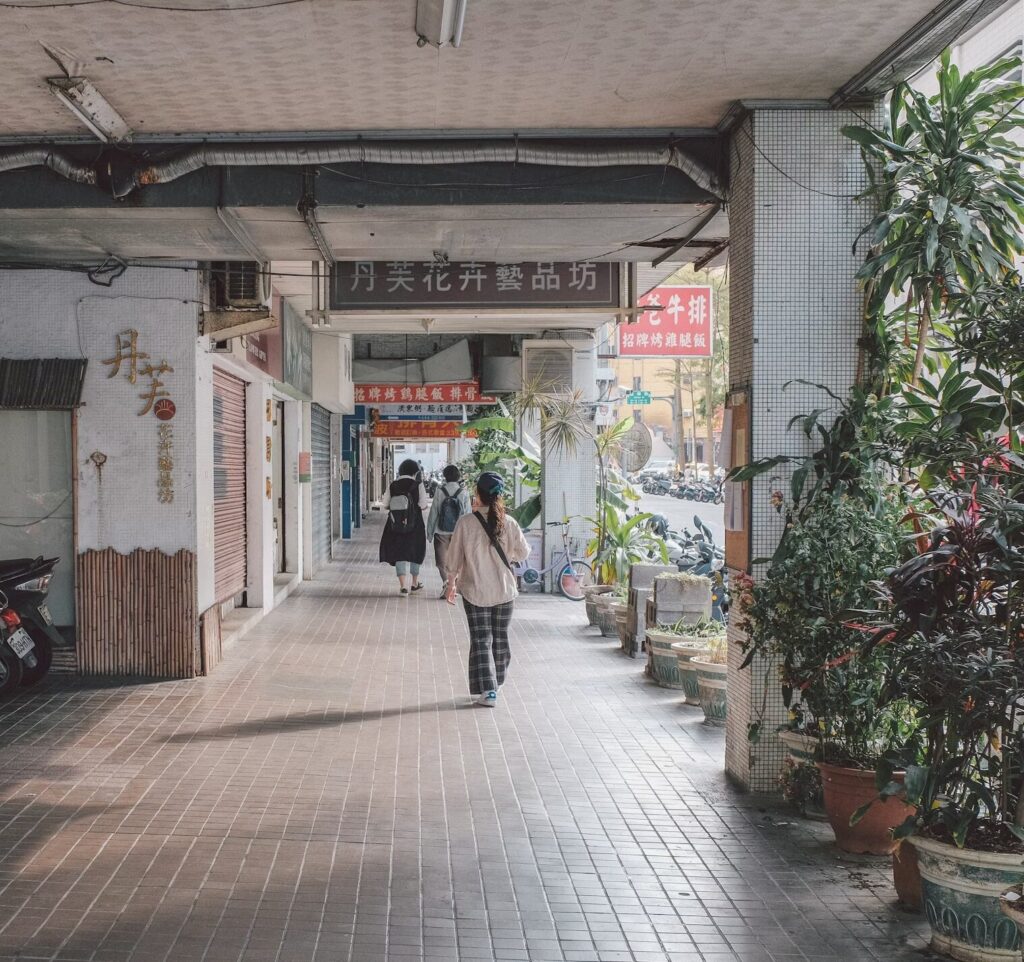
Instead there are low-rise apartments layered tightly together, alleys filled with parked scooters, markets and stalls sending steam upward without pause.
Sanchong functions as both bedroom community and vast stomach. Its population density ranks among the highest in Taiwan. The space between people is narrow. The heat of daily life appears to convert directly into appetite.
Walking these streets, the same characters repeat in view: lu rou fan and pork knuckle.
The glossy brown pork, simmered until shining, is sometimes called black gold. In Sanchong, this black gold gathers with unusual concentration.
A District Formed by Migration
Sanchong became distinctive in the decades after the war, when it was among the first areas in Taiwan to experience rapid population growth.
From the 1960s onward, young laborers from central and southern Taiwan moved north in search of work. Many settled first in Sanchong and neighboring Luzhou.
The reasons were direct.
Rent was cheaper than within Taipei City.
Cross a bridge and one reached the workplace.
Night markets, markets, and boarding houses were close together.
As a result, Sanchong developed as a district shaped by the meals of new residents. At the center of that pattern stood this bowl.
A Dense Flavor for Physical Labor
Sanchong’s primary industries once included light manufacturing, construction, and transportation. Assembly lines, building sites, night delivery shifts—jobs relying on physical strength were numerous.
The workers required food that was inexpensive, quick, high in calories, and generous with rice.
The dish answered these requirements.
Sauce rich with fat and skin, tofu and eggs simmered until fully infused, pork knuckles and pickled greens pushing one to take another mouthful of rice. The intensity found in the Five Great shops is not accidental. It is the result of a laboring district’s necessity.
Pig Farming and the Culture of Fat
It is less remembered now, but the Sanchong and Luzhou area once ranked among Taiwan’s significant pig farming zones.
Using the waterways of the Tamsui River, feed, carcasses, and by-products such as skin and fat circulated at low cost.
From this environment came dishes that transformed fat and collagen into flavor: stewed cabbage with pork skin, braised trotters, pork heavy with fat, tofu absorbing dark sauce.
The cubes of fat at Jin Da appear striking, yet they are not eccentric. They follow from the region’s history of pig farming.
The bowl here stands at the intersection of agricultural past and labor demand.
A District That Eats at All Hours
Another difference lies in operating hours. Many eateries in Sanchong remain open for unusually long stretches.
Lian Wu Lu Rou Fan opens at seven in the morning.
Wei Feng serves from early hours.
Nearby shops operate past midnight.
Some establishments remain open twenty-four hours.
Residents once worked early shifts, night shifts, rotating factory schedules, late deliveries. Time did not align neatly.
An always-open shop reflected the rhythm of the district itself.
Within the Five Great shops, traces of this pattern appear.
Lian Wu answers morning demand.
Wu Deng Jiang aligns with midday factory traffic.
Jin Da supports night workers.
Dian Xiao Er functions like a canteen.
Wei Feng sustains the in-between hours.
The character of each shop corresponds to the lives of those who eat there.
Density and Competition
Markets, night markets, and commercial streets stand within short walking distance of one another. Within ten minutes on foot, multiple shops compete.
Under such density, each establishment must define itself sharply.
Fat at Jin Da.
Pork knuckle at Wu Deng Jiang.
Pickled greens at Wei Feng.
Shrimp soup at Dian Xiao Er.
A homelike tone at Lian Wu.
This differentiation is not fashion. It is strategy within a compressed district.
Competing through the same dish requires divergence. The Five Great shops evolved along separate directions under that pressure.
Not an Accidental Gathering
Sanchong did not randomly accumulate braised pork rice shops.
It formed as a migrant district shaped by population influx.
It answered workers’ demand for food that was inexpensive, quick, and dense.
It drew upon a history of pig farming that valued fat and skin.
It adapted to flexible hours stretching from dawn to midnight.
It sustained competition within a tightly packed urban fabric.
These layers overlapped. The district became, naturally, a place identified with this bowl.
The five well-known shops appear distinct, yet each exists within the same context.
Just beyond Taipei Bridge, within a radius of roughly one kilometer, Taiwan’s industrial past and everyday appetite condense into visible form.
To a visitor, it may resemble a simple street of popular food. To walk it slowly is to encounter a small model of Taiwan’s social history embedded in the steam rising from rice.
— Detour —
a little further to walk
- Notes on the Long Memory Inside a Bowl of Braised Pork Rice
- Notes on Braised Pork Rice as the Base of a Taiwanese Meal
- Notes on the Difference Between Lu Rou Fan and Rou Zao Fan in Taiwan