On Taiwanese menu boards, shui jiao, tang bao, hu jiao bing, and sheng jian bao appear as variations on the same idea: meat enclosed in wheat dough. But the final character in each name marks a sharper divide than their shapes suggest—and xiaolongbao sits across it.
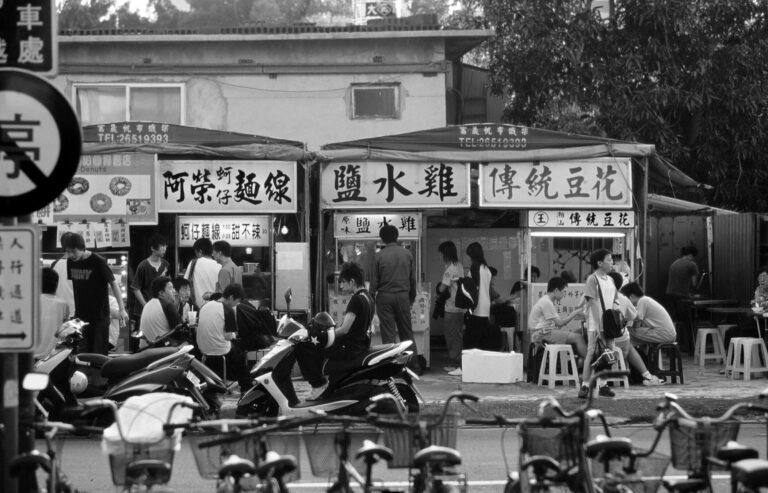
Inside Taiwanese eateries, red paper menu tags hang in rows along the walls. The words repeat: shui jiao, tang bao, hu jiao bing, sheng jian bao.
To Japanese eyes, they often look the same. Meat wrapped in wheat dough. The differences seem limited to shape, or whether they are steamed or fried.
Yet each name ends with one of two characters. Bao or jiao.
That final word is not about appearance. It is a quiet signal of where the dish comes from and which culture it extends from.
When Taiwan Had Only Wontons
Before 1945, Taiwan was clearly a rice-based food society. Daily meals revolved around rice, porridge, and rice-flour dishes such as thin rice noodles and flat rice sheets.
Wheat played a supporting role. Its use was limited, with bian shi, similar to wontons, and oily wheat noodles as typical examples.
The skins of these dumplings were stretched thin enough to turn translucent. The noodles were valued more for texture than for wheat flavor itself.
Here, wheat was not the main actor. It was a material for wrapping, binding, and shaping, not a staple meant to fill the stomach.
In Taiwan, wheat dishes sat at the edge of a rice-centered world.
When Wheat Crossed the Sea in 1949
The structure of Taiwanese meals shifted sharply in 1949.
After losing the Chinese Civil War, the Nationalist government relocated to Taiwan. Along with it came roughly two million migrants from across the mainland, known as waishengren.
Many were from northern regions. They had grown up in cold, dry climates where wheat, not rice, formed the daily diet.
They ate mantou as staples and treated dumplings as regular meals. Their bodies carried wheat not as cuisine but as everyday energy.
At the same time, wheat flour aid from the United States began arriving. Cheap flour circulated in large volumes, aligning supply with demand almost instantly.
Northern wheat culture moved from nostalgic food to daily sustenance.
Taiwan became both a rice island and a wheat island.

The Line That Divides Bao and Jiao
The wheat dishes brought from the north were not a single category. By method, they separated clearly into two families.
Dough That Breathes: Bao
Dishes ending with bao are generally made with fermented dough. Yeast or natural starters create air pockets within the structure.
The dough swells and expands further when steamed. Pressed with a finger, it slowly springs back.
Its nature resembles bread. Because of the internal space, it absorbs meat juices and sauces. The dough itself carries flavor.
Its ancestor is mantou, a plain steamed bread created to eat wheat itself as a staple.
Bao does not simply wrap. It holds and embraces the filling.
Dough That Seals: Jiao
Dishes ending with jiao use unfermented dough. Flour is kneaded with water or hot water, without raising.
There are no air pockets. Instead, gluten bonds tightly, allowing the skin to stretch without tearing.
When bitten, it pushes back with elasticity. Its character resembles noodles or pasta.
This dough does not exist to be eaten for its own taste. Its role is to seal.
Juices, moisture, and flavor are locked inside.
Jiao originates from noodle culture. Wrapping filling with sheets of dough eventually became a standalone form.
It is not a dish of skin. It is a structure that protects what is inside.
The World of Swelling Dough
Among the wheat traditions carried north to south, the form closest to the original is mantou. It was born as plain steamed bread meant to consume wheat directly.
From it came rou bao, where fermented dough absorbs meat juices and becomes flavorful itself.
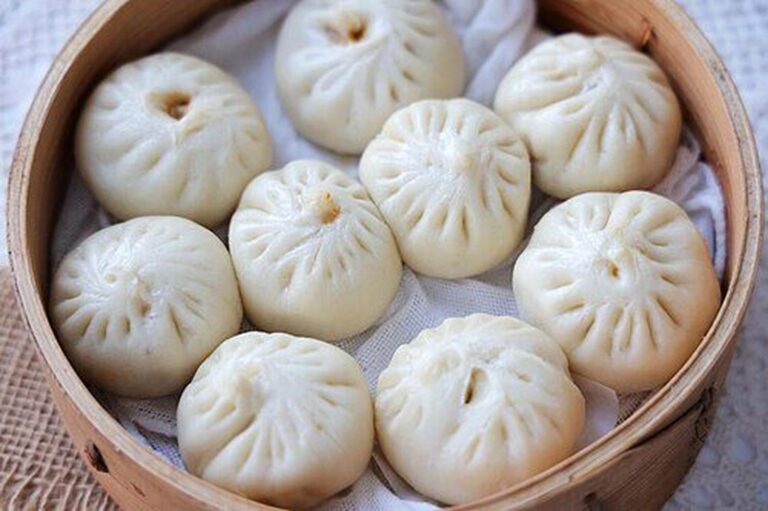
Then came sheng jian bao. Though browned on the bottom, the dough remains thick and risen, puffing softly inside. It looks similar to xiaolongbao but belongs entirely to the bao lineage.
Hu jiao bing stands slightly apart. Baked in ovens, its form traces back to Central Asian flatbreads like naan. Still, the dough expands and holds juices in the same fundamental way.
Across this family, the idea is consistent. Wheat is the main subject. Wrapping exists only to allow wheat to function as food.
The World of Sealing Dough
The jiao lineage reverses the structure. The filling, not the skin, becomes the center.
Shui jiao is the clearest example. The skin is thick and chewy but never fermented. Its elasticity grips the filling tightly.
With steamed versions, the dough turns translucent, revealing the shape inside. Because it does not rise, it holds form precisely.
Pan-fried versions add heat but not expansion. The dough stays firm and sealed.
Across all of them, the goal is containment. Nothing escapes.
Xiaolongbao, Which Fits Nowhere
Here appears a dish that does not fully belong to either side.
xiaolongbao.
The name includes bao, which should place it among fermented dough foods.
Yet in reality, two forms coexist.
The Breakfast Version
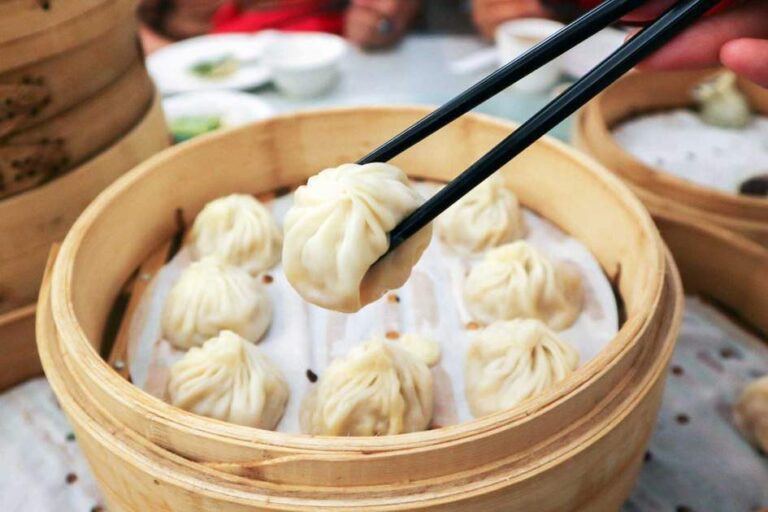
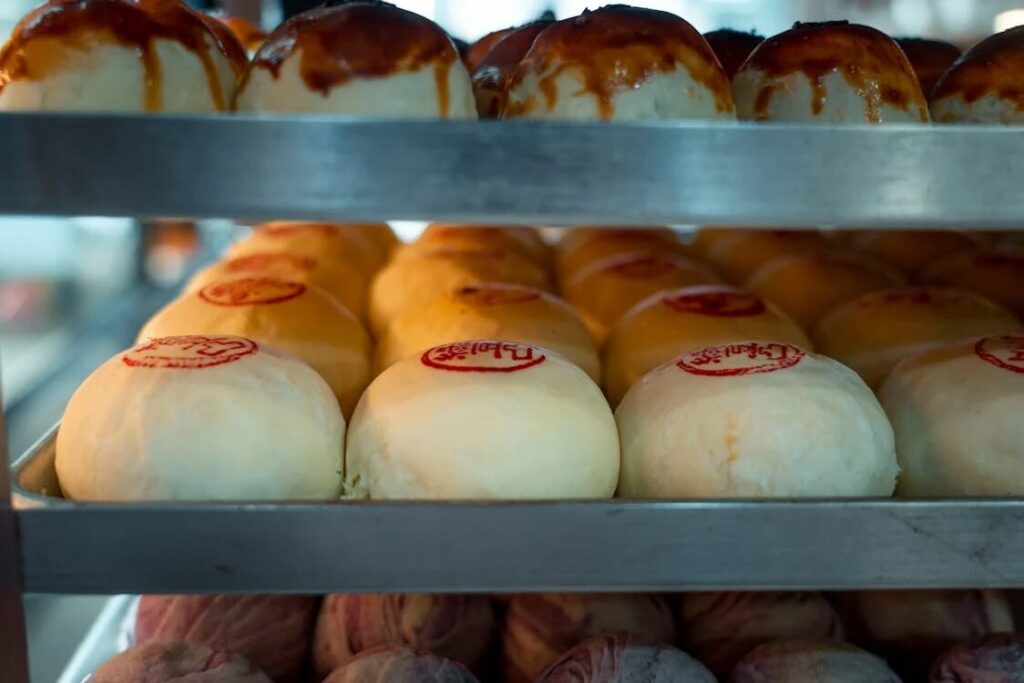
At morning stalls, xiaolongbao has thick, fluffy skin. Steaming lifts the dough, filling it with air.
This is truly of the bao lineage. Made with fermented dough, it functions like a small wheat-based staple.
Served beside soy milk, it supplies morning energy.
Spoons are unnecessary. It is meant to be eaten quickly by hand.
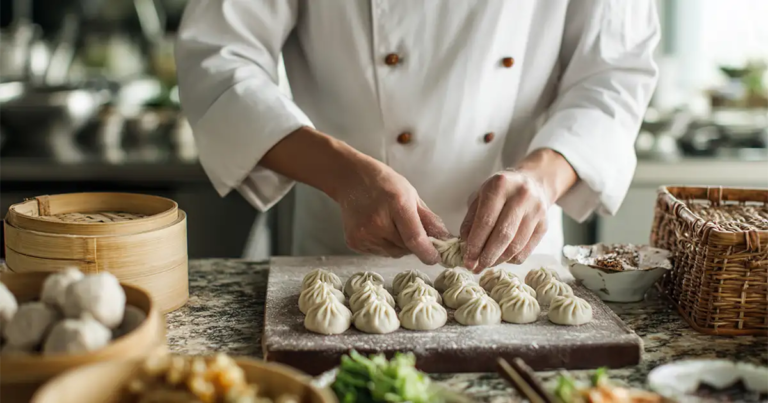
The Din Tai Fung Version
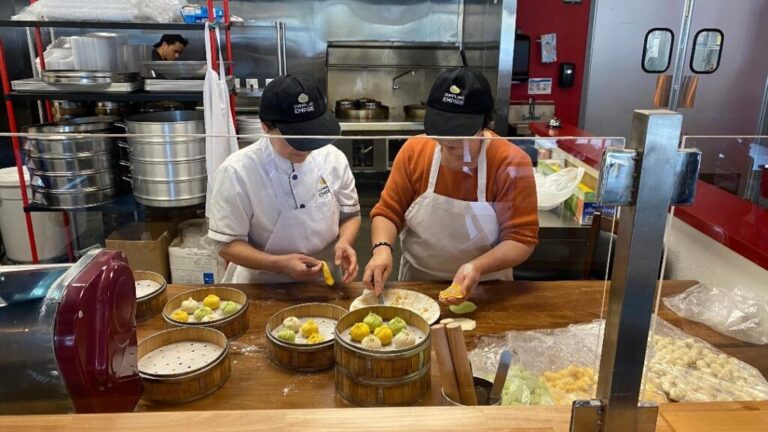
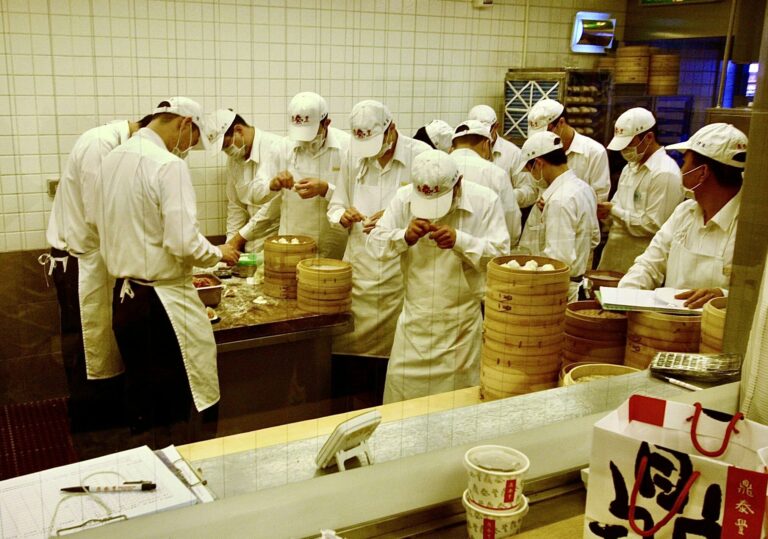
At Din Tai Fung, the structure is entirely different.
The skin is stretched paper-thin until it turns translucent.
The dough is unfermented. Technically it belongs closer to jiao.
Fermentation is abandoned so soup can be sealed inside. Thinness, uniformity, and precision become the value.
This form evolved in the Jiangnan and Shanghai regions as refined dim sum. Wheat here is treated as craft, not staple.
Hanging Between Two Lineages
By name, xiaolongbao belongs to bao.
By structure, half of it belongs to jiao.
It descends from mantou yet evolves through dumpling technique.
In lineage terms, it sits like a bat—neither fully beast nor bird.
Both forms coexist in Taiwan. Their presence itself reflects the overlapping food histories of the island.
Two Currents Beneath the Steam
When steam rises from bamboo baskets on Taiwanese streets, two processes may be happening.
The dough may be breathing and swelling.
Or gluten may be tightening and sealing.
Neither is better.
But the bite reveals the difference immediately.
Once noticed, the distance between northern and southern food memory, carried across the sea in 1949, quietly comes into view.
— Detour —
a little further to walk
- Notes on Xiaolongbao in Taiwan
- Notes on the Steamed Dumpling That Lost Its Shop
- Notes on Xiaolongbao and the History Taiwan Inherited