At noon, motorcycles idle outside bento shops while office workers carry away nearly identical boxes, each cinched with a single rubber band. The plain packages fog from within, their heat announcing lunch more clearly than any printed label.
At noon, the air on Taiwanese street corners shifts by one degree. Office building elevators open in succession and release streams of people onto the pavement. Suited office workers, laborers still in work clothes, students in uniforms — all walk in the same direction. On the road, motorcycles slow and riders pull up in front of shops without removing their helmets. Some keep their engines running, one foot on the ground, waiting their turn. People move without hesitation toward a handful of shops. Minutes later, they are carrying the same shape in their hands: a thin cardboard box, or a wooden one, bound crosswise with a single rubber band and placed inside a transparent bag. The inside of the bag is faintly fogged with condensation. White steam collects within it. The surface of the box carries no elaborate decoration — no photographs, few colors. What announces its contents is the heat that passes through the bag to the fingertips, and the unmistakable smell of oil and star anise. The weight pulling at the fingers conveys the density of what is inside. The corners of the box are slightly damp, indicating that steam has been circulating within. This is not occasional food for unusual circumstances. It is treated as the basic and reliable energy that keeps the circulatory system of Taiwanese society from slowing.
A Cold Railway Lunch from Japan
The food format most commonly seen on Taiwanese street corners traces its origin to the railway bento — the eki-ben — introduced during the period of Japanese colonial rule. The word currently in use, bian dang, derives directly from the sound of the Japanese word bentō. The sound settled into the land and was given Chinese characters. As the railway network was developed, the system of packing a meal into a rectangular box and eating it at the destination was transplanted into Taiwan. The boxes of that period were wooden or aluminum and followed Japanese conventions, with rice and side dishes arranged neatly in divided compartments. But that format carried one embedded premise: it assumed the food would be eaten cold, or at least at room temperature. The Japanese station bento was designed to accommodate the passage of time. In Taiwanese food culture, by contrast, eating cold rice is not welcomed. Warmth is given the same weight as flavor. Cold rice is regarded as rice in a diminished state. This difference in sensibility created a friction with the original bento from the beginning. The box remained. The idea of what went inside it did not take hold as it was.
Attachment to Hot Rice and the Union with Zi Zhu Can
Taiwan kept the convenience of the box and reorganized its contents. Portability was retained. Temperature was not surrendered. During the postwar period of economic growth, cities developed a need to supply large quantities of food in a short time. The format that emerged to meet this need was the zi zhu can — a canteen-style diner in which fried, simmered, and stir-fried dishes are displayed in glass cases at the front of the shop. The side dishes arrive freshly lifted from the pot, still steaming. Customers point at what they want and have it placed on their plate. The structure assumes everything is freshly made. The idea of packing that hot zi zhu can meal into the rectangular bento box gradually became the standard. When an order is placed, freshly cooked white rice is packed into the bottom of the box. Steam rises from it. On top of that, meat just lifted from high-temperature oil is placed — the coating still firm, oil gleaming on the surface. Side dishes fill the remaining space: stir-fried greens, simmered egg, braised tofu. Until the moment the lid closes, the interior is dense with heat. The rubber band binds the box and seals that heat inside. In this way, the cold station bento format was replaced by a hot one. The imported system was not rejected. It was remade to match the local sense of what temperature food should be.
The Unbroken Flow of Orders
At a bento shop counter during the midday rush, the exchange moves with minimal friction. The first question establishes whether the order is for eating in or taking out. Taking out is the dominant choice, though even those eating in are often handed the box as it is, rather than having the contents transferred to a plate. Next, the main dish is selected — one item pointed out from the menu posted on the wall. Names such as pork ribs rice and fried chicken leg rice appear on that list. This choice determines the price. Then come the side dishes. A dozen or more items are visible in the glass case, and three or four are pointed out. Whether to layer fried items or to lighten the box with greens is decided quickly. The box is then closed, bound with the rubber band, placed in a transparent bag, and handed across the counter. Payment is made, and the customer is gone almost immediately. The entire transaction takes less than a few minutes. This fixed sequence is what allows the continuous flow of customers during the midday peak to be processed without interruption. The movement of people does not stop. Boxes accumulate and are carried back out into the city one after another.
Three Large Chains at the Corners
Taiwanese bento culture is not formed by small individual diners alone. The same shop names appear repeatedly across the city — at station exits, along main roads, on corner lots at intersections. At noon, people gather under those signs. Three names in particular hold the capacity to fill the stomachs of an entire nation to a consistent standard.
Zhengzhong Pork Ribs Rice
Mass and dominance from the south
Zhengzhong Pork Ribs Rice was founded in Kaohsiung. Its shops occupy corner lots at intersections and carry large red signs visible from a distance, with bold white lettering. Before noon, people line up inside and boxes accumulate near the entrance. The main dish is pork ribs marinated in a sweet proprietary sauce and fried in oil. The finished meat is flat and wide, extending beyond the edge of the bento box. Placed over white rice, it covers nearly the entire surface. Each bite leaves a concentrated flavor on the tongue. The thickness of the meat and the firmness of the coating produce a reliable fullness after the meal. The combination of volume and strong seasoning has earned the loyalty of people working on construction sites and in factories. The chain has expanded from south to north, delivering the same flavor across the island. The sight of someone carrying one of these boxes is a direct image of what Taiwanese bento is.
Wutao Chishang Fan Bao
The wooden box that breathes, and the lineage of the railway bento
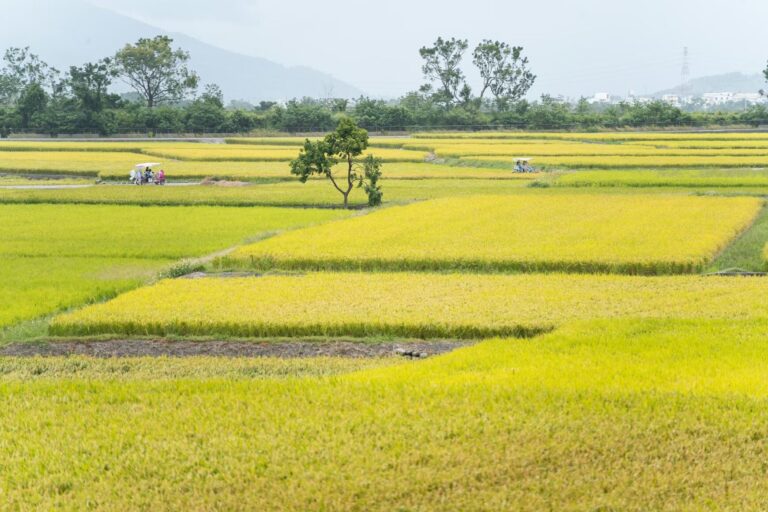
Wutao Chishang Fan Bao originated in Chishang, in the eastern region of Taitung, an area known for its rice production — land where rice plants move in the wind across wide stretches. The bento here is not packed into a cardboard box. It uses a thin wooden container, folded from narrow strips of wood. The box is light and dry to the touch. Small gaps in the sides mean it is not fully sealed. The wood draws excess moisture from the rice and allows the internal steam to escape. Even after time has passed, the grains do not become sticky. When the lid is opened, the surface of the white rice catches the light and each grain stands distinct. This format carries the trace of the railway bento more clearly than anything else in the category. The structure of packing food into a box and carrying it somewhere remains intact. At the same time, the box has been arranged specifically to preserve the sweetness and texture of Chishang rice. It is sometimes called anomalous within the larger Taiwanese bento culture. It is also the form that retains the most direct lineage from the station bento.
Liang She Han Pork Ribs
A standardized bento for the contemporary city
Liang She Han Pork Ribs has expanded its shop count rapidly in recent years. The smell of accumulated oil and the disordered kitchens of older bento shops are absent here. The interior is bright. Walls and floors are kept clean. Touchscreen ordering terminals stand at the entrance and customers operate them to make their selections. Main dishes and side dishes are indicated by number, and the sequence through to payment is short. Staff move along fixed paths and boxes are assembled at a consistent pace. The variation between individual locations is small — the result at any branch is nearly identical. In this space, the bento is treated as a meal supplied in a stable and predictable form. Even during the midday period, there is little visible disorder. This orderly environment represents a new form of the Taiwanese bento, aligned with the speed of the contemporary city.
Hierarchy Inside the Box
The bento box is a square container. Within it, a fixed set of main dishes appears repeatedly across the island, each establishing its own position in terms of price and the kind of satisfaction it provides.
Pork ribs rice (pai gu fan)
The standard by which a bento shop is measured. One cut of pork spare ribs — fried in some shops, simmered in soy sauce in others. The thickness of the meat and the depth of the marinade indicate the kitchen’s level.
Fried chicken leg rice (zha ji tui fan)
A whole bone-in chicken thigh, fried in one piece. The volume is sometimes enough that the lid cannot close fully. The skin is firm and the interior holds its juice.
Grilled chicken leg rice (shao ji tui fan)
Chicken thigh marinated in a sweet and savory sauce and grilled. The surface develops an amber gloss. Where the meat rests against the white rice, the sauce soaks in.
Chicken cutlet rice (ji pai fan)
Chicken breast pounded flat and fried. It covers nearly the entire upper surface of the box. The approach is one of area and mass combined.
Braised pork belly rice (kong rou fan)
Pork belly simmered as a braise, serving as the main element. The fat and braising liquid follow gravity downward and reach the bottom layer of rice. By the time the box is empty, a stain remains at the bottom.
Milkfish belly rice (sabahi yu du fan)
The belly of the milkfish (sabahi), deboned with care. The flesh is soft, and white fat rises to the surface. The price is set higher than most other options. A quiet sweetness remains that meat does not produce.
Three-cup chicken rice (san bei ji fan)
Chicken simmered with soy sauce, sesame oil, rice wine, and san ceng ta — an herb close to basil. When the lid is lifted, the smell rises immediately. The air in the immediate vicinity changes for a moment.
The Square Fuel That Moves the City
There is no special staging. The interaction is brief and words are kept to a minimum. At noon, a warm box of rice and meat is produced in its fixed form and handed across the counter. The people who receive it return to their respective workplaces. They climb stairs, enter factories, sit down at desks. The box is opened there.
— Detour —
a little further to walk
- Notes on the Milkfish Belly Bento
- Notes on Formosa Chang Beyond the Dining Room
- Notes on traditional Taiwanese Breakfast Shops