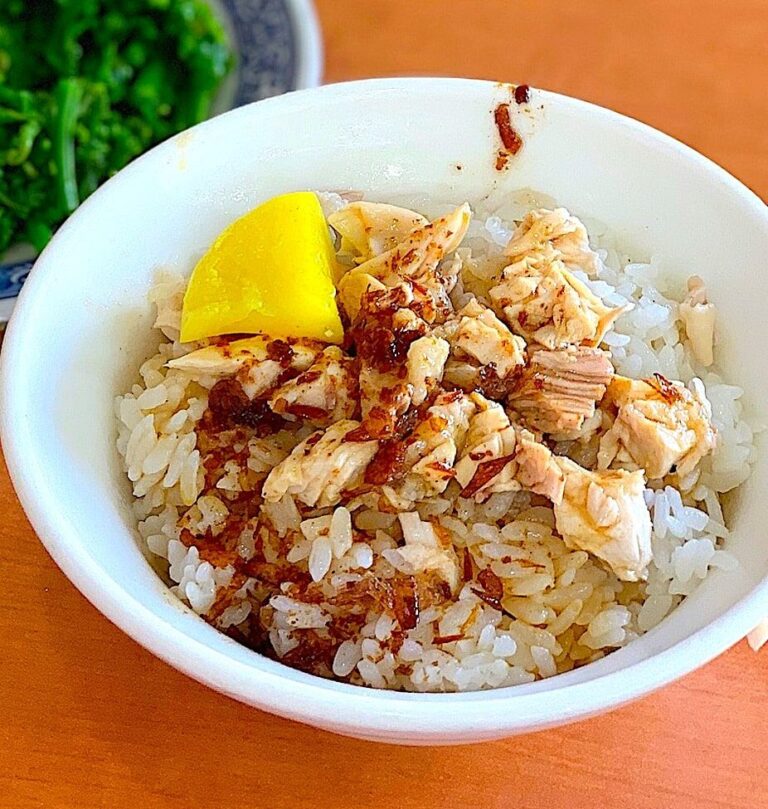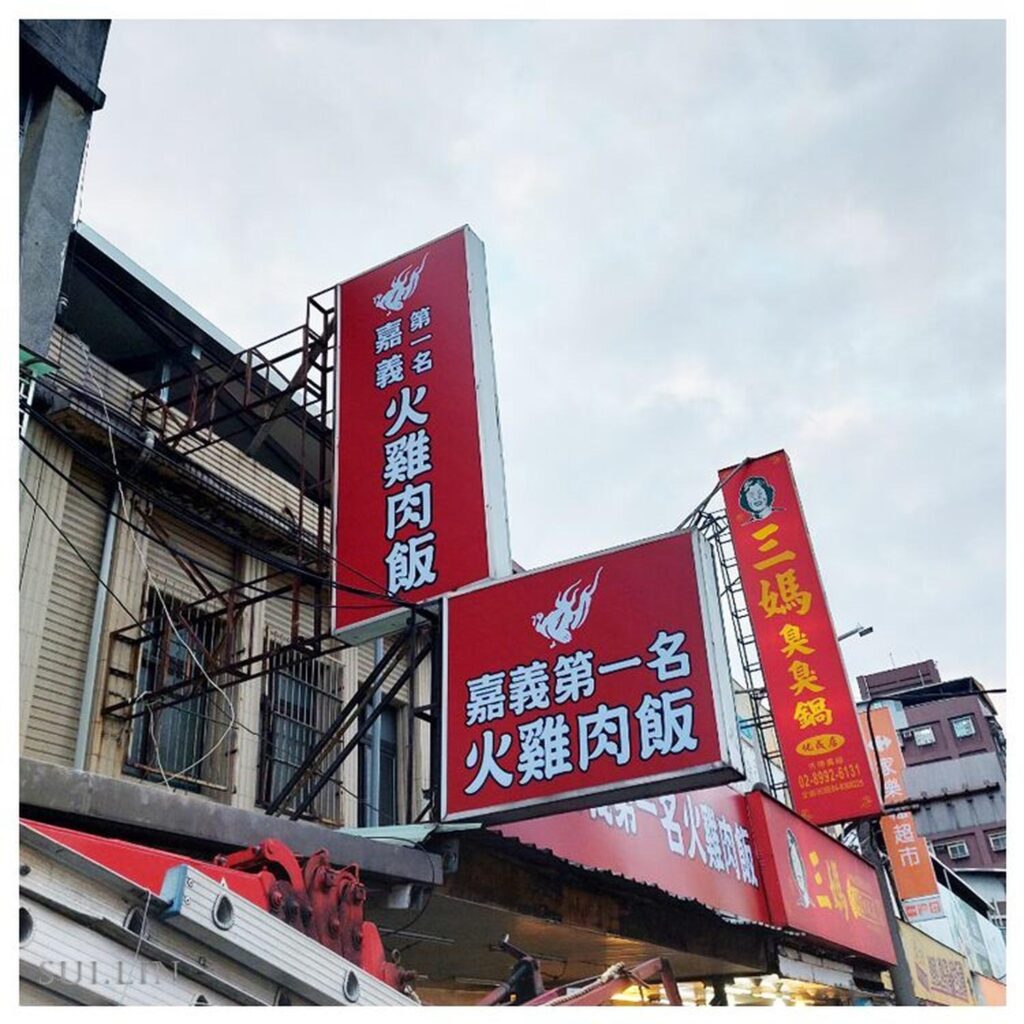
Chiayi has more than 150 chicken rice shops, at least 65 of them serving turkey, yet no turkey farms of its own. The birds on these crowded shop counters arrive from elsewhere.
Walk through Chiayi and the ji rou fan (雞肉飯, chicken rice) shops stand out. When the Chiayi Municipal Museum (嘉義市立博物館) ran a special exhibition on huo ji rou fan (火雞肉飯, turkey rice) in 2024, it reported more than 150 shops selling chicken rice inside the city, at least 65 of them dealing mainly in turkey. The four big convenience store chains have fewer branches there between them.
Chiayi City has no turkey farms. The birds arrive from Yunlin, Chiayi County, Tainan and other places nearby.
Why did so many turkey rice shops end up in a city that raises no turkeys?
Turkeys were already in Taiwan
Accounts of Chiayi turkey rice tend to start with American troops stationed in Taiwan after the war, who brought turkeys with them. The city’s own tourism material carries a version of this.
Turkeys did not reach Taiwan after the war. Agricultural experiment stations were raising them under Japanese rule, and a newspaper photograph from 1909 shows the birds at one of them. By the 1920s a district in Changhua counted 2,700 of them, and the press was recommending turkey farming as a sideline for farming households.
Chiayi was not where Taiwan first obtained turkeys, and it was not the only place that had them. More than 90 percent of the turkeys raised in Taiwan today come from Yunlin, Chiayi County and Tainan. Chiayi City is not a production area at all.
A well-known dish can acquire a tidy origin story after the fact. The question for Chiayi turkey rice is not where the birds came from, but why turkeys already in Taiwan became the meat for chicken rice here.
Turkey is the meat that stayed
Chiayi chicken rice has an origin story of its own, told about Penshui Ji Rou Fan (噴水雞肉飯). Lin Chao-cheng (林昭正), the second-generation owner, has said the shop began with the kind of chicken bought for ritual offerings, moved to a cheaper meat chicken, found it too soft, tried another bird and settled on turkey. Price was part of it. So were the coarser grain of the meat and its firmer chew.
The records do not line up. Material from the Chiayi City Health Bureau says the early meat was chicken, while the museum’s account can be read as turkey from 1949 onward. There is no single timeline for when the meat changed.
The first bird does not need to be identified. What the accounts show is that the meat in chicken rice could change, and that in Chiayi the substitution ended at turkey. Cost did not decide it on its own. Texture came into it.
The dish came first, and turkey fitted onto it. That alone would have been enough for one shop with a local reputation.
A large bird suits a shop better than a kitchen
Turkeys are much larger than chickens. The white-feathered turkeys common in Taiwan reach 17 to 22 kilos for a male. A whole bird is awkward for a household to handle. Taiwan’s livestock bodies say as much: ordinary families are not used to cooking turkey and do not own equipment for a bird that size, so fresh turkey meat barely appears in traditional markets or supermarkets.
For a shop the size is an advantage. The breast becomes turkey rice. Thigh meat and other cuts go out as separate dishes. The offal goes into soups. Carcasses and offal are sometimes traded separately after slaughter, so not every shop works through a whole bird. Either way, a bird that yields that much meat suits a place selling hundreds of the same bowl a day.
A bird too big for a household is a convenient raw material for a shop.
The second shop worked, and so did the ones after it
What marks Chiayi out is not one well-known shop like Penshui. It is that shops selling the same dish kept opening after it.
The Chiayi Municipal Museum’s account is that turkey rice was relatively easy to copy, which made it a way to start a business or switch into one and make a living. It also credits repeat visits by Chiang Ching-kuo, who ate the dish and praised it, with raising its profile.
No reliable record traces who left which shop to open their own. The shops today share no recipe. Some shred the meat and some slice it. The rice, the sauce and the you cong su (油蔥酥, fried shallots) differ from one shop to the next. The same business kept working anyway.
Even if the first shop could be identified, that would not explain Chiayi as it is now. A second shop, a third, and the ones after them made the same trade viable, and what had been one shop’s product became the city’s food.
Chiayi turkey rice may have been made by the shops that came after the first one rather than by the first one.
A supply chain that ends at the shops
More turkey rice shops mean a supply chain separate from the ordinary chicken trade. Turkeys raised in Taiwan pass from farms to meat traders, and after slaughter most of them go to turkey rice shops. Ministry of Agriculture surveys describe meat traders handling most of that flow, with some farms acting as traders themselves. The retail end of the chain is not the supermarket. It is the turkey rice shops.
That much is on the record.
Dozens of turkey rice shops in one city give meat traders steady demand for turkey. That makes supply easier for the traders, and a reliable supply makes it easier for the next shop to open. No source shows the order in which this happened in Chiayi.
What is visible is a city with no turkey farms of its own, turkeys arriving from outside it, and dozens of specialist shops in business. Rather than shops forming around a production area, the concentration of shops appears to have drawn the raw material in from elsewhere.
Turkeys raised for turkey rice
Turkey production in Taiwan grew after the war. Around 200,000 birds a year in the early 1950s became around 700,000 by the 1980s. From the 1980s the domestic industry contracted, with imports of frozen turkey among the reasons. Fewer than a hundred farms raise turkeys now, on a scale the Ministry of Agriculture itself calls a “micro-industry.”
Demand for domestic turkey did not disappear. Between 90 and 95 percent of the turkeys raised in Taiwan go to turkey rice shops. Those shops are not one channel among several. They account for almost the entire market for domestically raised turkey.
The shops’ requirements also shape how the birds are raised. Turkey abroad is mostly roasted whole, and birds go to slaughter relatively young so the meat does not turn tough in the oven. In Taiwan the chew matters for turkey rice, and shops want meat that is quick to strip and plentiful, so the birds are raised longer than they are elsewhere. The ministry states this directly. Better husbandry has also raised slaughter weights without extending the growing period, which suits what the market asks for.
Whether turkey came first and the shops followed, or the shops multiplied and the industry took its present shape around them, is hard to separate now. Looking only at the present, turkey rice supports the domestic turkey industry and shapes how the birds are raised.
Turkey rice is not made from whatever turkeys Taiwan happens to raise. The turkeys are raised for turkey rice.
Outside Chiayi, Chiayi became the measure
Once the shops and the supply behind them were in place, Chiayi turkey rice was recognized beyond the city. Shortly before the 1997 foot-and-mouth outbreak, Formosa Chang (鬍鬚張), a Taipei company selling lu rou fan (魯肉飯), had spent a long time developing a chicken rice product. At a tasting just before launch, staff objected that it could not compare with Chiayi chicken rice, and the launch was shelved. Chang Yung-chang has described this himself.
The point is not that Formosa Chang sold chicken rice later. It is that when staff judged their own chicken rice, they reached for Chiayi chicken rice as the comparison without having to think about it.
By 1997 Chiayi was more than a place name. Shops selling the same dish had kept opening there, and people making chicken rice elsewhere had come to measure themselves against it.
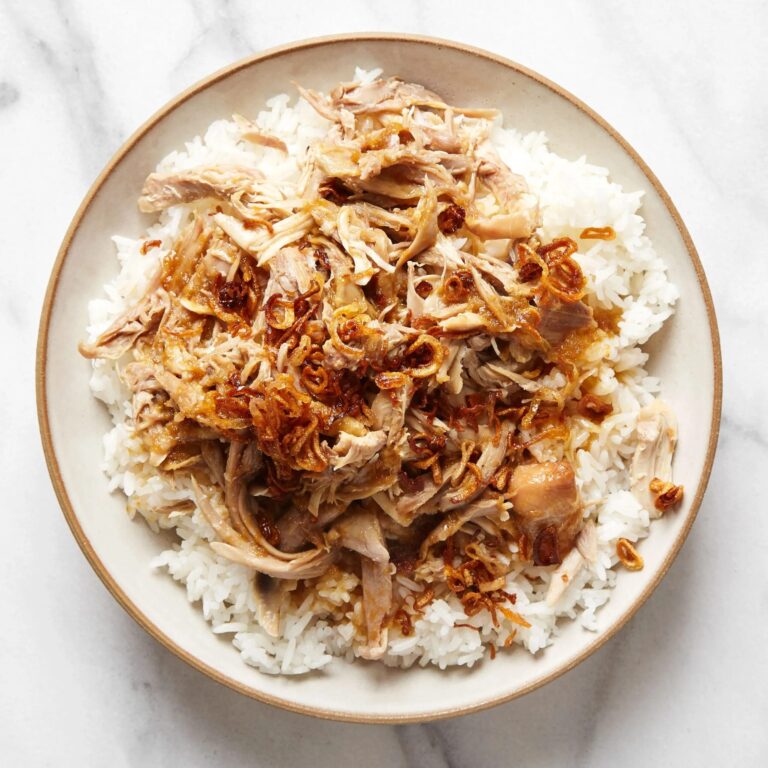

The city government came later
Government took up turkey rice as a civic asset after all of this. The city ran a chicken rice festival (嘉義市雞肉飯節) in 2011, and the Ministry of Agriculture records co-hosting it with the city for three years around then. In 2013 Chiayi City’s turkey rice won a national public vote on signature rice dishes run by the Agriculture and Food Agency, and the mayor announced a discount at turkey rice shops across the city from the stage.
In 2016 a turkey rice association (火雞肉飯協會) was formed, prompted by the city health bureau’s hygiene guidance for the trade. No recipe was fixed. Shops that had operated separately were bound together through food safety work and a trade body.
At the Taiwan Design Expo in 2021, turkey rice appeared as a way to describe the city rather than as a local speciality. A small city with everything a life needs inside it was set against a bowl with everything it needs inside it. By 2024 the history itself had become a museum exhibition.
The city government did not invent turkey rice. It connected an existing concentration of shops to tourism, food safety, design and a museum, after that concentration had already carried the name beyond Chiayi. What became fixed was not the recipe, but the idea that turkey rice represents Chiayi.
What Chiayi made was not a bowl
Chiayi City still has no turkey farms. Turkeys come in from the surrounding area, and dozens of turkey rice shops operate in the city. Turkey rice shops take almost all the turkeys raised in Taiwan, and what those shops want has changed how the birds are raised.
Looking for the first bowl will not explain this. Shops kept opening, and one shop’s product became the city’s trade. As the trade concentrated, a supply chain grew behind it that delivered turkeys to specialist shops, and the domestic turkey industry came to depend on turkey rice for its market. The name became the measure for chicken rice outside the city, and in the end the city government used turkey rice to explain Chiayi.
What Chiayi made was not one bowl of turkey rice.
It may have been a city where any number of turkey rice shops could work, and where that dish could explain the city itself.