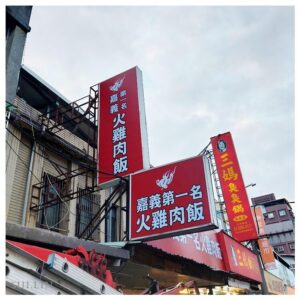
Notes on Turkey Rice in Chiayi
Chiayi has more than 150 chicken rice shops, at least 65 of them serving turkey, yet no turkey farms of its own. The birds on these crowded shop counters arrive from elsewhere.
Chiayi has more than 150 chicken rice shops, at least 65 of them serving turkey, yet no turkey farms of its own. The birds on these crowded shop counters arrive from elsewhere.
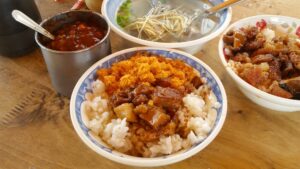
The yellow sign promises braised pork rice for 39 NT dollars. At the register, trays of soup, greens, eggs, and fried pork quietly turn that small bowl into something most diners treat as a full meal.
Lu rou fan is one of Taiwan’s most ordinary meals: a modest bowl, usually cheap enough to be an afterthought. At Formosa Chang, the price approaches twice the street-stall norm, yet the seats keep filling and the chain keeps spreading.
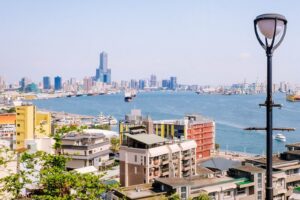
In Taipei, Formosa Chang’s yellow sign is so common it fades into the city’s background. Follow the high-speed rail south, however, and the familiar mustached logo disappears before the island’s major southern cities come into view.

At a Formosa Chang shop, the final steps look like ordinary restaurant work: rice is portioned, toppings are added, and a bowl is carried to the table. The meat and sauce have already passed through a very different kind of kitchen.
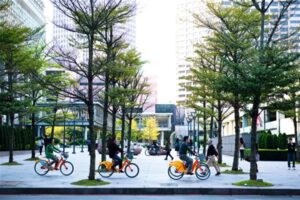
The mustached face of Formosa Chang turns up where a restaurant usually does not: on gold retort pouches at the supermarket, boxed meals at convenience stores, and sometimes an airline tray. The dining room is only one of the places where this bowl can be found.
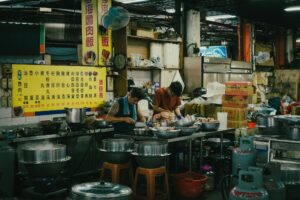
Formosa Chang serves a modest bowl of braised pork rice beneath bright lights, on dry floors, with uniforms and a tightly managed order of service. The dish belongs to Taiwan’s street-food tradition; the setting looks built to make it repeatable.
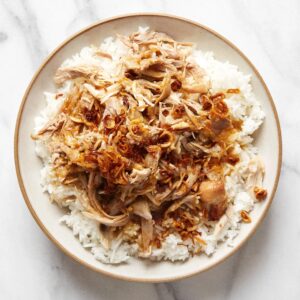
Formosa Chang is known for braised pork, but in its dining rooms chicken rice appears beside the signature bowl with surprising regularity. The dish is a secondary menu item in a restaurant whose name has become closely tied to pork.
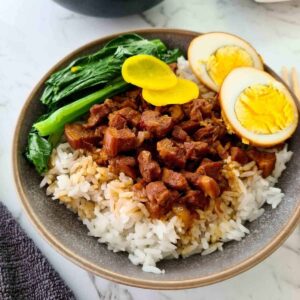
A bowl of lu rou fan that might cost around 30 NT dollars at a street stall sells for nearly twice that beneath Formosa Chang’s yellow sign. At lunchtime, office workers and older regulars still fill the seats, eating from bowls that arrive with strikingly little variation.
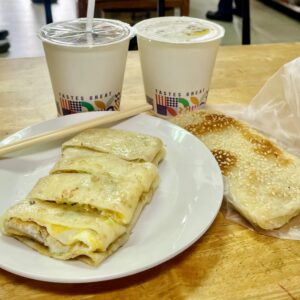
Before sunrise, red-and-yellow signs glow above small breakfast shops while eggs, buns, and thin patties meet the same broad griddle. Several of these places bear the name Mei & Mei, though the sign does not always point to the same business.