Taiwan

← Back to Taiwan

Food Culture

Notes on Paradise Dynasty in Singapore

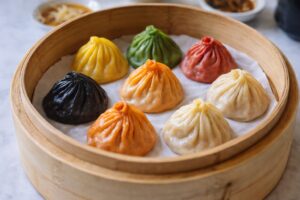
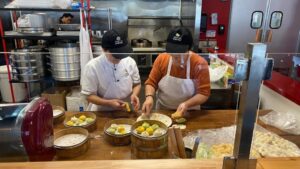
When the lid comes off a Paradise Dynasty steamer, the xiaolongbao arrive in red, green, black, and yellow instead of the expected white. They sit in sequence like a gift box—or a flight of macarons—before anyone takes a bite.

Notes on Halal Xiaolongbao

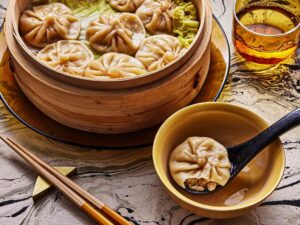
In a Kuala Lumpur food court, a bamboo basket opens to reveal xiaolongbao full of hot soup, even though pork is nowhere in the kitchen. The familiar pleats and fragile skin have survived a missing ingredient that normally helps hold the whole dumpling together.

Notes on Lu Rou Fan in Taiwan

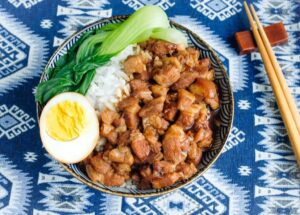
A bowl of lu rou fan can arrive as finely chopped pork spread through the rice, or as a glossy chunk of pork belly sitting on top. The characters on the menu may be the same, while the bowl—and the taste expected from it—changes across Taiwan.

Notes on Lu in Taiwan

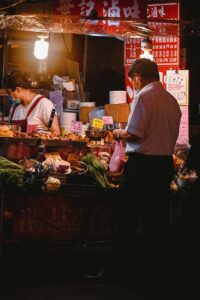
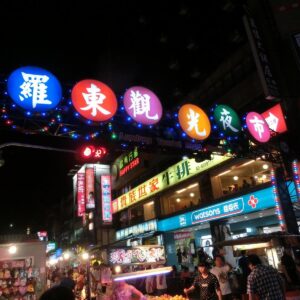
At a Taiwanese night market, brown slices of pork, tofu, eggs, kelp, and pig ear sit in open trays, often at room temperature. The same sweet, spiced smell seems to cling to the stall, the food, and whatever comes out of the pot next.

Notes on Chishang Rice in Eastern Taiwan

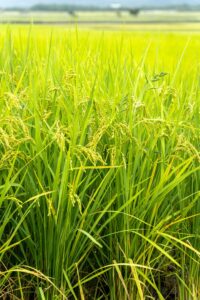
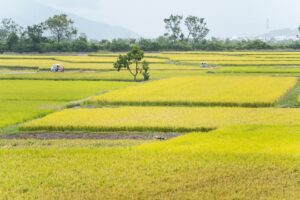
In Taipei supermarkets, bags marked Chishang sit slightly apart from the other rice, carrying a higher price and an immediate claim to quality. The town behind that label lies in a narrow valley in eastern Taiwan, far from the island’s main urban centers.

Notes on Yilan’s Sanxing Scallions

In Yilan markets, scallions are hard to miss: green bundles fill the stalls, while breads, pancakes, and noodle bowls are built around them rather than merely garnished. In supermarkets, the Sanxing bundles look ordinary at a glance, but their price does not.

Notes on the Lurou Fan “Michelin Incident”

The 2011 Taiwan edition of the Michelin Green Guide gave lurou fan only a few lines, but one of them placed the dish’s origin in Shandong. Soon, an everyday bowl served at food stalls was being defended in city halls, newspapers, and a thousand free servings.

Notes on Xiaolongbao as Taiwan’s Adopted National Dish

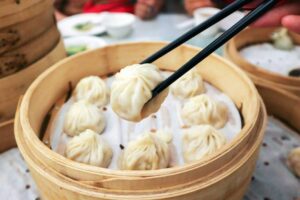
At a Taipei street corner, a bamboo steamer opens onto thin wrappers, pork, ginger, vinegar, and a pocket of soup. There is no bounce, star anise, or sweet-salty finish—yet few dishes appear more readily under Taiwan’s name.

Notes on the Entertainment of Xiaolongbao

The bamboo steamer opens, steam rises, and a smartphone appears before the chopsticks do. On the screen, the dumpling’s trembling skin and sudden spill of soup matter before anyone has tasted it.