Taiwan

← Back to Taiwan

Food Culture

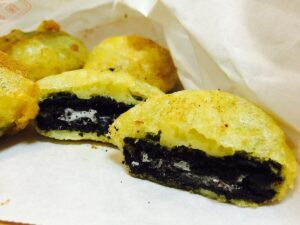
Notes on Fried Oreos in Taiwan

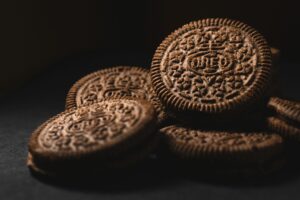
At a Taiwanese night-market stall, a black, patterned Oreo sits in the display case beside salt-and-pepper chicken, mushrooms, and fish cakes. The menu treats the cookie without hesitation as one more thing to lower into the fryer.

Notes on Pizza Hut in Taiwan

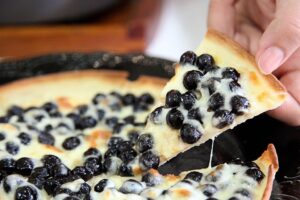
At a Pizza Hut in Taiwan, pepperoni and margherita sit beside pizzas topped with tapioca pearls, crushed Oreo, fried chicken, or mochi. The menu reads less like a fixed category than a collection of things that happen to fit inside a round box.

Notes on Oreo as Black Gravel in Taiwan

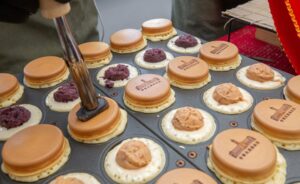
At a Taiwanese night market, a whole Oreo can disappear inside a wheel cake, while crushed pieces settle on milk tea as black soil. The package is familiar, but the cookie arrives at the stall with another job.

Notes on the Texture Called Q in Taiwan

On Taiwanese snack packages and night-market signs, a single letter appears where a texture rating might be expected: Q. It has no neat dictionary definition, yet a tapioca pearl, fish ball, or gummy candy can all be judged by it.

Notes on How Taiwan Turns Foreign Food into Q

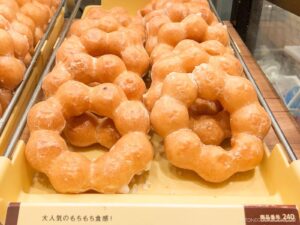
A Taiwanese waffle can crack under the knife and then stretch like melted cheese, with mochi pulling from its center. At Mister Donut, the ring-shaped Pon de Ring occupies the place where a conventional doughnut might be expected.

Notes on the Alchemy of Q in Taiwan

At a Taiwanese convenience store, a chilled tapioca dessert can still have the bounce of something just cooked. Left on a kitchen counter, the same starch would harden as it cooled.

Notes on Taiwan’s Q, Quietly Embedded in Japan

Frozen udon, convenience-store sweets, and Mister Donut’s Pon de Ring all carry a bounce that is neither quite sticky rice nor ordinary wheat. The white taiyaki had that same bounce—and disappeared.

Notes on Q-Dan Texture

On Japanese snack shelves, “Q-dan” appears beside gummy candies and imported foods without quite belonging to the language around it. The word points to a bite that pushes back quickly—not simply hard, chewy, or elastic.

Notes on Shaobing and the Layers of a Taiwanese Morning

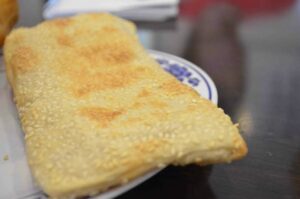
A shaobing looks light and orderly in the basket, but the first bite sends sesame and pastry flakes into the paper bag. Once split open, its crisp layers make room for a fried cruller—and for a breakfast that is awkward to carry away.

Notes on Red Oil Wontons Beside Xiao Long Bao in Taiwan

The plate arrives with pale wontons floating over a pool of red oil, the boiled skins catching light while the sauce seems to absorb it. At a Taipei dumpling shop, that sharp contrast often appears beside the softer, richer xiao long bao.