A bowl without soup, where the sauce remains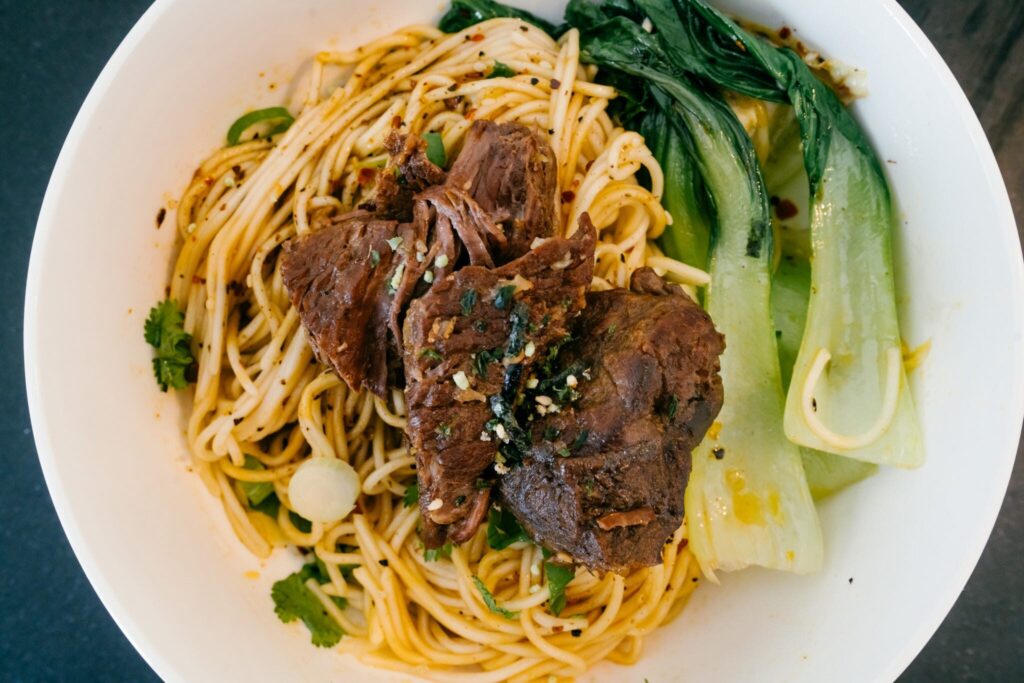
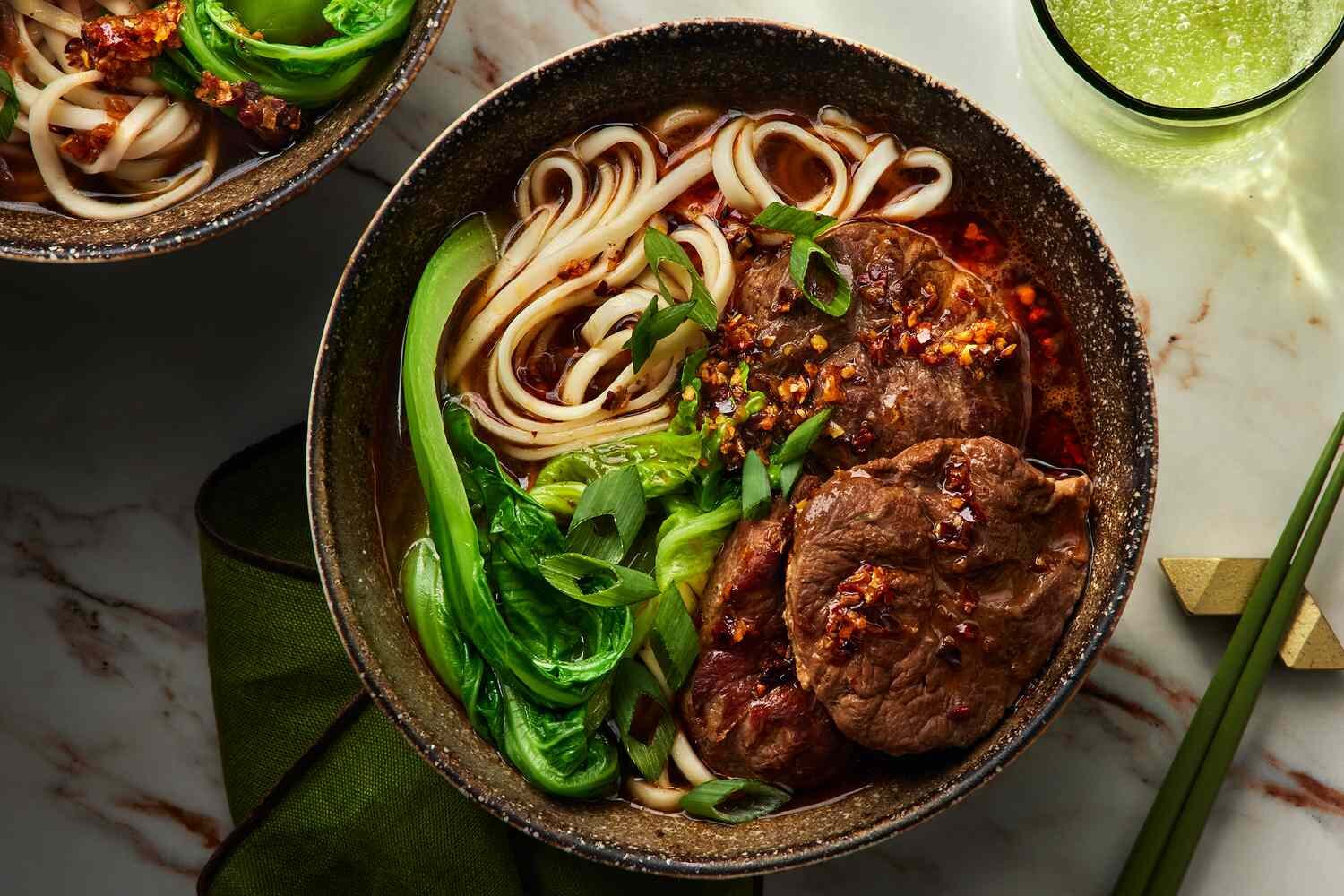
Dry beef noodles (niurou ganbanmian) arrive without the thing most people expect.
There is no broth.
At the bottom sits a small pool of dark sauce.
Above it, steaming noodles.
On top, a few heavy pieces of beef.
Compared with the usual beef noodle soup, this is not a soup dish.
It is a noodle dish.
The bowl looks plain.
It can feel like something is missing.
Then the first bite changes the mood.
This is not omission.
It is concentration.
Inside the bowl, there is nowhere to hide.
Without broth, the noodles, sauce, and meat collide from the beginning to the end.
Why the soup was removed
This style does not feel like an invention.
It feels like something that stayed because it fit.
In many shops, the soup begins as a braising liquid.
Beef is simmered for hours.
The result is strong and dense.
For a soup bowl, that liquid is diluted into a finished broth.
For a dry bowl, it is used before dilution.
The sauce hits the mouth in its original thickness.
Whether this is more luxurious is unclear.
But the concentration is higher.
There is also another explanation, often mentioned quietly.
Northern China has a long tradition of mixed noodles, like zhajiangmian.
In Taiwan’s heat, avoiding a full bowl of hot soup is practical.
A thick sauce and quick eating suit the climate.
This dish looks less like progress and more like adaptation.
Heat, appetite, table turnover, local habits.
When those conditions align, this shape remains.
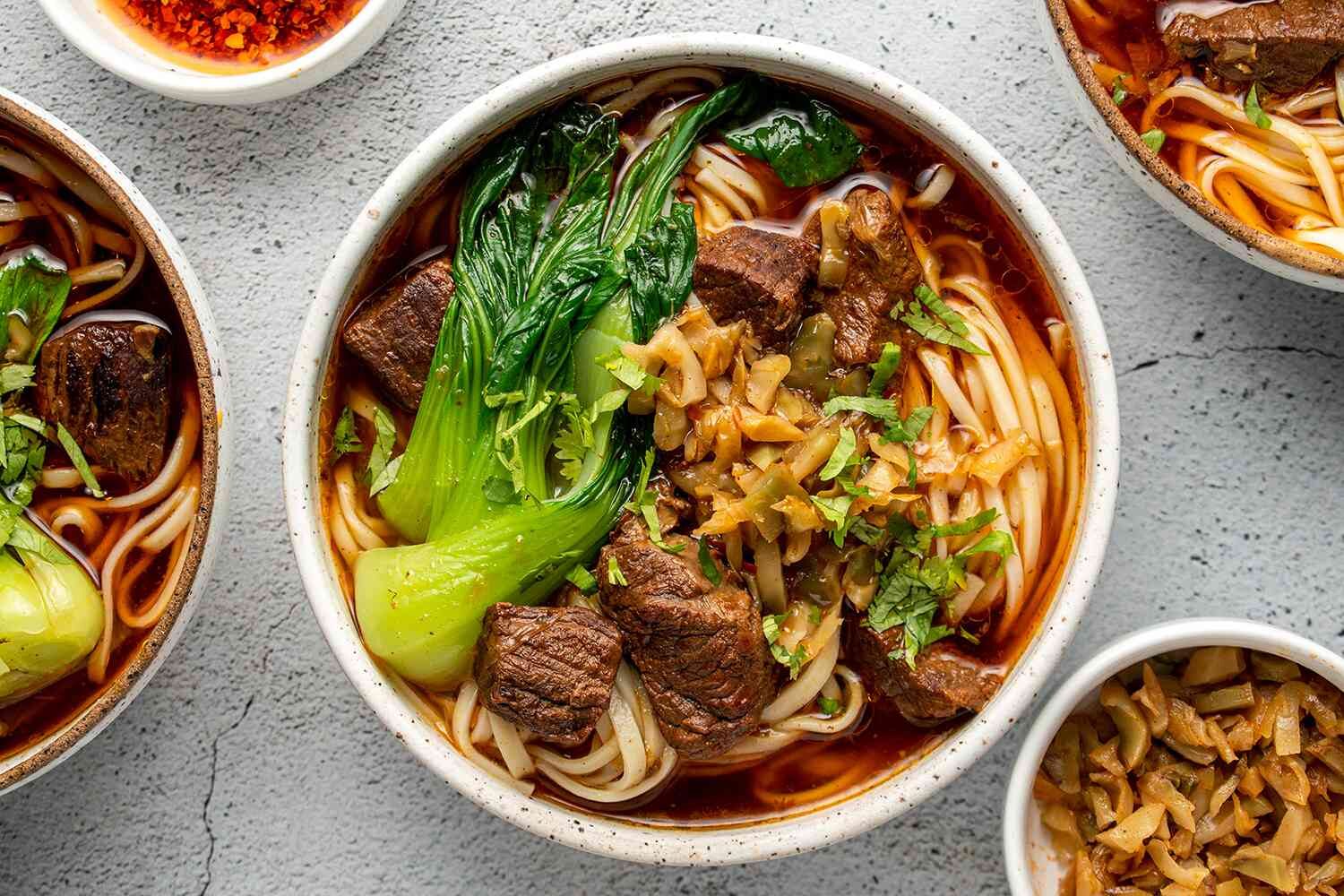
No distance between taste and tongue
In a soup bowl, boundaries soften.
The noodles leak into the broth.
The broth moves into the noodles.
Everything becomes one liquid body.
In a dry bowl, there is no distance.
Beef fat, oyster sauce, and fermented chili paste cling directly to each strand.
Nothing is diluted.
Nothing is carried away.
The impact is different from soup.
It is not only stronger.
It is closer.
The sauce touches the tongue without mediation.
That begins in the first bite and continues to the last.
The dark pool at the bottom looks small.
But it is usually enough.
If there is too little, the bowl will not bind.
If there is too much, it becomes heavy.
This is a dish where balance shows itself immediately.
A direct contest with the noodles
One advantage of this style is how long the noodles keep their Q—springy chew and resistance.
Because they are not soaking in hot broth, they lose that bite more slowly.
From the first mouthful to the last, the resistance stays.
The usual mid-bowl change does not arrive.
That is why thick noodles often make sense here.
Wide noodles, or knife-cut noodles, can hold their ground.
They push back as you chew.
The feeling of eating noodles remains intact.
On days when I want to chew for real, this bowl becomes rational.
Noodle thickness looks like preference.
In practice, it is tied to sauce density.
Thin noodles can lose the contest.
The sauce can dominate too quickly.
Thick noodles can carry it.
They give time.
They give friction.
This bowl is built for noodles that can endure.
The soup stands to the side
Some people feel they are paying for less.
A bowl without broth can look incomplete.
But many shops serve a separate clear soup alongside it.
Sometimes it is free, sometimes self-service.
This changes the rhythm.
You take noodles and accept the weight of the sauce.
Then you drink the clear soup and reset the tongue.
Then you return.
Instead of mixing everything into one flavor, the contrast is managed in two vessels.
The dish becomes a back-and-forth movement.
If soup noodles are one finished form,
this is a structure where elements are separated and eaten in turns.
It is not that soup disappeared.
It was moved sideways.
Taipei’s heavyweight: Yongkang Beef Noodle
In Taipei, dry beef noodles often lead to one name: Yongkang Beef Noodle.
The shop is famous, and the bowl is not delicate.
The sauce feels rough and forceful.
It is dark, thick, and heavy with garlic.
Fat and heat sit low in the bowl.
When you lift the noodles, the sauce stretches like threads.
It clings.
Regulars sometimes add another dish beside it, such as steamed pork intestines.
They eat the noodles, then the spicy offal, then clear soup.
Noodles, fat, offal, soup.
Heavy things remain heavy, and only the clear soup cuts through them.
Even the sound inside the shop changes.
It is not the sound of sipping broth.
It is the sound of pulling noodles upward.
This dish changes the noise of eating.
Kaohsiung’s old guard: Gang Yuan Beef Noodle
In the south, Kaohsiung has its own reference point: Gang Yuan Beef Noodle.
It also serves a dry bowl.
But the direction is different.
Here, the front note is not spice.
It is pork lard and sweet soy sauce.
Thick white noodles take on a brown sheen.
The bowl looks quiet.
The smell is not.
Sweet oil and scorched soy remain in the steam.
Garlic is added at the table, by the customer.
That last step matters.
It makes the bowl feel like a cafeteria habit.
The final adjustment belongs to the eater.
This version is less aggressive.
It feels closer to daily food.
Instead of hitting with chili, it wraps with oil and soy.
Even within the same category, the city changes the direction of density.
A primitive satisfaction
This bowl removes the comfort of soup and keeps only stimulus.
Sauce and noodles.
Meat as weight.
It resembles a more primitive kind of eating.
Flour and protein, taken directly.
On hot days when I do not want to sweat into broth,
or on days when I want the palate to be struck,
this becomes an option.
Writing ganban on an order slip is a small signal.
It opens another face of the same dish.
If beef noodle soup is a city’s simmering infrastructure,
then the dry bowl looks like its core extracted.
The sea of dark sauce is shallow.
But only density remains there.