One of the Most Basic Soups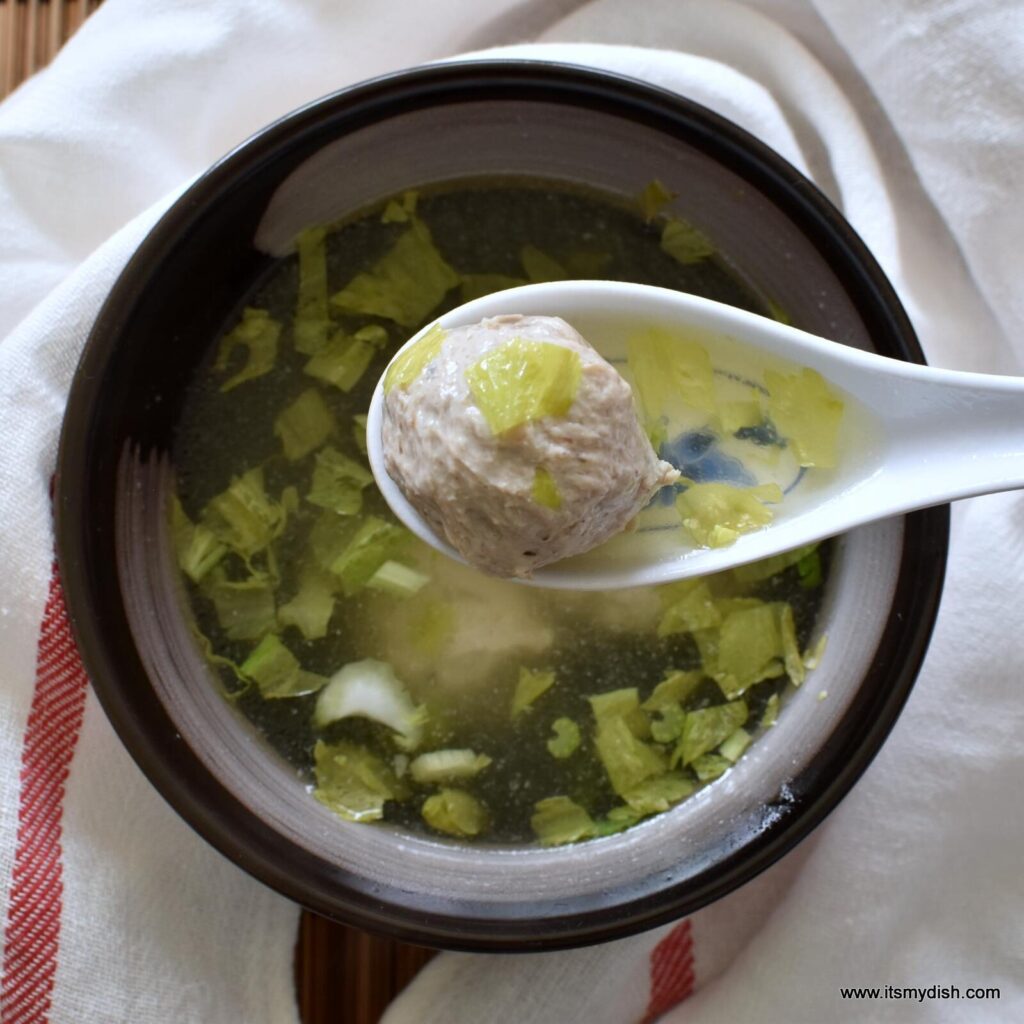
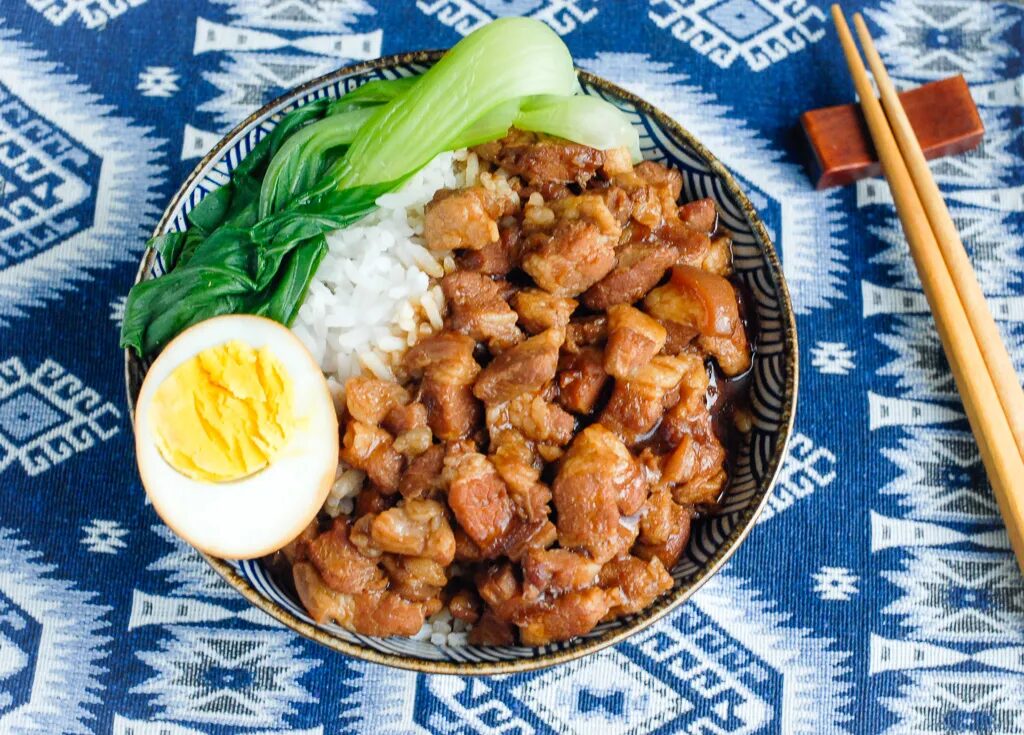
Pork ball soup is introduced first as Pork ball soup (gongwan tang), appearing in Taiwanese lunch shops where steam drifts low across the room. Metal pots touch lightly, water splashes as noodles are drained, and at the back tables people shovel in bowls of braised pork rice while sipping a clear broth. Inside the bowl, several gray round forms float without movement. There is nothing decorative about them. They are not presented as specialties. Yet they sit on almost every menu, as if they have always belonged there.
A Silent Broth and a Resisting Bite
This soup is one of the most basic in Taiwanese dining rooms. A transparent pork broth holds several gray meat balls, with only a little celery and white pepper resting at the bottom. The color is muted. The structure is simple. At first glance it suggests something soft that will fall apart when bitten.
The moment teeth sink in, that expectation collapses. The ball does not crumble. It pushes back. After a brief resistance like a rubber sphere, it breaks open with a sharp snap, releasing juice and broth into the mouth at once. The movement is nothing like ordinary meatballs. The texture and internal structure belong to something entirely different.
The Coexistence of Bounce and Break
When Taiwanese food is discussed, one word appears repeatedly: Q. It describes elasticity, spring, and the way food pushes back when chewed. It is used for tapioca pearls, noodles, and dumplings, and it applies here as well.
But this dish goes beyond bounce. After reaching its limit of resistance, it splits cleanly. This crisp break is called cui. It is neither simply soft nor merely firm. Rebound and rupture occur together. When the cross section is visible, countless small air pockets appear evenly inside, like a sponge. These spaces absorb broth and fat, producing both juiciness and elasticity at the same time. Beneath the quiet surface, a complex physical structure is already complete.

Violence Instead of Cutting
The origin of this texture lies in the name itself. The character gong is said to come from a Taiwanese word meaning to pound. The meat is not chopped with knives. It is struck repeatedly with heavy wooden or metal rods until the fibers are crushed completely and the mass becomes a paste. This is not slicing but physical destruction.
Through this process, muscle fibers break apart, proteins recombine, and a dense network forms. The resistance and clean snap are created not by seasoning but by accumulated impact. It is a technique that transforms structure itself rather than softening meat.
Memories from the Fujian Coast
This dish does not belong to imperial banquets or the fiery traditions of Sichuan cooking. Its roots lie along the southern coast of China, in the Minnan region of Fujian. It developed in humid seaside climates where meat spoiled quickly, and pounding served as both preservation and texture enhancement.
The method traveled with migrants across the sea. Similar preparations remain among Chinese communities in Malaysia and Singapore, known there as bakwan. Shapes and flavors shift by region, but the core idea of pounding meat into elasticity stays the same. What appears here is not an invention but an extension of survival knowledge shaped by coastal life. Inside each gray sphere remain traces of migration and adaptation to heat and moisture.

Wind as a Finishing Tool in Hsinchu
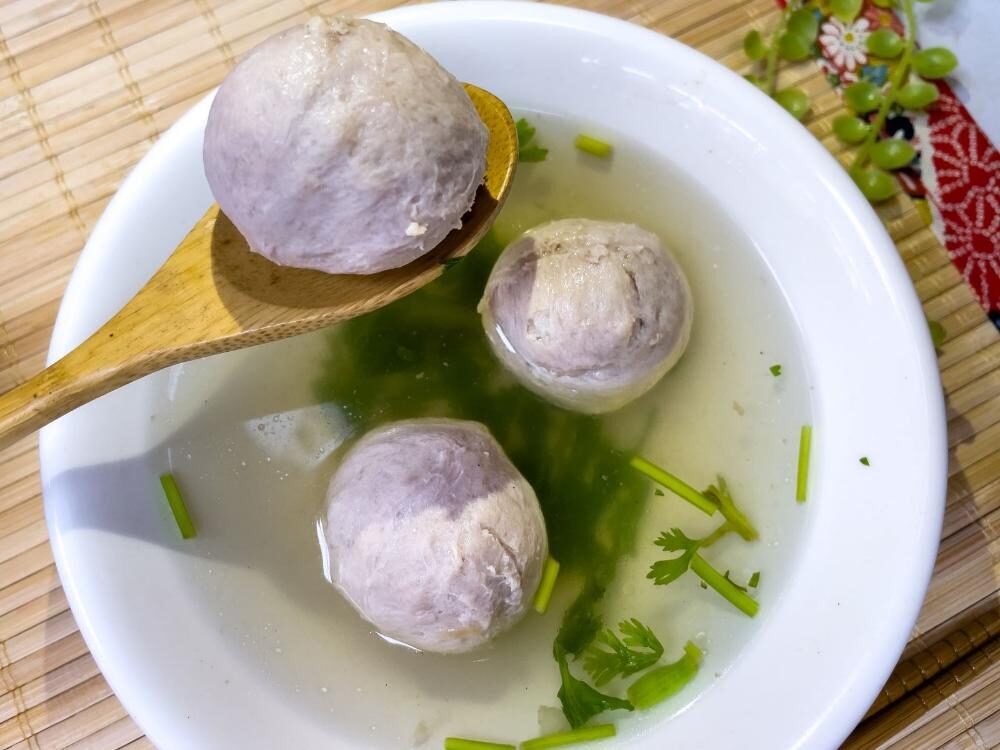
When the technique reached Taiwan, a decisive change occurred in the northwestern city of Hsinchu. The city is known as Wind City, swept by strong seasonal gusts that dry the air unusually for Taiwan. When pounded pork paste is shaped and exposed to this wind, the surface tightens quickly while moisture stays inside, increasing elasticity.
Hsinchu also sat near active pig farming areas, making freshly slaughtered warm pork readily available. Protein bonds formed most effectively in this state. Climate, raw material, and technique happened to converge here. The dish shifted from migrant food to local specialty.
A story remains about a devoted son who pounded pork for his toothless mother so she could eat more easily. Whether true or not, the tale marks the moment the food became rooted in place. Wind and pork together pushed it toward its final form.
Factories and Perfect Uniformity
Today, the experience hardly varies from shop to shop. Whether in Taipei alleys or southern markets, the resistance and snap remain almost identical. The individuality common in handmade foods has nearly disappeared.
Most restaurants no longer pound meat themselves. Instead, specialized manufacturers in Hsinchu supply frozen finished products. Large factories such as Hai Rui and Jin Yi mass-produce them. Shops simply thaw and drop them into broth. This is not laziness but a system built to deliver consistent elasticity and crispness cheaply and everywhere. Industrial production standardized what human hands could not. The gray spheres now function as part of Taiwan’s food infrastructure.
Two Small Tools that Control Fat
The pork fat released into the broth is strong and heavy. Without balance, it would quickly overwhelm. That is why celery and white pepper always appear, even in tiny amounts.
The green sharpness of celery slices through clinging fat instantly. The heat of white pepper tightens the blurred outline of the broth and wakes the tongue. These are not decorations but control mechanisms, designed to make the richness drinkable to the last sip. The soup is not complete without them.
A Finished Form That Sank into Everyday Life
This soup is never the star. It waits quietly beside braised pork rice and fried rice. It carries no dramatic aroma and rarely appears in photographs. Yet it exists almost everywhere.
Within it sit migrant techniques, wind-shaped texture, and modern industrial rationalization, all disguised as a gray floating sphere. The bowl is drained. The final piece is bitten. A small snap sounds in the mouth.
For a brief moment, the outlines of Taiwanese daily life become clearer.