The source of a scent that feels medicinal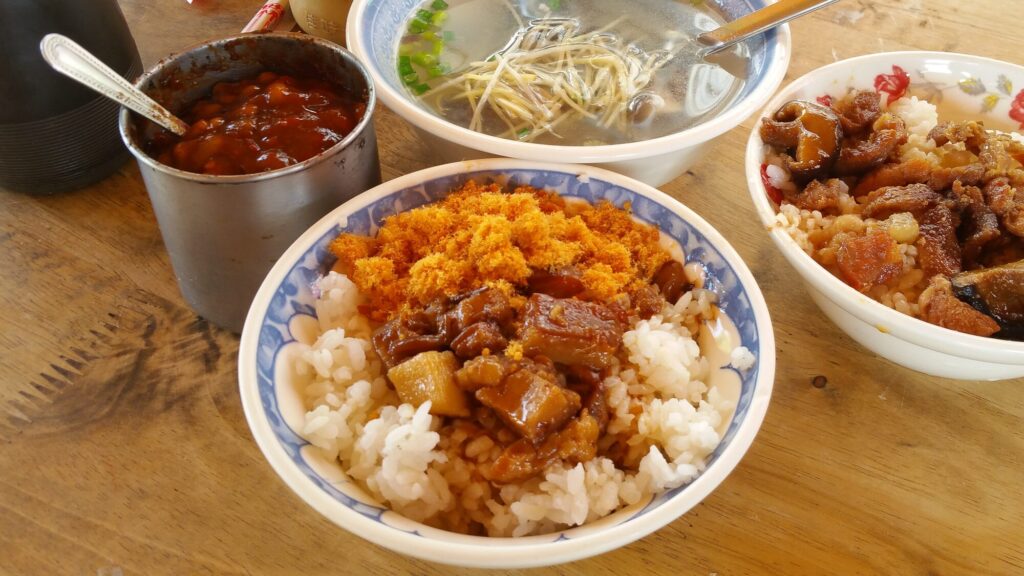
Walking through the streets of Taiwan,
a sweet, slightly herbal smell drifts in from nowhere in particular.
You do not need to stand in front of a specific shop.
It does not require a night market or a food stall.
A convenience store entrance.
A corner of a narrow lane.
A residential street in the early evening.
The scent exists not as a point,
but as a surface.
Its source is star anise.
A star-shaped spice.
Dry and unassuming in appearance,
yet capable of influencing the air of an entire city.
In Taiwan, it does not belong to a single dish.
It changes form, dissolves, hides, becomes powder,
and secures a place everywhere.

Where this spice resides
Star anise does not appear in a fixed form in Taiwanese cooking.
Sometimes it is visible.
Sometimes it exists only as a smell.
It slips beneath an eggshell,
melts into fat,
hides behind spicy soup,
locks itself inside meat,
or bursts as powder on hot oil.
Few spices are used with such range.
Simmered: tea eggs (chaye dan)
Entering a Taiwanese convenience store,
what unsettles first-time visitors may not be the products,
but the smell.
An electric pot sits near the register.
Inside a brown liquid,
eggs with fine cracks in their shells
rock gently.
This is the familiar tea egg.
The cracks are said to be intentional.
The shell is lightly tapped with a spoon,
creating a web of fractures.
Through these gaps,
tea leaves, soy sauce, and star anise
seep into the white.
The yolk can be slightly dry,
but the sweet herbal scent
covers that weakness.
In Taiwan, this is neither snack nor dish.
It is something that is simply always there.
As a result,
this single egg quietly influences
the air of the city itself.
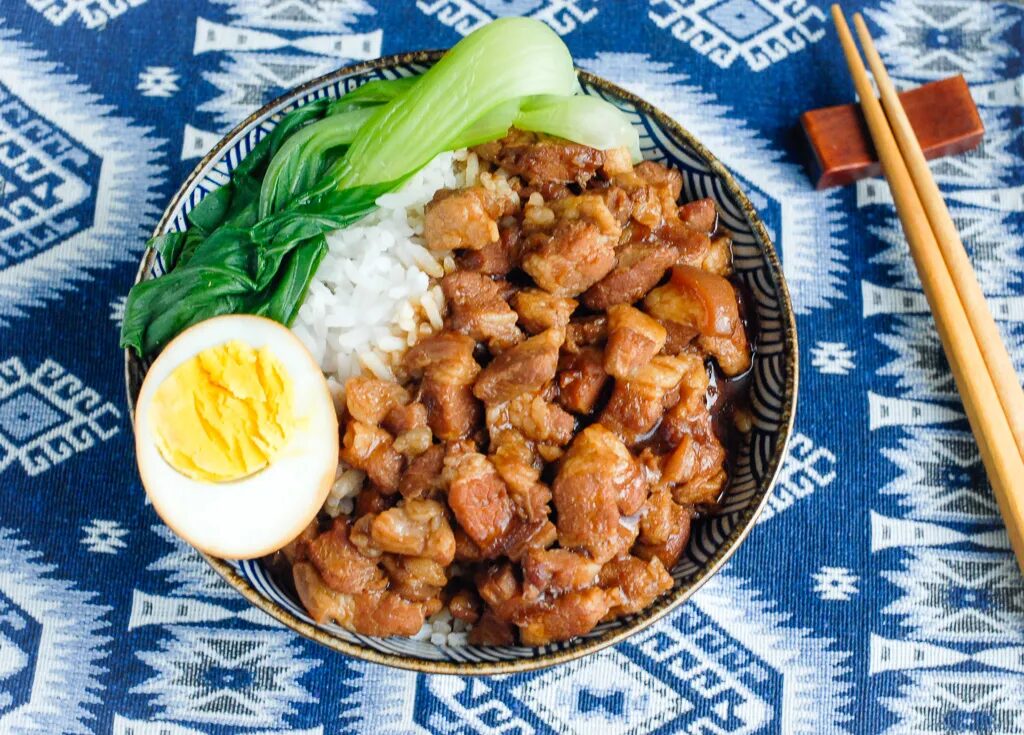
Dissolved: braised pork rice (lu rou fan)
On white rice,
finely chopped pork belly is placed.
It looks heavy with fat.
Yet when eaten,
it does not feel as rich as expected.
Many people notice this contradiction
the first time they try it.
Here, the spice is not visible.
It has fully dissolved into the sauce.
When pork fat meets the aroma of anethole,
the main component of star anise,
fat is perceived not as heaviness,
but as depth.
Nothing is reduced.
The character of the fat is simply adjusted.
This may be one reason
fatty cuts are less avoided in Taiwan.
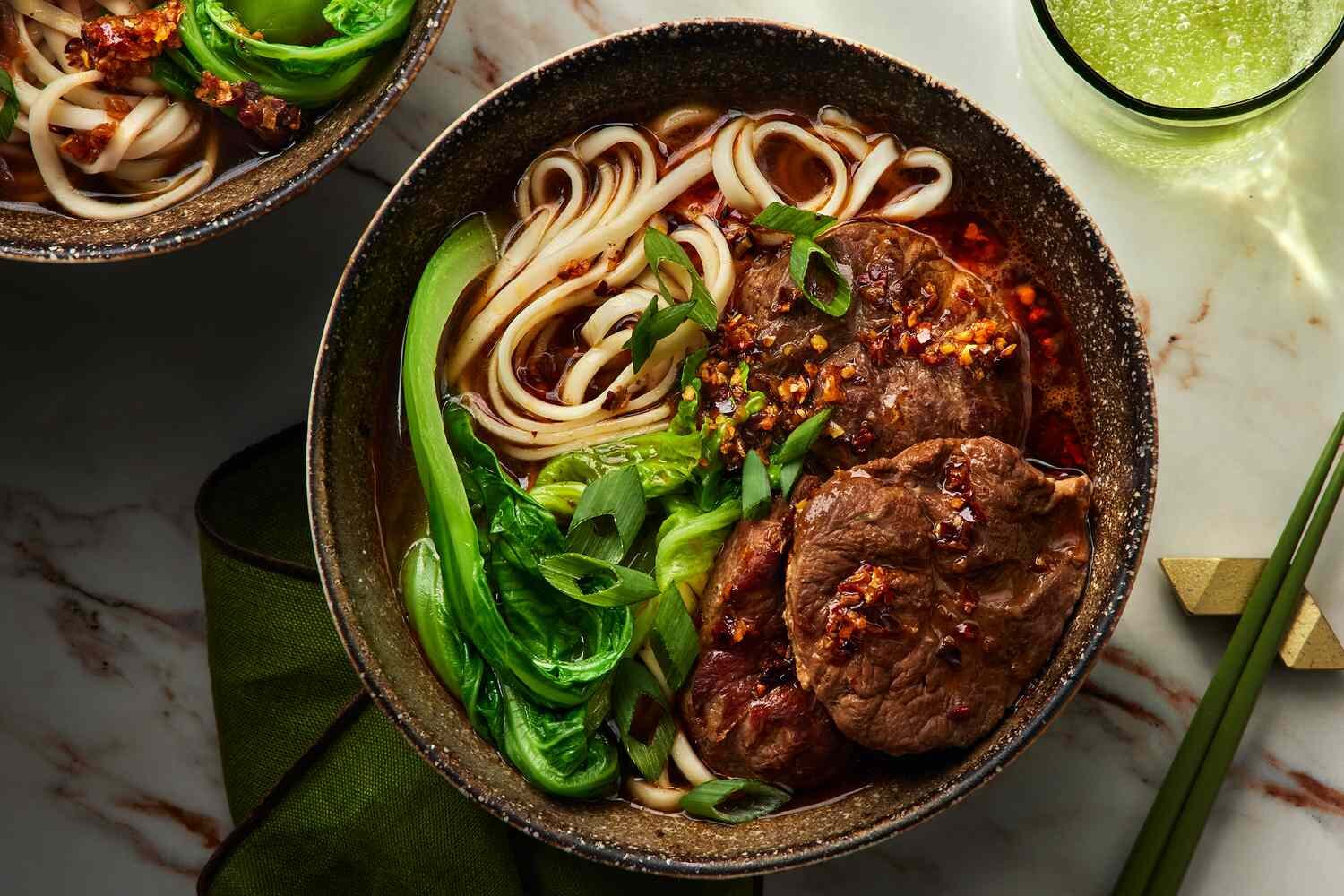
Hidden: red-braised beef noodle soup (hongshao niurou mian)
A dark broth.
Chili bean paste.
Beef, both lean and fatty.
The bowl is crowded with strong elements.
The first sip feels
spicy, heavy, and dense with information.
As the soup continues,
a balance becomes apparent.
From deep within the broth,
a faint sweetness passes through the nose.
That is the spice at work.
It softens the edges of chili paste,
suppresses the smell of beef,
and aligns everything in one direction.
It does not step forward.
But without it, the dish does not hold.
Here, it clearly functions as a regulator.
Stuffed: Taiwanese sausage (xiangchang)
At night markets,
rows of glossy red sausages line the stalls.
Biting into one with Japanese expectations,
many people pause.
It is sweet.
Sugar, star anise, and cinnamon
are mixed into the pork.
To receive this sweetness,
raw garlic is always served alongside.
The contrast between
the spice’s sweetness
and the sharpness of garlic
turns it into something beyond a simple sausage.
Here, the spice is fully sealed inside the meat.
There is no escape.
Sprinkled: fried chicken cutlet (jipai)
A fried chicken cutlet
as large as a human face.
The coating is crisp.
A complex sweetness rises,
distinct from pepper.
Here, the spice appears as powder.
As part of five-spice blend,
it mixes into the batter and finishing seasoning.
Unlike simmered dishes,
it does not emerge slowly.
High heat causes it to burst at once.
The same spice,
in water and in oil,
reveals completely different expressions.
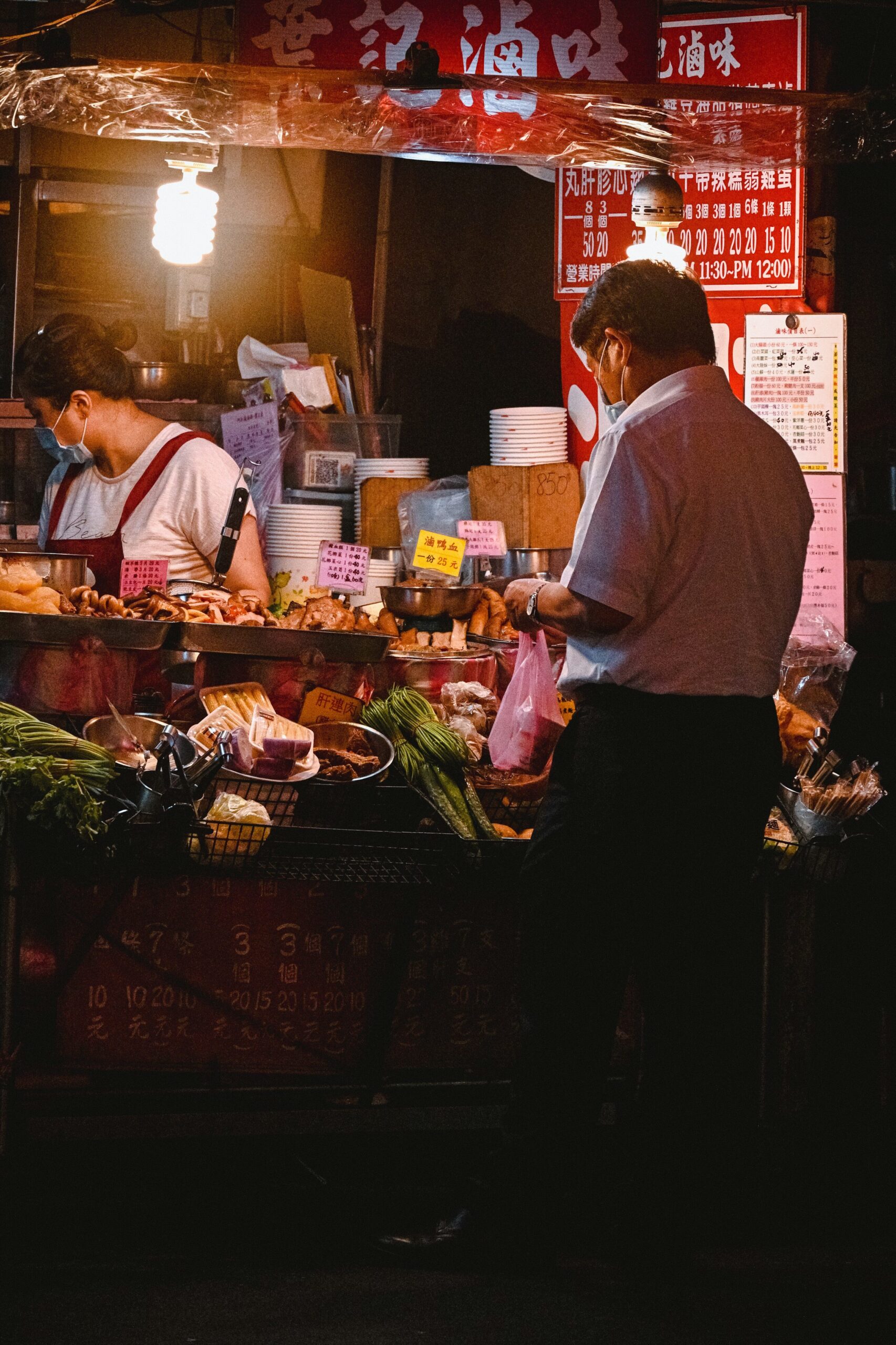
And then, braised assortment (luwei)
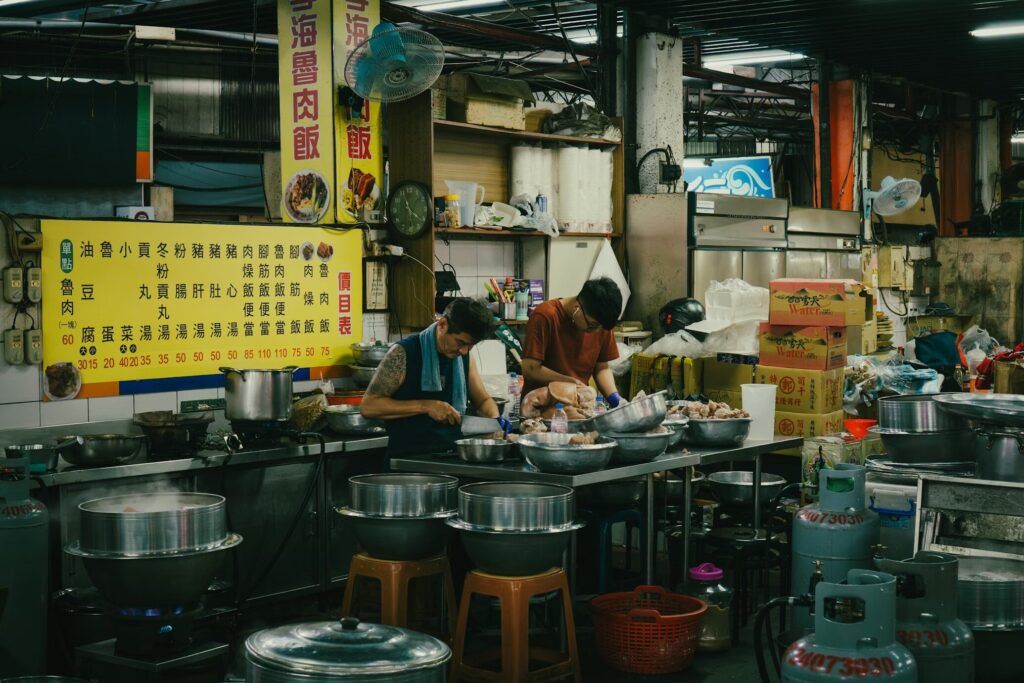
The brown mountain of the night market
Walking through a night market,
there is often a corner
where the density of air is unmistakably different.
Brown.
More precisely,
objects stained brown by braising
are piled high on metal trays.
Tofu, seaweed, pig ears, intestines, wings, eggs, vegetables.
Different shapes, textures, and origins,
unified by color.
This is the braised assortment.
Customers receive a basket
and choose freely from the pile.
The vendor returns the items
to a large pot of sauce,
reheats them, chops them, and plates them.
It resembles reheating more than cooking.
At the center is not the ingredients,
but the braising liquid.
Dark soy sauce.
Sugar.
Herbal spices.
And star anise.
Many items are offal.
Ears, intestines, tendons.
Without careful handling,
their smell would be obvious.
What converts them into
a single “night market scent”
is the heavy use of this spice.
When one area of a market smells strongly of it,
a braising stall is usually nearby.
Here, it makes no effort to hide.
It dominates not delicately,
but spatially.
Among Taiwanese dishes,
this one stands closest to it.
Whether one can endure this smell,
or even find it appetizing,
becomes a quiet threshold.
A quiet test of affection for Taiwan
Many people say,
“It’s good, but something catches.”
That something is often star anise.
It functions as a kind of touchstone.
Reject it,
or accept it.
At that point,
one’s distance from Taiwan is decided.
The wish to say
“without it, please”
is understandable.
But it is not a simple request.
This spice is not a topping.
It is a layer formed by climate, preservation methods,
medical thinking, and adaptation to meat consumption.
Just as removing stock from Japanese cooking
erases its outline,
removing this spice does something similar here.
When noise becomes appetite
At first, the scent feels medicinal.
Then one day,
it becomes a signal that stirs hunger.
There is no clear moment of change.
You simply notice,
upon opening a convenience store door,
that the smell feels reassuring.
That is all.
To understand Taiwan
may be to quietly reconcile with this scent.
Somewhere in the city,
star anise is simmering again.
Its aroma, unchanged,
continues to dissolve into the air.