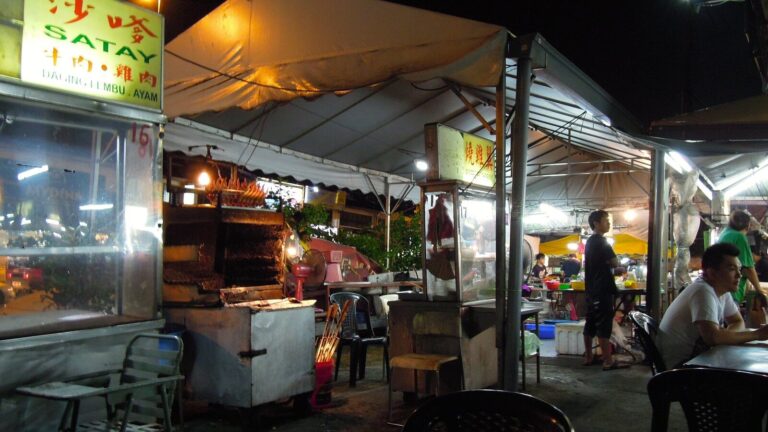
At a Taiwanese convenience-store counter, tea eggs simmer in dark liquid while a sweet, faintly medicinal aroma fills the shop. The same note rises from braised pork, night-market stalls, and train-station kiosks, turning up often enough to feel less like a spice than part of the air.
Taiwan has a smell.
Step out of the airport.
Duck into a convenience store.
Wander a night market.
Something sweet and faintly medicinal drifts up from somewhere. Anyone who’s been to Taiwan more than once probably knows it.
It’s star anise.
Not always star anise alone, to be precise. Japanese visitors just seem to pick up this whole family of aromas and label it “star anise” almost on instinct.
What star anise actually is. Why it keeps turning up in Taiwan. And why it sticks in Japanese memory as the smell of the place, even though it isn’t unique to Taiwan.
Three threads, taken in order.
What Star Anise Is
Star anise comes from the fruit of Illicium verum, a tree native to southeastern China through Vietnam. Dried, the pods form an eight-pointed star — hence the name in Chinese, ba jiao (八角), literally “eight horns.” In English, star anise. It isn’t native to Taiwan.
The aroma is the whole story. Sweet, faintly herbal — closer to anise or licorice than to anything sugary. Less woody than cinnamon, less sharp than cloves. Sweet, a little cool, with a herbal edge that lingers.
At the center of it is anethole, which makes up 80 to 90 percent of the essential oil. The smell of star anise isn’t just anethole, though — a handful of minor compounds round out the effect.
When a Japanese visitor says the “star anise smell” in Taiwanese food bothers them, they may not be smelling star anise alone. Taiwanese cooking tends to use it inside wu xiang (五香, five-spice) or a lu bao (滷包, braising spice bag), a mix that also includes cinnamon bark, cloves, fennel seed, Sichuan pepper, and licorice root. What comes off a pot of braising meat or eggs is all of that at once.
Much of what gets described as a “star anise smell” in Taiwanese food comes from lu (滷), a Chinese-style braising tradition in which star anise often appears alongside other spices.
Star anise is also one of the easiest notes to pick out. Even mixed with everything else, it announces itself. That may be why the whole blend gets filed under one name.
There’s a practical side to it too. Star anise has documented antibacterial and antioxidant properties, and food-science research has found it can slow oxidation and off-smells in preserved meat. Adding it to a pot of meat or offal isn’t only about flavor.
That’s not enough to say Taiwan’s braising culture developed for preservation because of the heat and humidity, though. Both the spice and the lu method predate Taiwan — they came from mainland China. Its preservative properties may have made it useful in these cooking traditions, but the historical reason for its adoption is not clear.
Running Into Star Anise Again and Again in Taiwan
Star anise isn’t in everything. It’s not in xiaolongbao (小籠包). It’s usually not in ji rou fan (雞肉飯), chicken rice. Plenty of seafood dishes and stir-fried greens skip it entirely.
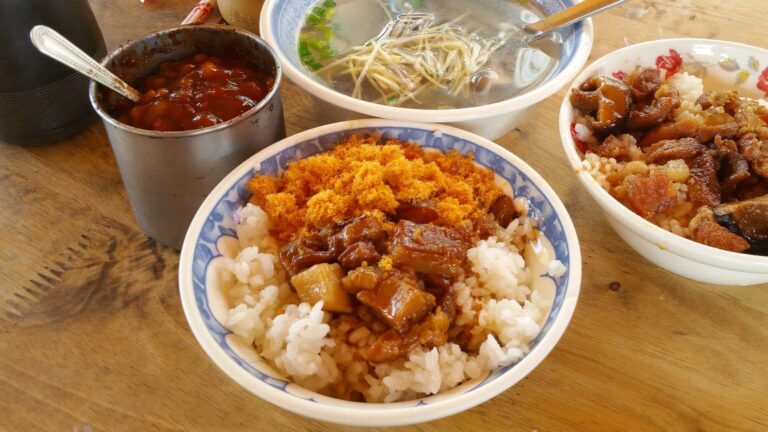
Still, travel around Taiwan and the smell turns up again and again. One reason: the lu style that carries star anise spans a whole range of everyday dishes — tea eggs (cha ye dan, 茶葉蛋), lu wei (滷味), pork trotter (zhu jiao, 豬腳).
Different dishes, same family of smell, over and over. Eat a tea egg. Spot lu wei at the night market. Order pork trotter another day, and a bowl of niu rou mian (牛肉麵), beef noodle soup, sends up the same note in its steam. That repetition is what turns a dish’s smell into a place’s smell.
Taiwan’s convenience stores are a good example. Tea eggs are simmered in a broth of tea and star anise, shells cracked to let the liquid in, and kept warm on the counter — so the aroma drifts through the whole store. Plenty of Japanese visitors specifically name tea eggs and star anise as the smell of a Taiwanese convenience store.
Convenience stores didn’t create Taiwan’s star anise culture. An everyday food simply ended up on the counter of a modern convenience store. That shows how deeply lu is embedded in everyday Taiwanese food.

Except It’s Not Only Taiwan’s Smell
Here’s the complication.
Star anise isn’t exclusive to Taiwan. Its home range runs from southern China through Vietnam. Chinese cooking uses it widely, including Hokkien five-spice dishes. Vietnamese pho uses it too.
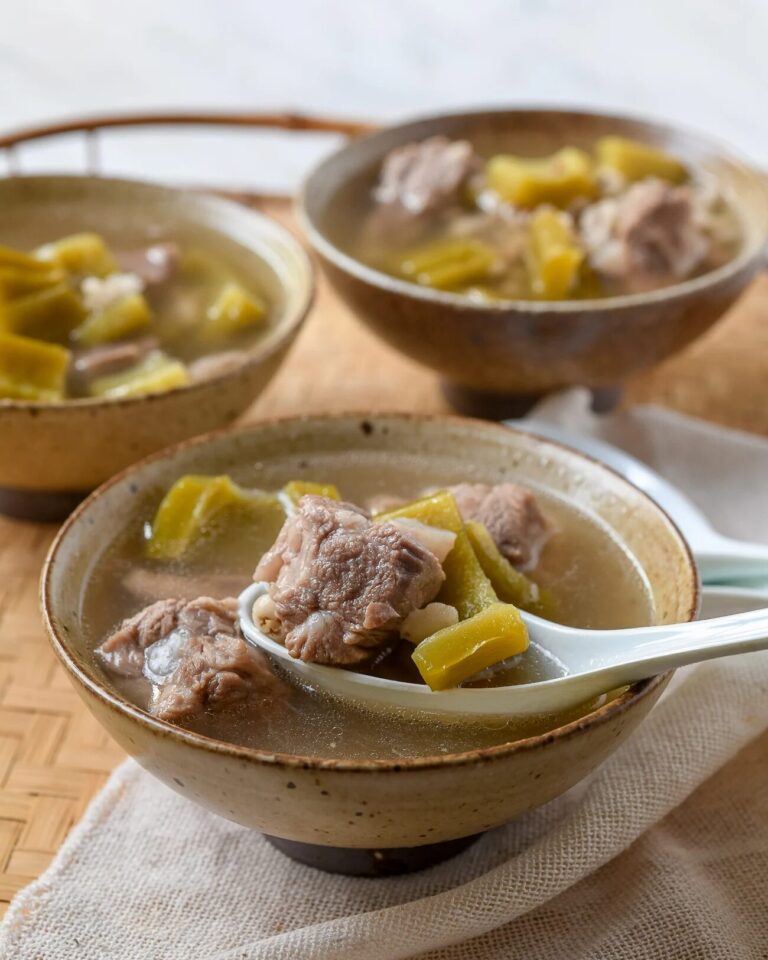
Hokkien communities in Malaysia also brought related five-spice and braising traditions, including dishes like bak kut teh (肉骨茶) that use star anise, cinnamon, and cloves. Taiwan’s food culture owes a lot to Hokkien migration from Fujian — but that alone can’t explain “Taiwan equals star anise.” Malaysia got much the same migration.
No study compares star anise consumption across Taiwan, China, Vietnam, and Malaysia. It isn’t accurate to say
Taiwanese people eat dramatically more star anise than anyone else.
Still, search for Taiwanese food in Japanese and star anise turns up again and again. Complaints about the smell aren’t rare among Japanese travelers to Taiwan either.
Which means the question isn’t only how much star anise Taiwan uses. It’s also about the people smelling it — the Japanese side of the equation.
Star Anise as the Difference from Japan
Line Taiwanese food up against Japanese food.
The two are obviously different.
There’s white rice next to soy-braised pork. That much is easy for a Japanese eater to recognize. Ginger and scallion show up too. So do braising, steaming, frying — nothing unfamiliar there.
Then it hits the tongue: star anise. Suddenly that one note is foreign.
It may not be that star anise is unusually common in Taiwanese food overall. It may be that once you subtract everything Taiwanese and Japanese cooking share, star anise is what’s left standing.
That gap is a clue to why the smell registers so strongly. Malaysia has Hokkien food with star anise too — but right next to it sits coconut and lemongrass. The distance from Japanese food shows up everywhere, not in one note.
Thailand works the same way. Fish sauce and lemongrass — no single ingredient reads as the smell of Thailand.
Taiwan is different. There’s already a lot that’s familiar to a Japanese palate, and inside that familiarity, the five-spice blend built around star anise sits at a genuine distance.
That alone makes it stand out.
It isn’t that Taiwanese food is far from Japanese food that makes star anise stand out.
It’s that Taiwanese food is close to Japanese food that makes star anise stand out.
That’s a hypothesis. No one has measured the “aromatic distance” between Taiwanese and Japanese cooking, and this isn’t backed by any quantitative comparison of food chemistry. It stays a hypothesis.
But it does explain something: why Taiwan registers more strongly than Malaysia or Vietnam, even though both use plenty of star anise too.
Star Anise Keeps Showing Up in Japanese Accounts of Taiwan
At minimum, this much is observable, not just a personal impression: Japanese diners really do pay close attention to star anise in Taiwanese food.
Taiwan’s Central News Agency (中央社) ran a piece surveying how Taiwanese food shows up in Japanese food manga. In Ramen Hakkenden, a character eating beef noodle soup mentions the star anise. In Kuishinbo!, the star anise in a braised pork chop bento — lu pai biandang (滷排便當) — gets the better of a character. In the Taiwan volume of Ekiben Hitori Tabi, star anise keeps turning up as the story circles the island. The article’s own writer argues that Japanese diners are unusually preoccupied with the spice — that star anise has become something like the key flavor Japanese people use to recognize Taiwanese food.
Star anise isn’t native to Taiwan. It isn’t in every Taiwanese dish either.
Even so, Japanese diners keep picking it out.
That “Taiwan smells like star anise” feeling doesn’t reduce to how much star anise is actually used. What you’re eating in Taiwan matters — but so does what you normally eat back home.
Go to Taiwan and the smell keeps coming back. It’s in the tea eggs. It’s in the lu wei. It’s in the pork trotter.
And it’s almost absent from daily life in Japan.
It’s the one smell that stays with you.
Taiwanese food isn’t unique in using star anise. What may be unusual is how sharply that difference registers for Japanese diners.
Taiwan isn’t the smell of star anise.
The space between Japan and Taiwan is.

— Detour —
a little further to walk
- Notes on Star Anise as a Central Actor in Taiwanese Cooking
- Notes on Lu in Taiwan
- Notes on Four Invisible Pillars of Taiwanese Flavor