1997, When the Tower Still Meant Hope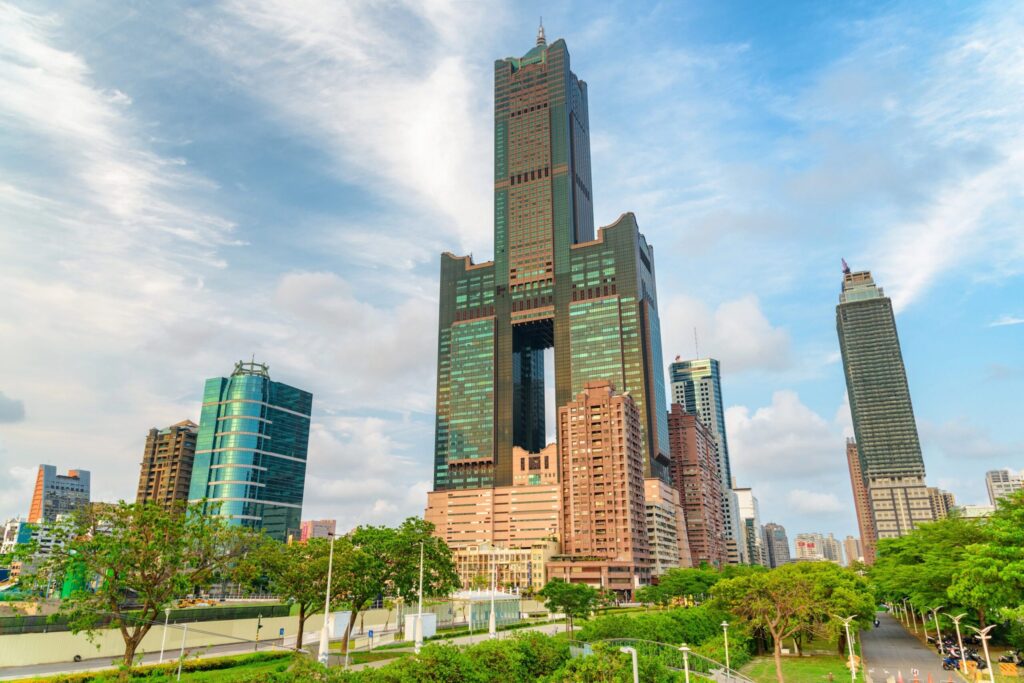
In the mid-1990s, Kaohsiung felt heavier than it does now.
The air was dense. The heat stayed.
The port ranked third in the world for container throughput.
Ships lined up offshore.
Smoke rose day and night from the chimneys of the export processing zones.
The city moved like a large engine.
Most people believed tomorrow would be richer than today.
It was the closing chapter of what later came to be called the Taiwan Miracle.
If Taipei was the city of politics,
Kaohsiung was the city that earned money.
That confidence began to take architectural form.
The idea was simple.
To surpass Taipei.
And to prove it through physical height.
The Figure Known as the Southern Emperor
At the center of this ambition stood Chen You-hao, head of the Tungkai Group.
At the time, he was called the Southern Emperor.
Real estate, petrochemicals, textiles.
His interests crossed industries.
His influence reached deep into politics.
Banks lent when he raised his hand.
His vision was straightforward, and excessive.
To build a structure that would look down on Taipei’s Shin Kong Tower, then 244 meters tall.
Being slightly taller was not enough.
It had to be overwhelming.
The planned height was 347 meters.
With antennae, 378.
It would be Taiwan’s first of its kind.
Once completed, it would rank among Asia’s tallest.
Raising the Character for “High”
The architect chosen was C.Y. Lee, later known for Taipei 101.
His answer was direct.
To build the Chinese character for “high.”
Literally.
The base spread outward in three directions.
A large void opened at the center.
The upper sections converged again into a single form.
It could be called postmodern.
But it was closer to a declaration.
This is Kaohsiung.
In feng shui terms, it was a gate to gather wealth.
Structurally, a monumental arch.
No one laughed.
At the time, the city had enough momentum,
and enough surplus capital,
to believe in it.
A Tower Rising, Other Sounds Below
Construction continued without pause.
Steel frames climbed upward.
The skyline was rewritten.
People looked up.
Through the smog, the rising tower seemed to signal a future.
A shift from heavy industry to an international city.
Plans were shared as certainties.
A department store.
A world-class hotel.
Even an indoor amusement park.
They were spoken of not as proposals,
but as promised outcomes.
Yet as the tower drew closer to the clouds,
different sounds began to emerge at ground level.
The Asian financial crisis.
What began in Thailand spread quickly across East Asia.
Completion Without a Toast
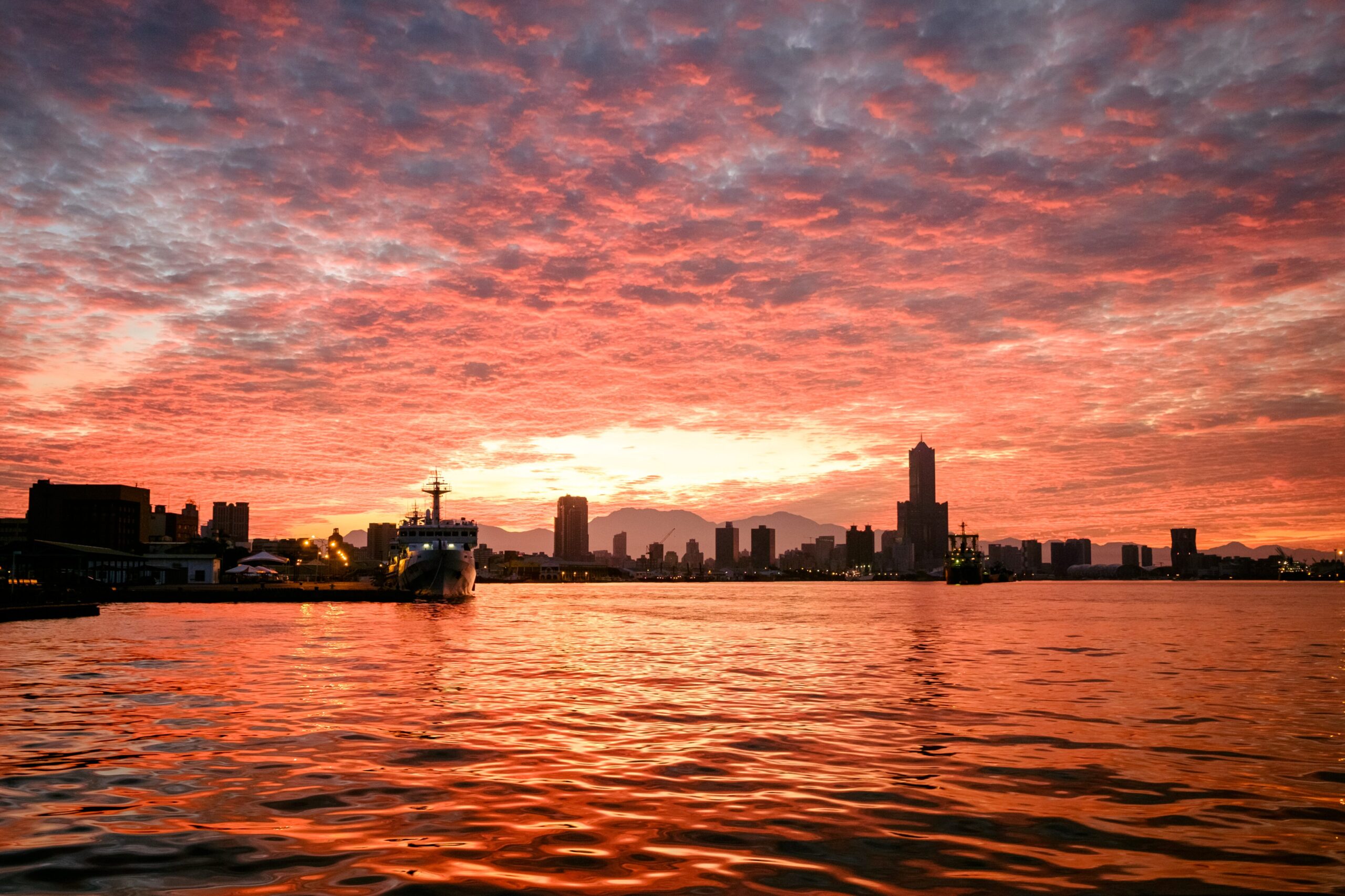
The tower was completed in 1997.
It surpassed the Shin Kong Tower.
In name and fact, it became Taiwan’s tallest building.
There was no celebratory mood.
The finances of the Tungkai Group deteriorated rapidly.
Banks changed their posture.
The swollen construction costs hardened into debt.
At the moment of completion,
the structure became two things at once.
Taiwan’s tallest building.
And its largest non-performing asset.
To recover funds, floors were divided and sold.
Then subdivided further.
A skyscraper designed for unified management
began its life as a structure owned by thousands.
A Monument That Arrived Too Early
In photographs from that time,
there is little around the tower.
The Asia New Bay Area does not yet exist.
No promenades. No light rail.
A single massive structure stands
in a bare industrial zone.
It looks like a film set.
Waiting for a future that does not arrive.
At that moment, Kaohsiung was dreaming.
The dream exceeded the real economy.
It was fixed into concrete and steel.
The tower was not built to become a ruin.
Urban desire,
one man’s ambition,
and the madness of the era
aligned with rare precision.
The structure was born
as a monument marking the end
of a period of collective intoxication.