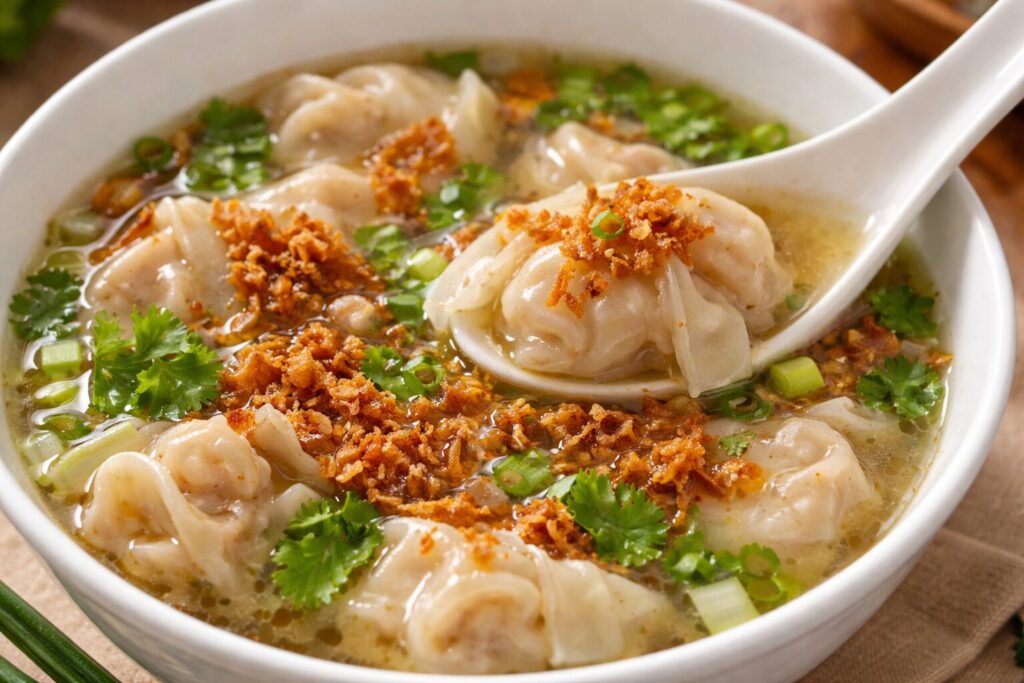
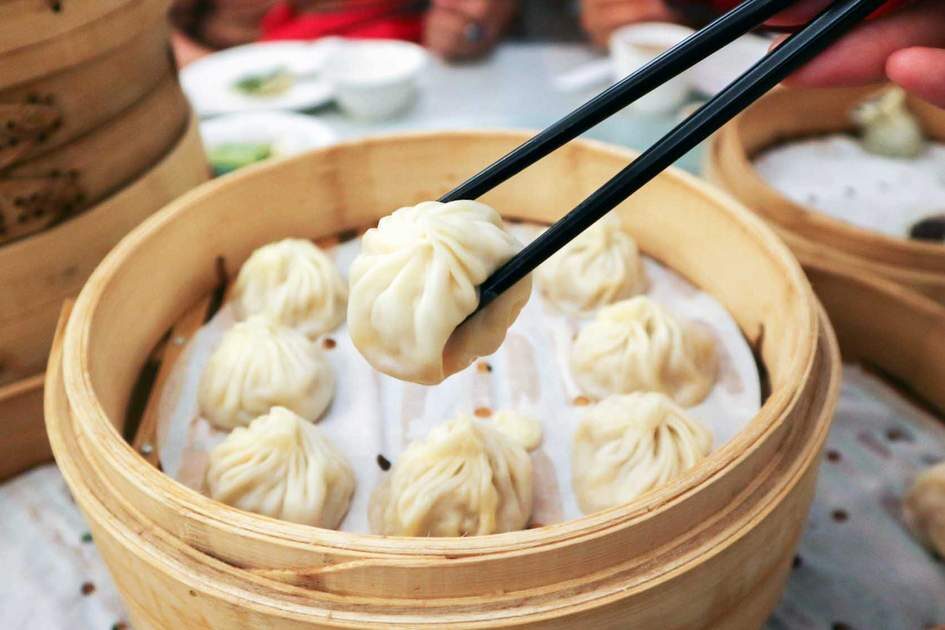
The 18 Pleats as a Shared Language
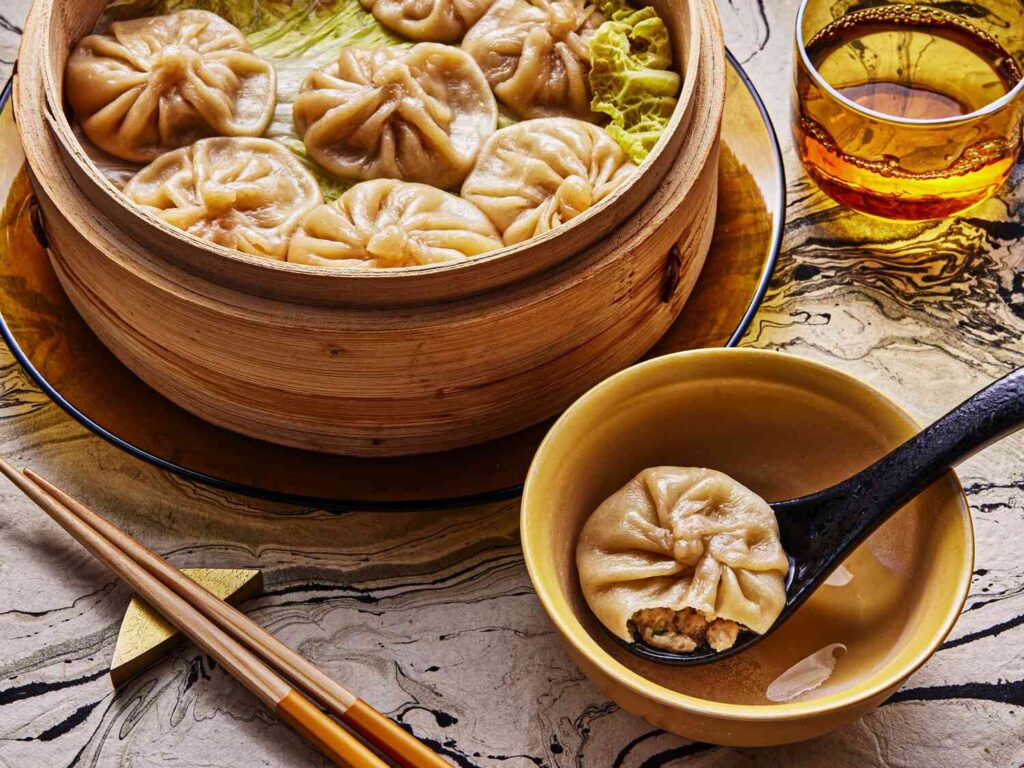
Xiaolongbao, the soup dumpling , was once a kind of dim sum rooted in Taiwan’s street corners.
It was small.
It ended inside a bamboo steamer.
Then it crossed the sea.
Not only the taste, but the entire format moved with it, and settled inside different cultures.
The globalization of this dish seems to have a clear starting point.
On January 17, 1993, The New York Times ran an article titled “Top-Notch Tables; Teapots and Dip.”
In it, Din Tai Fung was introduced as one of the world’s ten great restaurants.
At the time, Din Tai Fung was still a single shop in Taipei.
To be placed beside high-end restaurants in Paris or Tokyo was an unlikely alignment.
The first moment the world “found” Taiwan’s soup dumplings may have begun with this small misunderstanding.

1996: Japan as a filter
The first major milestone abroad came in 1996.
Din Tai Fung entered Japan, at Takashimaya in Shinjuku.
Not the United States.
Not Europe.
Japan came first.
At the time, Chinese food—especially dishes with street-stall roots—often carried a vague impression: good, but not clean.
A department store does not sell food alone.
It sells cleanliness, safety, uniform quality, and the status of the place itself.
Japanese department stores are known for strict standards.
To open there and draw a line of customers mattered.
That fact traveled back to Taiwan, and forward to the next country.
“A place Japanese people line up for” worked like a certificate.
Japan became a device that converted soup dumplings from “ethnic” to “luxury.”
It was not that Taiwan’s flavor crossed unchanged.
It passed through Japan and was shaped once.
That shaped outline became the standard form for global expansion.
Turning craft into numbers
The biggest barrier to going global was the human hand.
If the product depends on a craftsman’s intuition, it cannot scale.
The taste drifts.
People run short.
Consistency breaks.
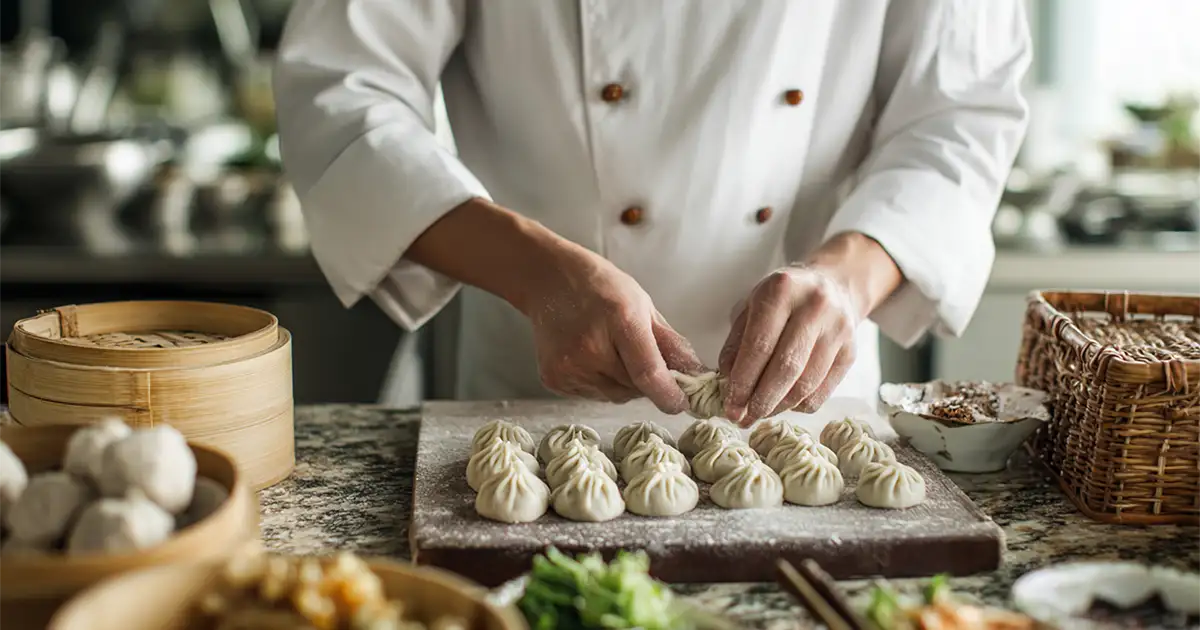
What happened here was the conversion of craft into numbers.
Wrapper: 5 grams.
Filling: 16 grams.
Pleats: 18 or more.
These figures are often described as aesthetics, but they are also a blueprint.
They are a specification designed to produce the same result in any country, in any branch.
Taste is difficult to share in language.
Numbers can be shared.
At this point, the dumpling shifts from “food” toward “system.”
Instead of raising artisans, the model raises operators who assemble to spec.
Training moves away from personal apprenticeship and toward process.
Calling it industrialization may sound harsh, but the direction is close.
The dish chose reproducibility in order to cross borders.
The glass-walled kitchen as a stage
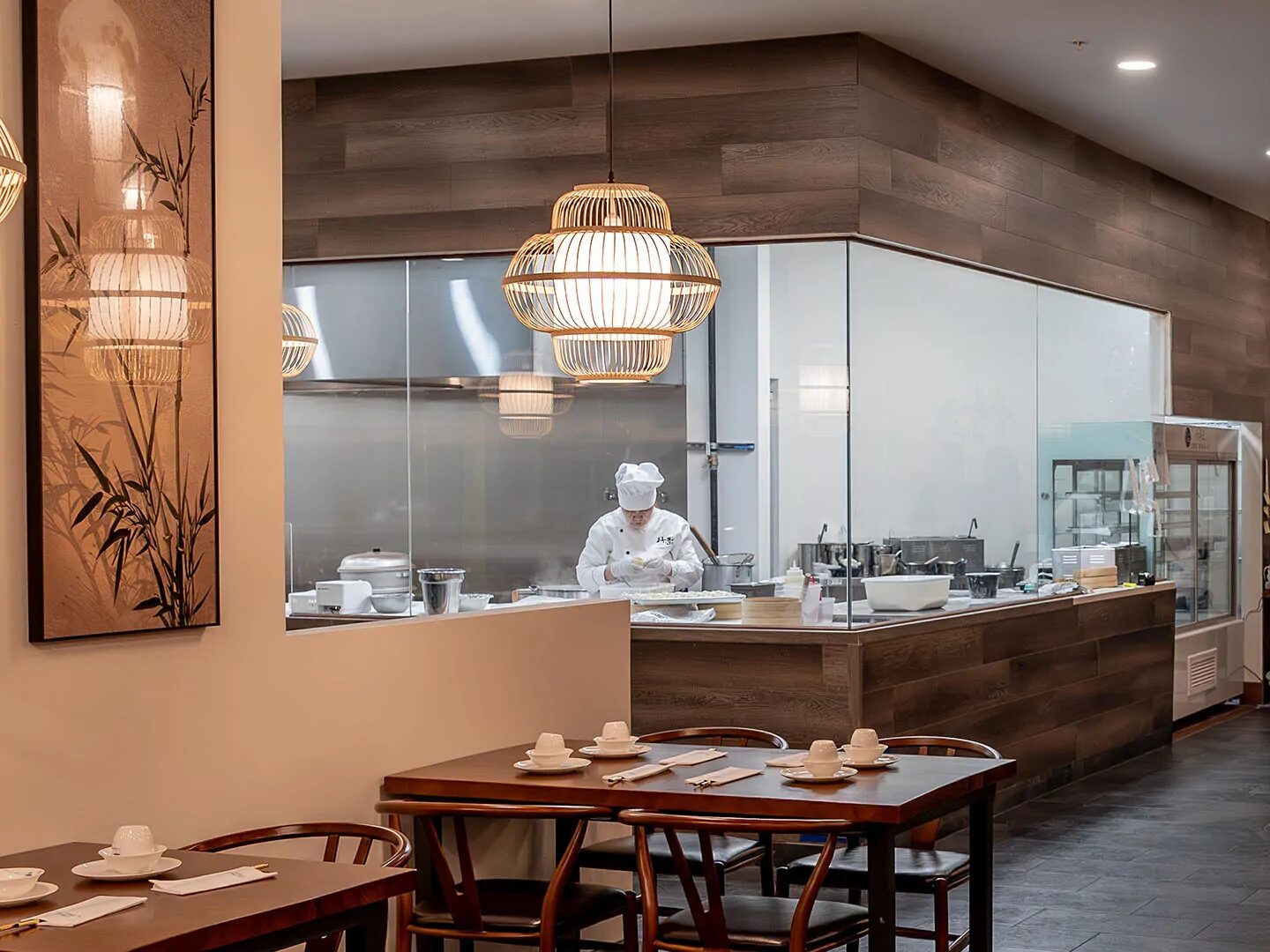
Another global standard Din Tai Fung built was the open kitchen.
Through glass, you can watch the dumplings being folded.
White coats.
Masks.
Caps.
A quiet room, like a clinic, where hands keep moving.
This is not only for taste.
It is also for trust.
For guests who do not share the language, the message is visual: this is safe.
Explaining hygiene is slower than showing it.
It also changes how waiting time works.
The making of dumplings is no longer hidden in the back.
It is placed at the front.
Cooking becomes a display.
The time before eating is built into the experience.
2010: the star
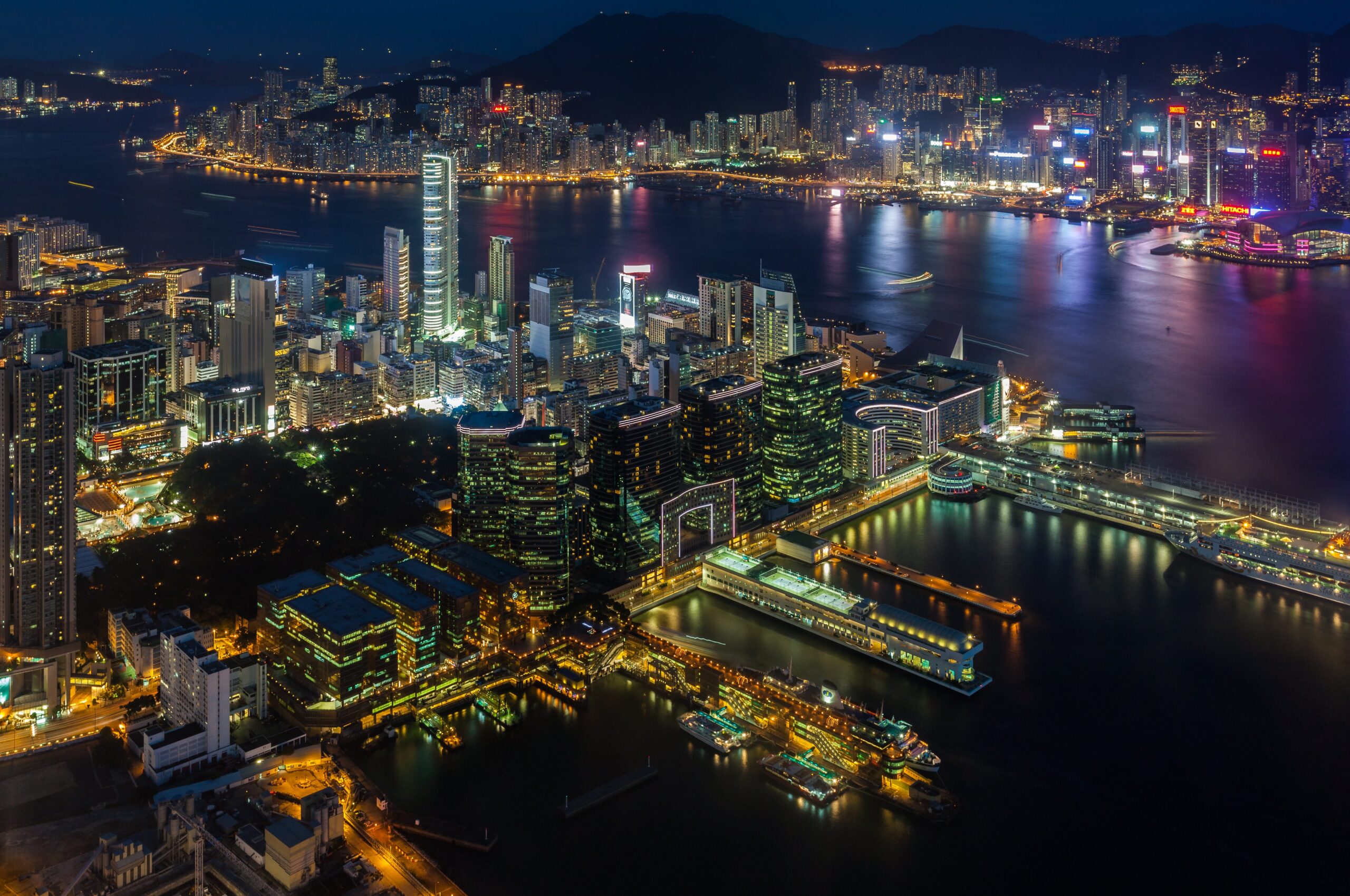
In 2010, Din Tai Fung in Hong Kong (Tsim Sha Tsui) received a Michelin star.
Dim sum earning stars was not without precedent.
But what happened here felt less like “dim sum winning,” and more like “a chain winning.”
Michelin evaluates more than flavor.
Temperature.
Timing.
Service.
Cleanliness.
And consistency.
In a crowded district where tourists and business travelers pass through, the steamers stack in order, and the same pleats arrive at the same speed.
That stability pulled the dish away from the shadow of the street stall.
A food once linked to stalls and canteens is treated as urban fine dining.
This was not only an award.
It looked like a shift in the coordinates of the genre.
After the star, the dumpling requires less explanation.
It can be introduced not as “a local Taipei food,” but as “global-standard dining.”
That change works not because the taste is rare, but because the system is.
Soup dumplings as soft power
Now the dish exists outside Taiwan.
In Los Angeles and London, the same standardized dumplings appear.
Even the gesture of lifting the steamer lid repeats.
What is being carried is not only pork and soup.
Order travels with it.
A spoon is placed first.
Ginger is set beside it.
Small dishes of soy sauce and vinegar are lined up.
The folding process is visible through glass.
These steps begin in the same way, in city after city.
The dish is less a meal than a short ritual.
There is also a time when celebrities film themselves folding dumplings.
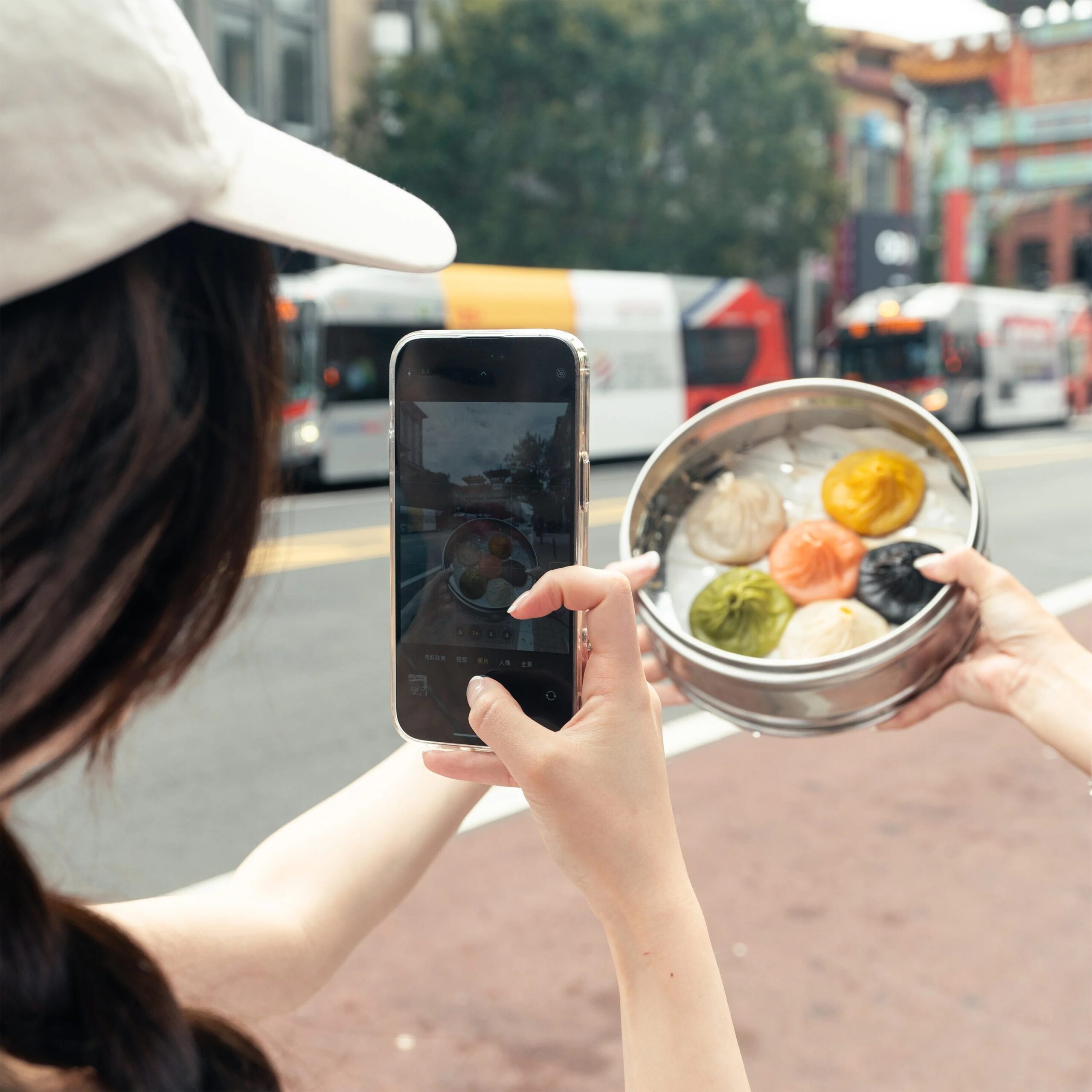
Visitors pay for the “wrapping experience,” take photos, and open the lid for the camera.
The sequence becomes a kind of calling card.
Some people know the dumpling without knowing the country.
In that sense, the food is remembered in place of the state.
It has become a strong diplomat for Taiwan.
Not like semiconductors.
In another form, a dish crosses borders and carries the outline of a place.
Steam erases borders
In major cities around the world, the same spec, the same taste can be found.
That universality is also the result of a small oil shop in Taiwan.
When the steamer lid opens, what appears is not only dim sum.
A system is there—quantified, polished, and designed to travel.
The wrapper weight is fixed.
The pleats are aligned.
Steaming time is controlled.
The kitchen is built to be seen.
Cleanliness is presented not as a claim, but as a scene.
This is how the dumpling keeps its shape across borders.
It does not settle by adapting to local taste.
It settles by repeating the same thing.
Steam disappears quickly.
But that speed may also reveal the strength of this food.
Something that vanishes in a moment is reproduced, in the same way, across the world.
What made that possible was not talent for flavor, but structure.