How a Public Bicycle Became Part of the City
Walking through Taipei, yellow-and-white bicycles are always somewhere in view.
At street corners.
Near MRT exits.
In front of university gates.
They are so ordinary that it is easy to forget they are the result of design.
Someone planned this.
Someone decided where they would stand.
YouBike feels less like a vehicle than part of the city’s infrastructure.
Behind it are a bicycle manufacturer, the city government, and one elderly man.
The First YouBikes Were Not Widely Used
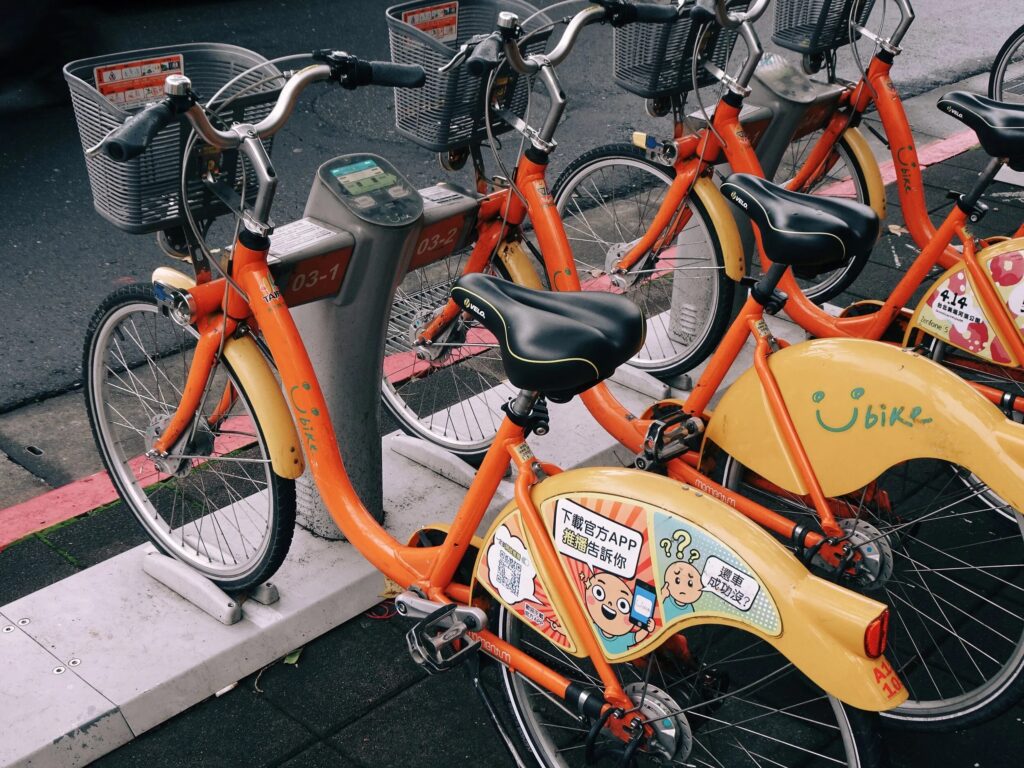
The first YouBike experiment began in 2009, in Xinyi District, Taipei.
Five hundred bicycles.
Eleven stations.
An area dense with city offices and department stores.
A place that seemed likely to succeed.
Usage, however, remained limited.
At the time, Taipei already had:
A well-developed MRT and bus network.
Motorbikes that were fast and flexible.
A view of bicycles as slow, sweaty, and vulnerable to rain.
Cycling was not a daily habit.
It was something one chose to do.
For a while, the bicycles in Xinyi stood quietly.
Public objects, exposed to rain.
YouBike did not begin as a successful system.
King Liu, a Missionary of Cycling
The project continued largely because of King Liu, founder of Giant.
He did not see bicycles as products alone.
He saw them as a way of life.
A tool for health.
A form of mobility less dependent on cars and motorbikes.
One culture Taiwan could show to the world.
From this thinking, Giant took on the public bicycle system with the Taipei City Government under a BOT model.
Build.
Operate.
Transfer.
In its early years, the project ran at a loss.
It is said that Giant continued it as part of its social responsibility.
In his later years as chairman, Liu rode long distances.
Around Taiwan.
Across mainland China.
He showed, through action rather than words, that older people could ride.
YouBike was an administrative project.
It was also a cultural experiment supported by one founder’s ideas.
From Version 1.0 to 2.0
YouBike 2.0 is often discussed as a technical upgrade.
From an institutional perspective, what mattered more was unification.
Before YouBike spread, Taiwan had several public bicycle concepts.
Different designs by different municipalities.
No shared operating rules.
Some projects succeeded.
Others faded quietly.
YouBike 2.0 brought these scattered ideas together.
It became the de facto standard.
Version 1.0 relied on underground cables.
Racks and kiosks were physically connected.
Installation required excavation and electrical work.
It suited parks and wide sidewalks.
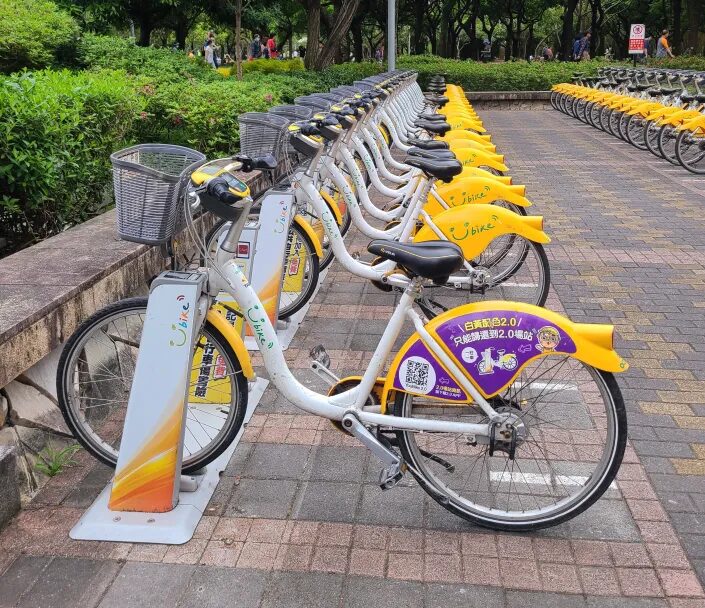
Version 2.0 placed power and communication inside the bicycle.
Stations became simple light docks.
Installation conditions were relaxed.
This shift allowed YouBike to move from an experiment to nationwide infrastructure.
It was not the creation of something new.
It was the consolidation of what already existed.
Operations Stay in the Background
Daily operation depends on unremarkable work.
Redistribution.
Maintenance.
These tasks are not meant to be visible.
Stations constantly full or empty.
Broken bicycles left unattended.
Avoiding such scenes is part of the system’s design.
Redistribution and repairs happen quietly.
Users are not expected to notice.
YouBike does not promote efficiency or innovation.
It aims to prevent problems from appearing at all.
A Role as the Last Mile
YouBike is not the centerpiece of urban transport.
It connects short distances.
It complements MRT lines and buses.
It does not maximize profit on its own.
It raises the ease of movement across the city.
Prices, station placement, and rules follow this logic.
YouBike is not used because it is remarkable.
It is used because it was built to be used continuously.
Seeing YouBike at the Corner
In a Sanmin District alley, I returned a bicycle.
The number on the station dropped by one.
I do not know who will take it next.
I know only that it will cross the city several times today.
And be returned somewhere again.
YouBike circulates quietly.
Less a result of urban planning than part of the street itself.
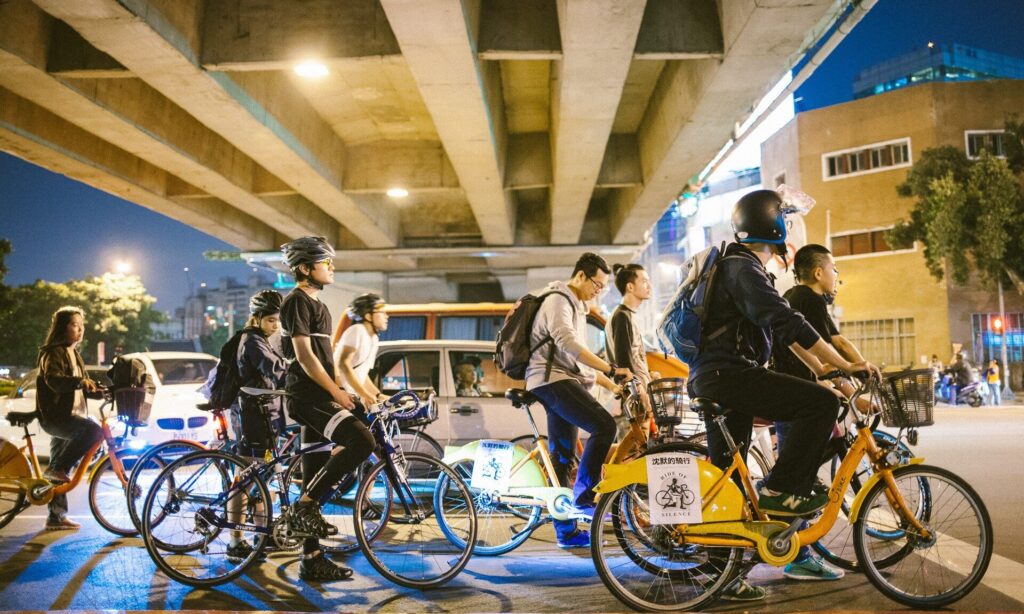
The signal changes.
A line of motorbikes begins to move.
Another yellow bicycle passes in front of the station.