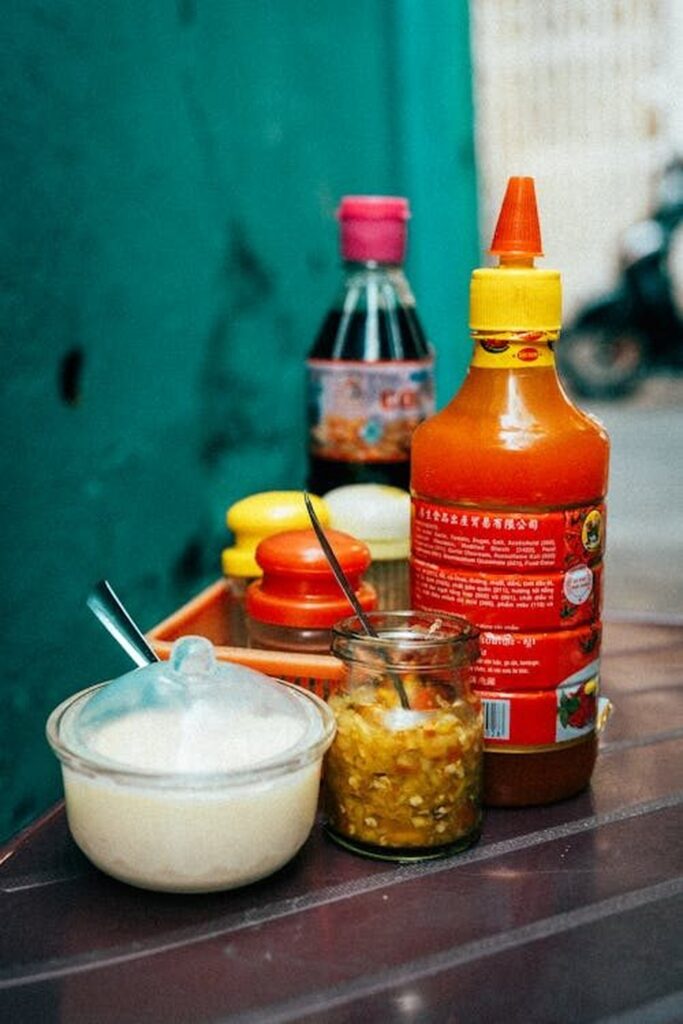
At a small Taiwanese eatery, a seasoning bottle has to be tilted and held before its black contents begin to move. The sauce lands on breakfast cakes, boiled greens, meat, and even sliced tomatoes with the slow weight of syrup, more like a coating than a seasoning.
At a small Taiwanese eatery, I tilt a seasoning bottle on the table.
The black liquid inside does not fall right away.
After a brief pause, it descends slowly, heavily.
Its viscosity is closer to chainsaw oil or black syrup.
It does not seem to follow the same physical rules as the soy sauce I know from Japan.
This liquid is thick soy sauce, jiangyou gao.
It quietly supports much of Taiwanese food from the background.
On the tongue, it is sweet first.
Then savory.
Salt arrives surprisingly late.
It feels closer to a sauce than a seasoning.
That description usually ends the discussion faster.
Why Thickness Was Necessary
The base is soy sauce.
Sugar and starch are added, then cooked down.
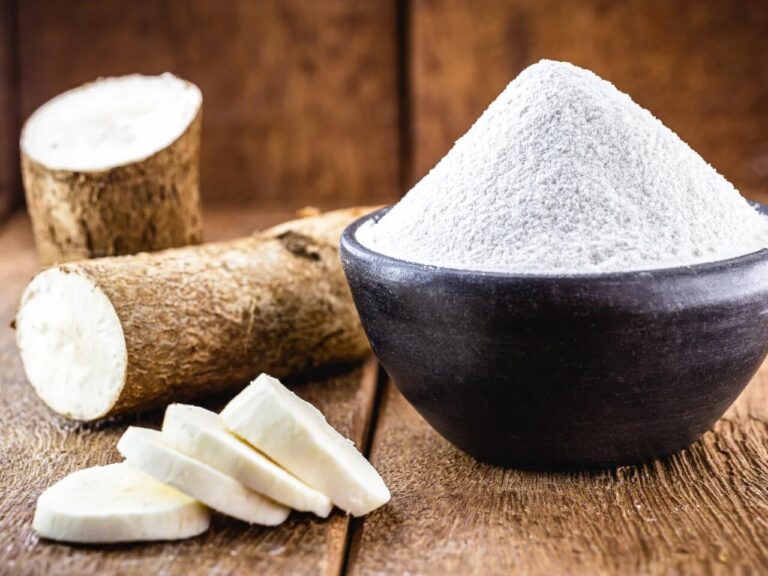
The starch is often glutinous rice flour or tapioca starch.
The process sounds more at home in a factory kettle than a household kitchen, yet the result lives firmly in daily meals.
Why did thickness matter.
Taiwanese cooking uses many smooth surfaces.
It also uses many dishes with little liquid.
Boiled offal.
Silken tofu.
Rice noodle rolls.
Elastic, slippery skins.
Thin soy sauce runs off.
The flavor leaves the food behind.
This sauce clings.
It fixes flavor in place.
The viscosity looks purpose-built.
If Japanese soy sauce belongs to a culture of soaking in,
this one belongs to a culture of coating.
Seen that way, the plate in front of me becomes easier to read.
Black Beans, Not Wheat
A brief detour into ingredients.
Japanese soy sauce is built on soybeans and wheat.
Much of its sharpness and aroma come from wheat.
Traditional Taiwanese thick soy sauce is often based on black beans instead.
No wheat.
This method is known as yin you.
Black beans are fermented with mold, an older technique.
The result is depth from black beans.
A rounded sweetness.
More sugar is added on top of that.
Sharp saltiness never comes forward.
If Japanese soy sauce cuts with a line,
this sauce wraps with a surface.
The difference in raw materials remains visible as a difference in character.
The Black Sauce Served with Tomatoes
To see its range, it helps to go south.
In Tainan or Kaohsiung, order tomatoes at a fruit stall.
A small dish arrives alongside them.
Inside is thick soy sauce.
Sugar.
Grated ginger.
Licorice powder.
For many Japanese diners, this combination causes a brief silence.
But when tasted, it settles calmly.
The salt lifts the tomato’s acidity.
Ginger tightens the finish.
Sweet.
Salty.
But not scattered.
Here, the sauce functions not as soy sauce,
but as a fruit dressing.
This black belongs to more than main dishes.
In Taiwan, it occupies that kind of position.
The DNA of a Sugar Island
The sweetness points south.
Southern Taiwan once thrived on sugarcane.
Sweetness signaled abundance.
It signaled wealth.
That alone does not explain everything, but the taste never disappeared.
Soy sauce techniques introduced during the Japanese period met local sugar culture and changed direction.
This sauce sits at the end of that process.
It is often confused with oyster sauce, but they are not the same.
Most versions contain no oyster at all.
Because of that, it is used freely in vegetarian cooking.
The black carries umami without animal aroma.
Black Dresses at Breakfast
This sauce may work hardest in the morning.
Breakfast makes its role clearer than lunch or dinner.
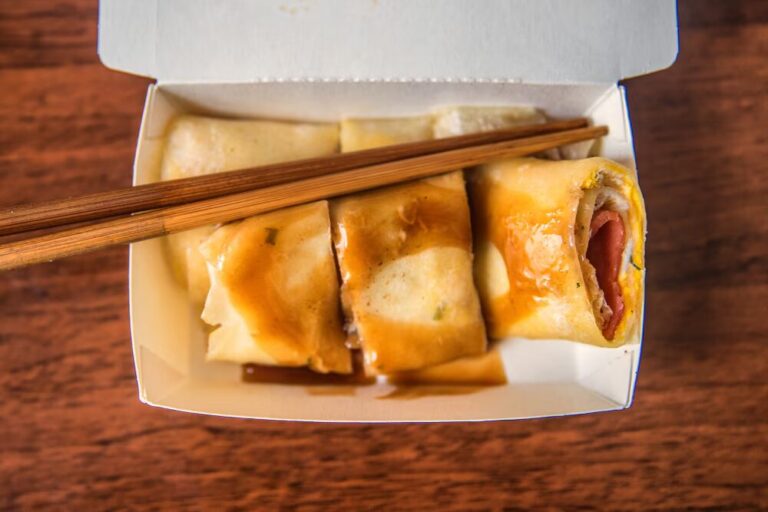
Egg crepes, danbing.
Soft skin, mild egg, finished by a sweet-salty coating.
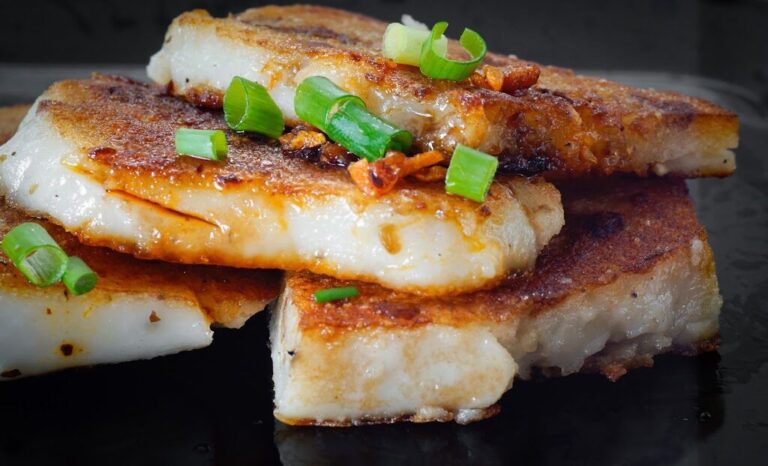
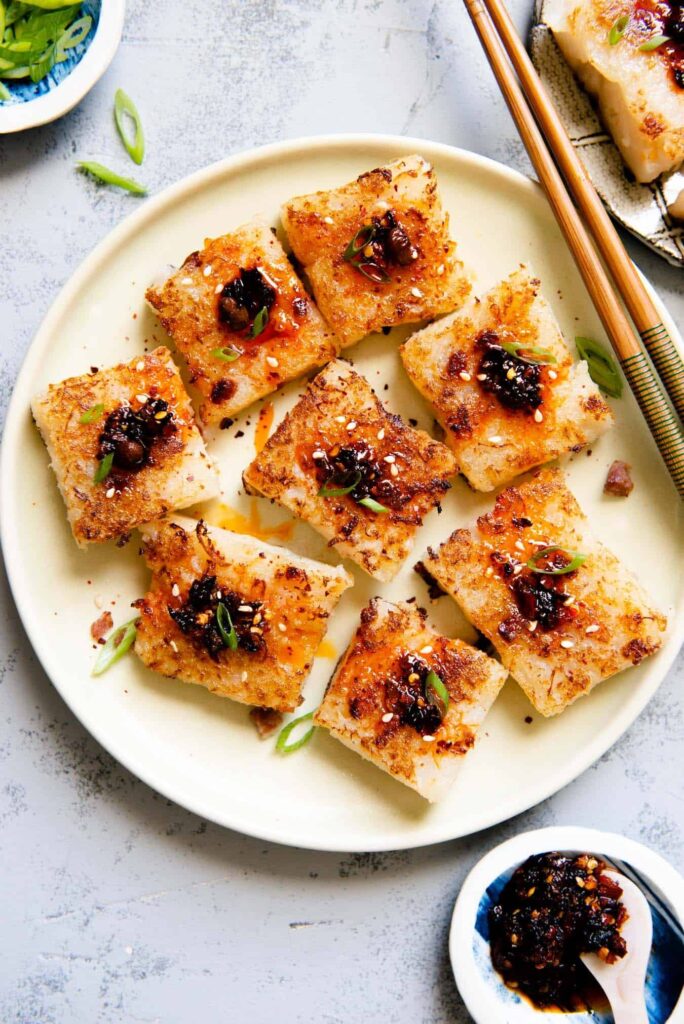
Radish cakes, luobo gao.
Crisped on the surface, then covered in a slow black layer.
A white block wearing a dark dress.
Taiwanese breakfast sometimes feels built to receive this sauce.
That may sound exaggerated,
but the memory of morning plates resists denial.

An Accomplice Called Garlic
There is an evolved form.
Thick soy sauce blended generously with garlic,
suannrong jiangyou gao.
White bits rest at the bottom of the bottle.
When poured, plain boiled meat suddenly feels settled.
Not improved, but placed.
Boiled pork slices with garlic sauce, suanni bai rou.
Just pork and sauce.
Pork fat sweetness.
Sauce sweetness.
Garlic heat.
The structure is simple.
The pleasure comes from layering, not complexity.
The Savior of Boiled Greens
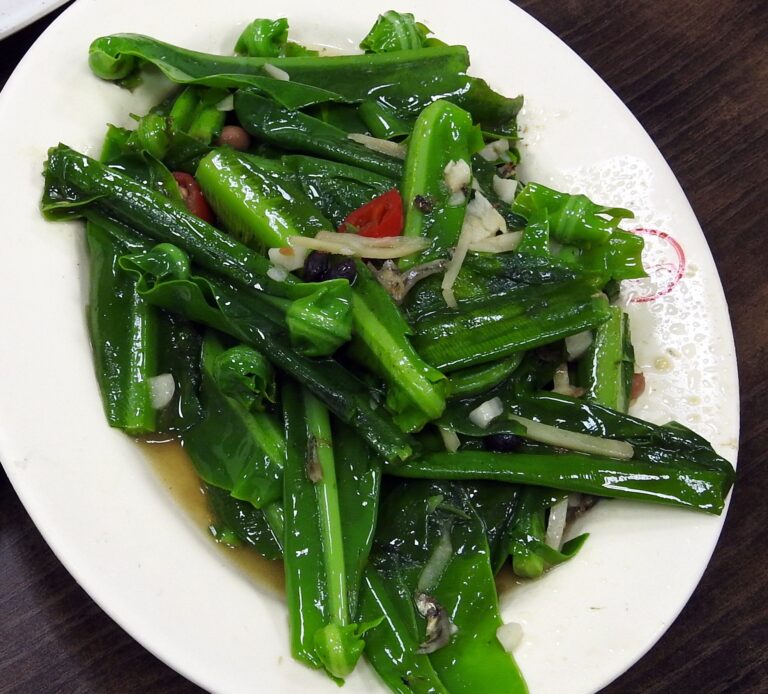
Boiled vegetables, tang qing cai.
Ordered out of obligation.
Sweet potato leaves.
Cabbage.
Nothing but water and heat.
The sauce is poured over them.
Sometimes lard is added.
Despite the moisture, the flavor does not thin out.
The viscosity acts like a levee.
Water comes,
but flavor does not escape.
A dish ordered for health quietly turns into a lesson about texture.
That happens often in Taiwanese eateries.
Texture as Gentleness
It lacks the sharp edge of Japanese soy sauce.
Salt is restrained.
Instead, it envelops.
“Forgiving” might fit, but the word feels too soft.
Sweet, slow, lingering.
Its way of staying suits the climate.
Sometimes, a place explains itself through taste first.
Taiwan’s relaxed air.
Its openness.
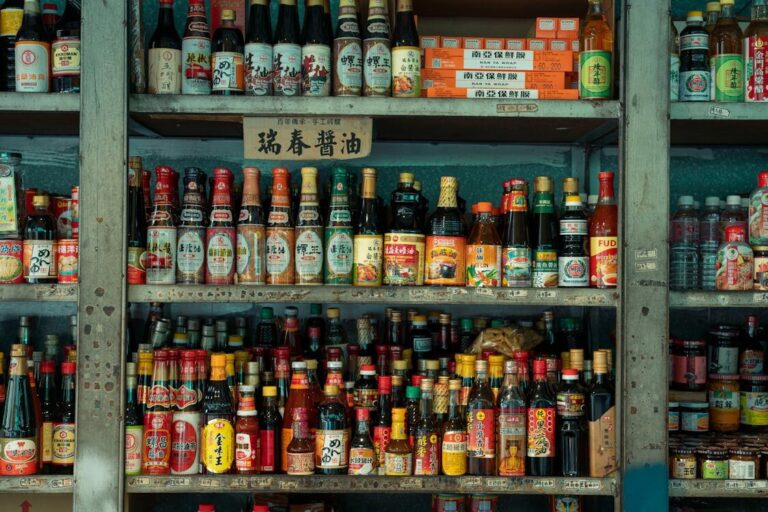
Later, back home, I stand in front of a supermarket shelf.
I pick up an ordinary soy sauce bottle, then return it.
And I think of that sweet black.
The one that seems to fall against gravity.
— Detour —
a little further to walk
- Notes on Four Invisible Pillars of Taiwanese Flavor
- Notes on Lu in Taiwan
- Notes on Sha Cha Sauce as a Crossroads in Taiwan