Why It Is Almost Always There
In Taipei and in Kaohsiung, the same scene appears again and again while walking.
Past a corner, at the edge of a park, in the open space before a station.
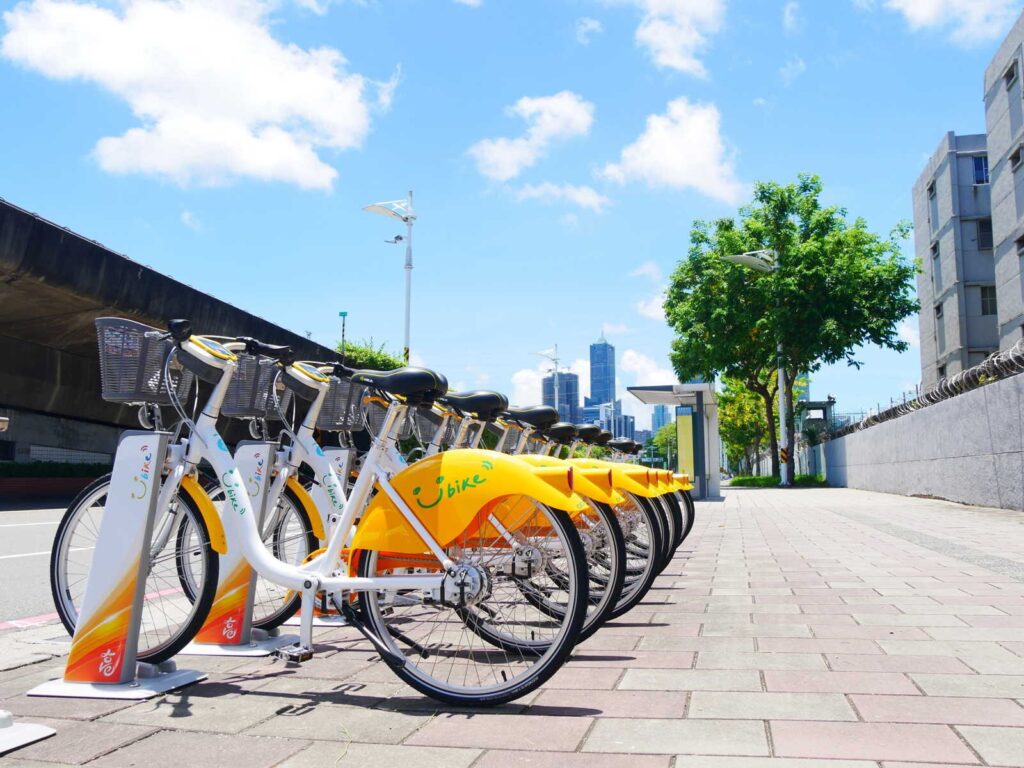
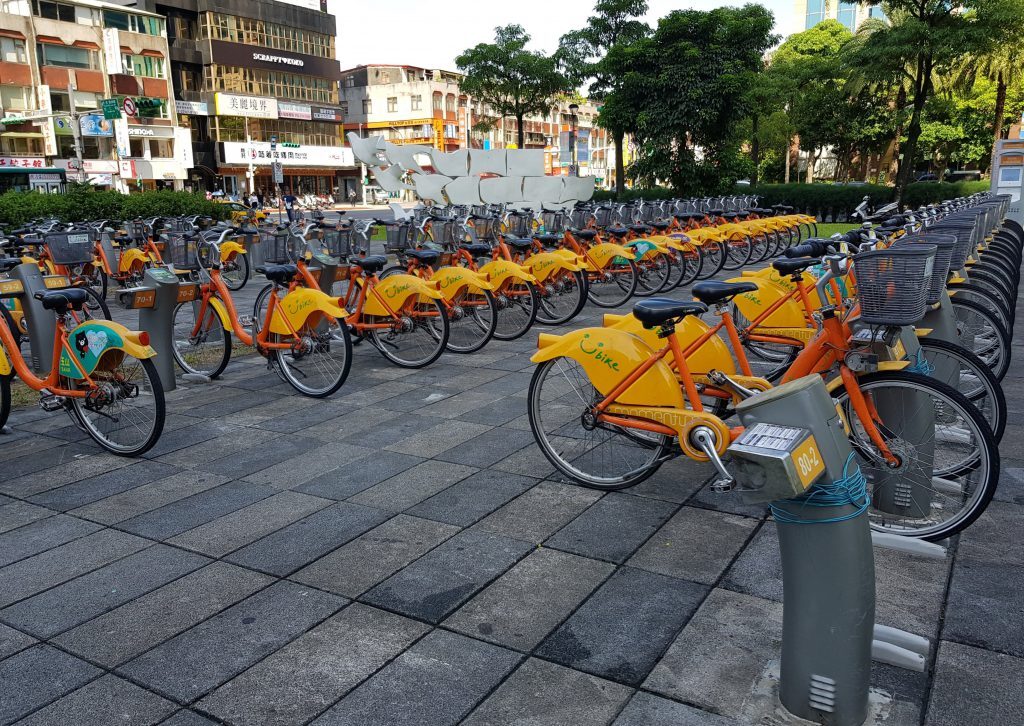
Yellow and white bicycles are lined up.
What is striking is not their number.
It is how rarely I encounter a moment when I cannot ride.
The despair of finding everything gone.
The irritation of arriving and finding no space to return a bike.
These situations are uncommon.
Tens of thousands of bicycles are scattered across cities of several million people.
Keeping that system in near balance
is not something that happens by chance.
The convenience of YouBike is not a matter of feeling.
It is the result of calm design,
built on an understanding of urban structure.
Placement — controlling distance from the station
The first logic lies in where bicycles are placed.
YouBike is not the main mode of transport.
That role belongs to the MRT and buses.
Bicycles fill the gap between them.
The distance after leaving a station.
Too far to walk comfortably,
but not far enough to justify a taxi.
This ambiguous zone is covered thoroughly.
A few minutes from the exit.
The next intersection.
The edge of a park.
Bikes are not placed as points.
They form a surface.
Within a five-minute walk,
there is always another station.
That sense prevents hesitation.
“If it’s not here, it will be just ahead.”
That certainty sustains use.
Technology — reducing places where bikes cannot be placed
The second layer is technical change.
Early YouBike stations required power from the ground.
Construction was needed.
Costs were high.
Locations were limited.
That changed.
Bicycles began to carry their own power.
Communication was built in.
As a result, docks became lighter.
Cables disappeared.
Edges of sidewalks.
Gaps beside planting.
Entrances to narrow streets.
Places that were never candidates
became options.
Urban leftover spaces are not missed.
Accumulated, they create density.
Land — offering reasons to lend space
The third layer is land.
Prominent locations are not accidental.
In front of schools.
Beside government offices.
At the front of parks.
These places are usually difficult to secure.
But YouBike offers something else in return.
Fewer scooters lingering.
Less disorderly parking.
Safer school routes.
The proposal is to reduce these problems.
In exchange for placing bicycles,
traffic is organized.
Not rent, but effect, is offered.
For the host facility,
management burdens are reduced.
The streetscape improves.
As a result, access is granted.
Prime locations are secured.
Operations — balance maintained at night
The fourth layer is constant movement.
In the morning, from residential areas to stations.
In the evening, from stations back to residential areas.
This wave occurs every day.
Left alone, imbalance appears.
Movement prevents it.
Usage data is read.
Shortages are anticipated.
Collection and redistribution happen
late at night or during quiet hours.
The trucks are unobtrusive.
The work is quiet.
But if it stops,
convenience collapses.
The presence of bicycles
is the result of continuous intervention.
Four layers, overlapping
Placement.
Technology.
Land.
Operations.
If any one is missing,
the system fails.
Good locations mean nothing without bicycles.
Efficient operations are abandoned
if density is too low.
The strength of YouBike lies
not in a single special factor,
but in holding all four together.
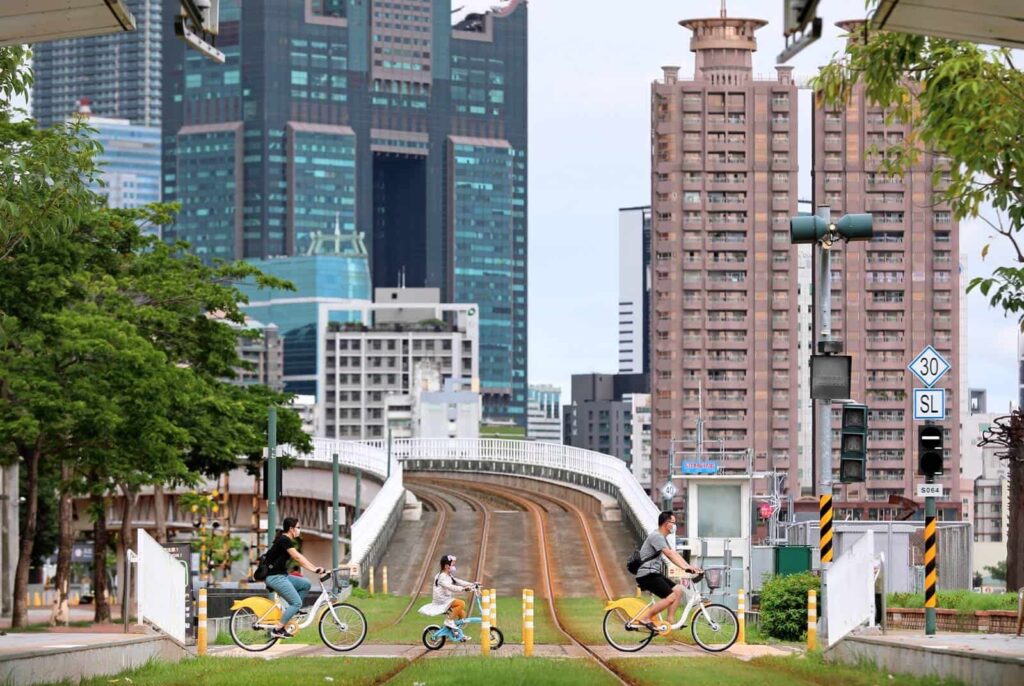
The work of maintaining the ordinary
I get on a bicycle.
I press the pedals.
There is no surprise.
That is the point.
The goal is to become unnoticed within the city.
Every effort goes into avoiding inconvenience.
The next time I ride,
there is nothing to recall.
The bicycle is simply there, as usual.
That condition,
by itself,
is already the answer.