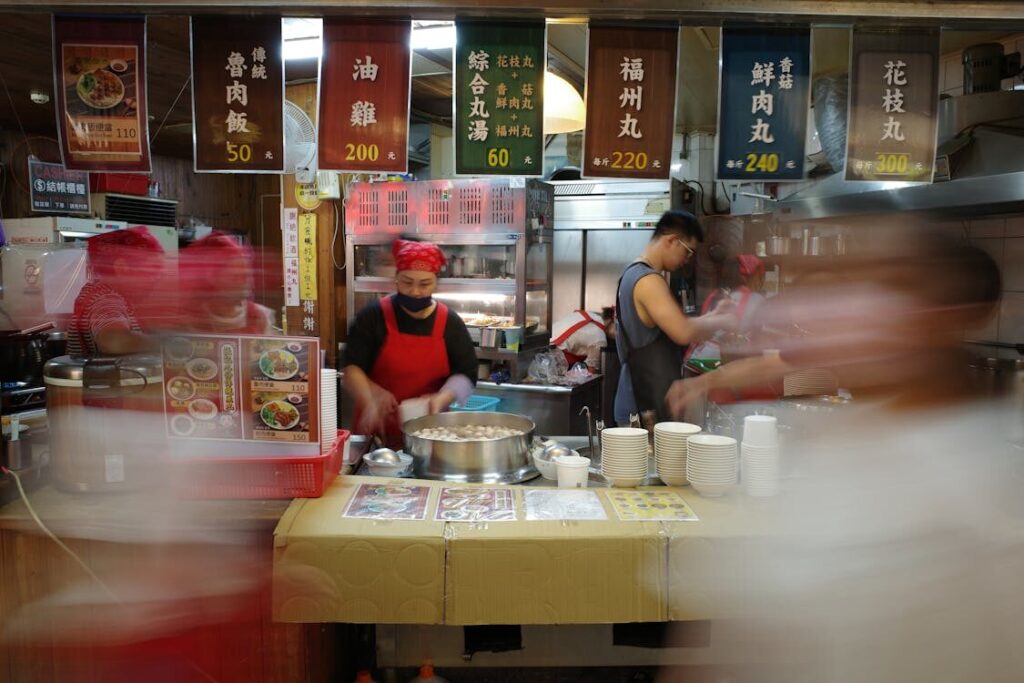
At Maru Lin Lu Rou Fan in Taipei, customers pass a glass case of fish, vegetables, eggs, and tofu before anyone asks whether they want rice or noodles. The braised pork rice arrives at the end, after the rest of the tray has already taken shape.
When Japanese visitors come to Taiwan for the first time, many repeat the same pattern. They enter a small eatery, order only braised pork rice (lu rou fan), finish in five minutes, and leave.
From their point of view, they have efficiently checked off a local specialty. From the Taiwanese side, the scene may look slightly strange.
In Japan, there is a culture of rice bowls such as gyudon or katsudon that complete a meal on their own. Without noticing, visitors translate this dish into that same category.
In Taiwanese eateries, however, this bowl is not the star. It sits closer to the role of a base that allows a full meal to exist.
Lu Rou Fan as Taiwanese Everyday Life
Lu rou fan is often described as a national dish of Taiwan.
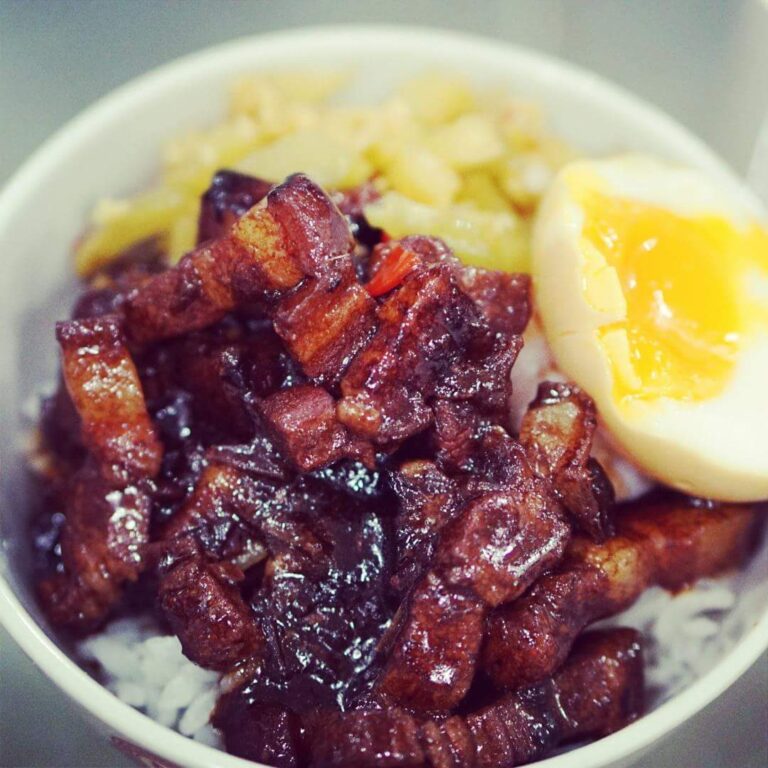
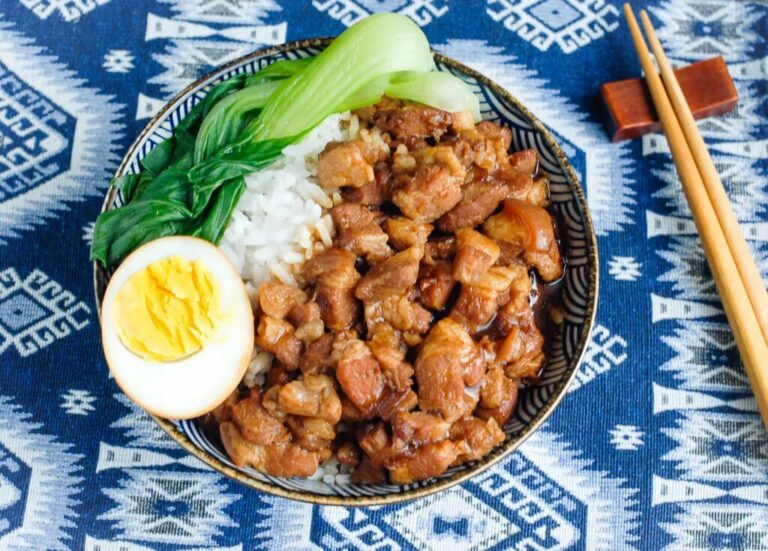
Finely chopped pork is simmered in a soy-based sauce with a restrained sweetness.
It is then poured over white rice.
The structure is simple.
Differences between shops remain visible.
The ratio of fat to lean meat shifts.
Sweetness rises or recedes.
Sometimes star anise lingers at the edge.
Even so, most people picture roughly the same bowl.
The portion is modest.
The price is usually restrained.
Some finish it alone.
Others add greens or soup and let it become a full meal.
In Taiwan, this bowl rarely marks an occasion.
It sits closer to a baseline —
something that quietly supports the rhythm of ordinary days.

An Upgraded Form of Plain Rice
In Taiwanese diners, this dish is treated less as a main course and more as an improved version of white rice.
In the humid climate, plain steamed rice can feel heavy to swallow. A small amount of pork fat and sweet sauce lets the grains slide easily into the mouth.
The bowl functions like lubrication for appetite. It is not meant to bring fullness by itself.
Its character becomes clear when combined with other dishes. It acts as the reference point of salt and sweetness that receives what surrounds it.
Maru Lin Lu Rou Fan as a Classroom
I enter Maru Lin Lu Rou Fan, a long-established shop in Taipei. Tourists appear, yet the flow inside remains distinctly local.
Past the entrance, what comes into view is not a menu but a glass case lined with prepared dishes.
Fish, meat, vegetables, eggs, tofu. Plates form a silent procession.
Customers take a tray and move along, pointing through the glass. What they choose here determines the outline of the meal.
At the end, a staff member asks, “Rice or noodles?”
Only then does one answer “braised pork rice.” The order feels reversed.
The main elements have already been selected. The bowl arrives last, as the vessel that holds them together.
A Tray Built by Teamwork
On a Taiwanese tray, roles naturally emerge.
First comes the bowl, carrying fat and carbohydrates as the foundation.
Next arrives a main dish such as pork chop or fish, providing the satisfaction of chewing and protein.
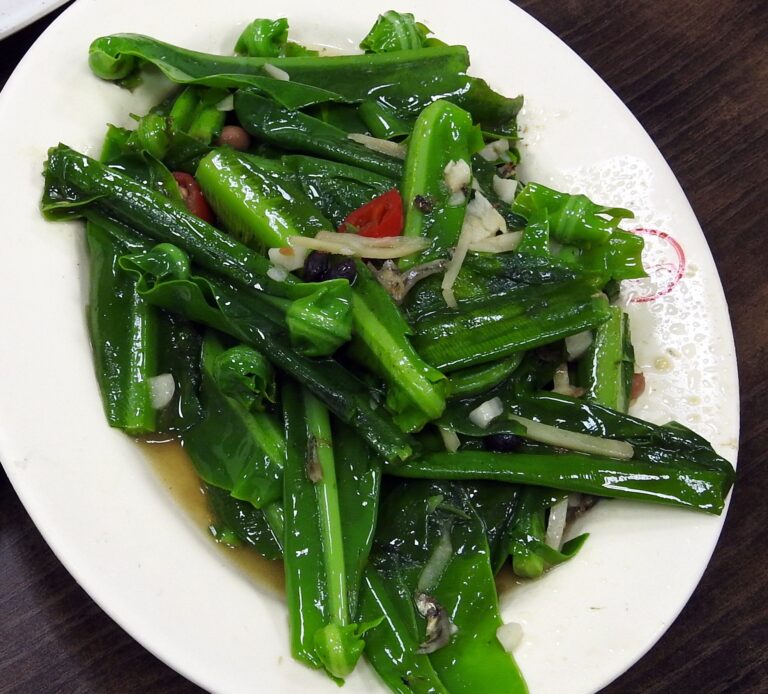
Then blanched greens appear, softening the richness and resetting the mouth.
Finally comes soup. Taiwanese meals often balance dry and broth-based elements.
Eating only the bowl can make the flavor feel heavy. Paired with mild vegetables and clear soup, the whole settles into calm balance.
A meal without this structure resembles trying to win a game with only a pitcher.
The Philosophy of Self-Serve Dining
The system at Maru Lin Lu Rou Fan extends from the culture of self-serve eateries known as zi zhu can.
Often translated as buffet or cafeteria, the characters mean something closer to “help yourself to a meal.”
There is no assumption that the shop provides a finished composition.
In Japanese set-meal restaurants, daily specials and recommended combinations exist. The customer receives a correct answer prepared by professionals. Delegating choice becomes comfort.
In self-serve dining, only ingredients and options are presented.
Do you take meat?
Do you add more vegetables?
Do you include soup?
The structure belongs entirely to the diner.
Here, health and satisfaction become personal management.
The small size of the bowl connects to this idea. It is not about giving less. It is space left open, saying the rest is yours to build.
An Obsession with Fine Adjustment
This habit of choosing does not stop at food.
It appears clearly in the countless drink stands across the city.
Each order brings questions.
How much ice?
How much sugar?
Normal. Less ice. No ice.
Full sugar. Half sugar. Light sugar. None.
Japanese customers often answer “normal.” Taiwanese customers adjust according to the day’s heat or their own condition.
No ice today.
Thirty percent sugar.
It is not seen as trouble. It resembles a right.
Rather than accept a default state, people tune what they receive to match their reality.
Daily life itself seems built on small adjustments.
Taking Responsibility for Satisfaction
What emerges is a quiet form of individualism.
In a Japanese set-meal shop, dissatisfaction becomes the fault of the dish or the restaurant.
In self-serve dining, dissatisfaction belongs to one’s own choices.
Freedom arrives together with responsibility.
The small bowl is not unkind. It signals that the shop does not guarantee completion.
When a combination works, the satisfaction feels self-made rather than given.
Leaving after eating only the bowl feels like a loss.
Not because of nutrition, but because it means departing without touching the everyday practice of choosing, assembling, and balancing that shapes Taiwanese life.
— Detour —
a little further to walk
- Notes on the Side Dishes at Formosa Chang
- Notes on Lu Rou Fan in Taiwan
- Notes on the Five Bowls of Braised Pork Rice in Sanchong