Where Night and Curry Meet Beneath the Towers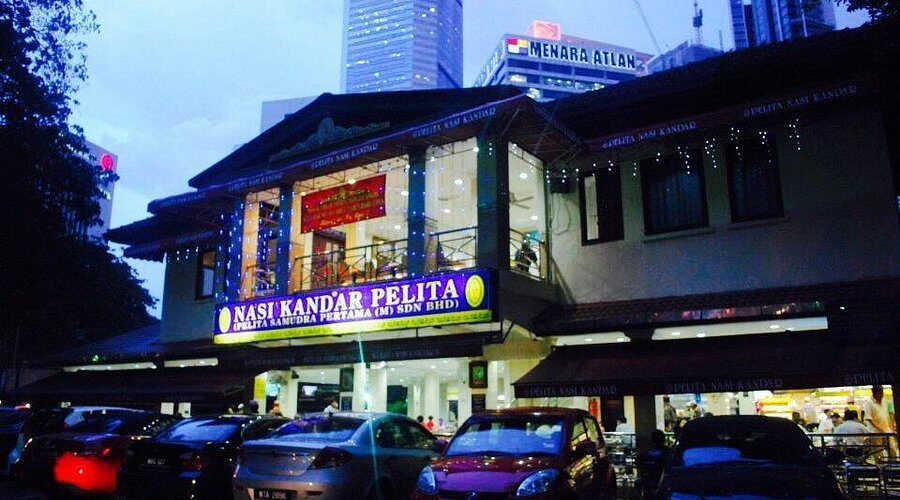
When I look up, the Petronas Twin Towers are shining over Kuala Lumpur. The scene is made of glass and steel and reads as near-future. I let my gaze drop without moving. At ground level there is a vast, semi-outdoor dining hall filled with the smell of oil and spices.
Nasi Kandar Pelita sits in the middle of that gap. It is a place where what is easy to read about this city and what is hard to read appear at the same time. Here English and Malay mix, and the customers do not share the same skin color. It is a shop in a tourist district, yet the usual tourist tempo is thin. Under the shadow of the Twin Towers, ordinary life keeps turning as it is.
A Format Called Nasi Kandar
This dish is called curry rice (nasi kandar) once, and after that it is more accurate to treat it as a format. More precisely, it is not a dish name but a way of eating. There is white rice. On top of it, side dishes chosen by pointing are placed one after another. At the end, curry is poured over everything.
Which curry it is does not matter. Mixing is the premise. By mixing, flavor loses its outline. In exchange, only thickness remains. What this becomes is closer to a state than to a single prepared dish.
A Small Ritual Called Ordering
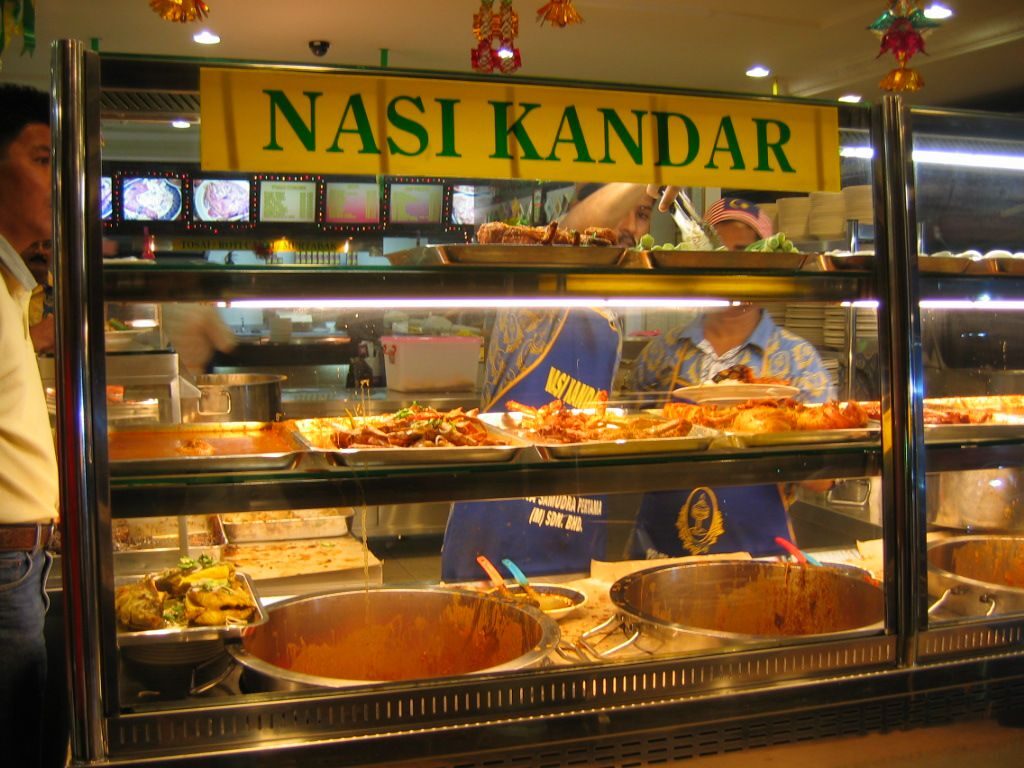
At Pelita, I do not serve myself. I extend a finger toward the staff behind the display case. At the entrance, there is no need to pick up a plate first. I follow the movement of the line and stop in front of the counter. When the staff’s eyes come to me once, that becomes the signal.
The first question is usually fixed. Rice, or biryani. Many people choose white rice here. Nasi. When I say that, white rice is placed on a plate. The amount is often not asked in detail. The shop’s standard arrives as it is.
I move on. Inside the glass case, fried items, stews, fish, vegetables are arranged. From here it becomes less conversation than pointing. I say this. I extend a finger. The staff place it on the plate without words.
Chicken. Fish. Beef. Egg. Vegetables. I choose what I want, in order. If I hesitate, the presence of the customer behind me comes a little closer. But the feeling of being rushed is faint. The staff wait. Only the air that wants my decision to come sooner stays in place.
At the last stage, curry is poured. There is a word worth keeping here. Kuah Campur. If I say it, fish curry, chicken curry, beef curry are layered in small amounts over the rice. If I want the plate more soaked, there is Banjir. The rice drowns completely. It stops being a single taste and becomes a matter of eating layers of spice.
The faster the pointing, the more practiced the customer looks. The pointing of a hesitant tourist is slightly slower. The staff wait, but their expression does not change.

The Slip Is Decided by Approximation
When the plate is complete, the staff glance at it for a moment. The amount, the kinds of meat, the general heaviness of the serving. They do not calculate. They do not weigh.
On the spot, something is entered into a device, and a slip is placed on the plate or handed to me. That becomes the bill. No one seems to care whether it is exact. The fact that this looseness holds at all is also proof that this is daily food.
What matters here is probably not precision. It is that the flow does not stop. People are processed, plates are assembled, seats turn over. As long as that continues, the city’s night continues as well.
Ayam Goreng as the Main Presence
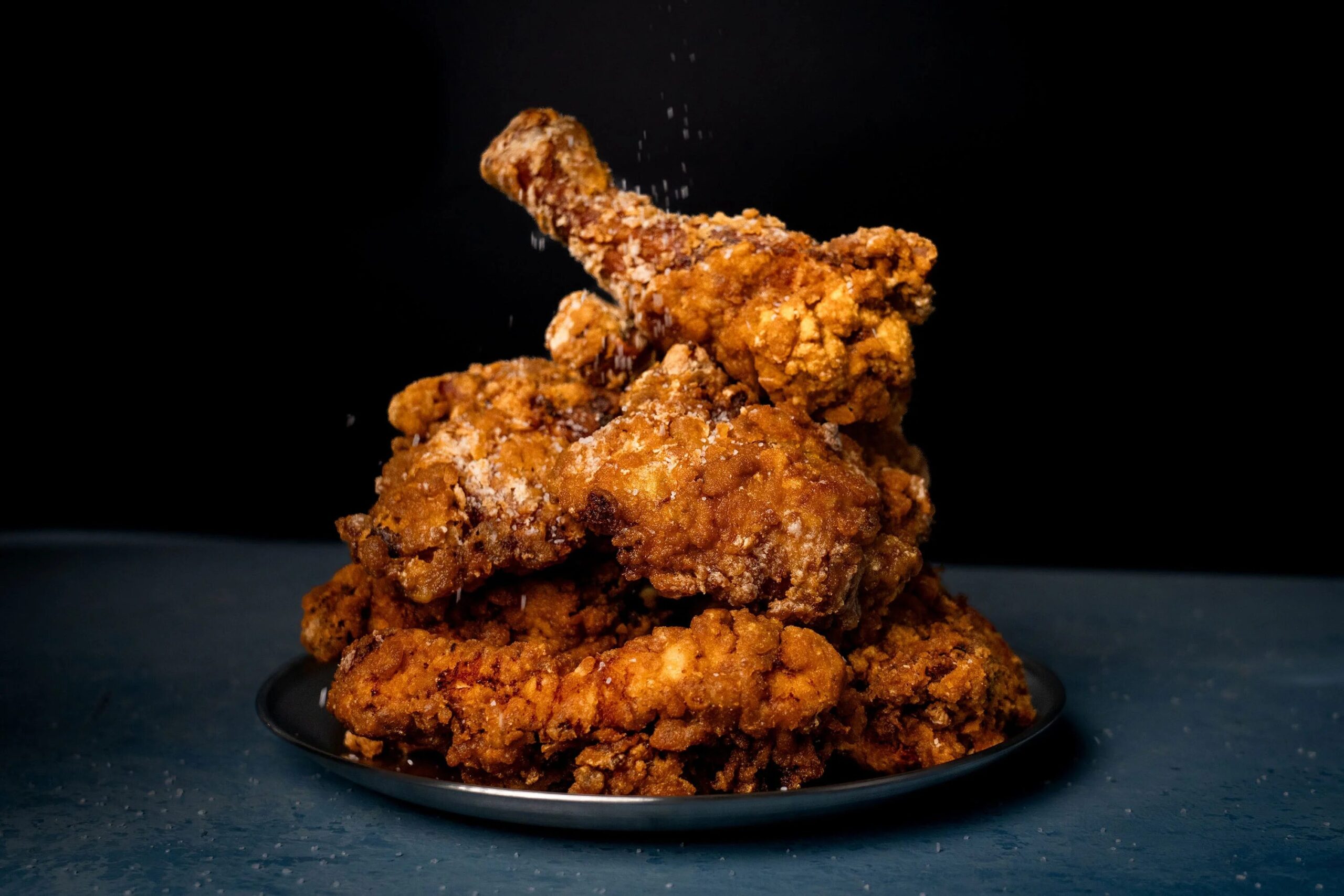
Curry is fine. But what catches the eye first at Pelita is the piled fried chicken. Ayam goreng. A reddish-brown mass with spices worked into the coating.
The turnover is fast. That means it is close to freshly fried most of the time. Adding one piece brings the plate close to completion. When I lean in, pepper and garlic rise before the smell of oil. It is a different kind of stimulus from curry. Another assertion enters the plate.
Where Teh Tarik Appears
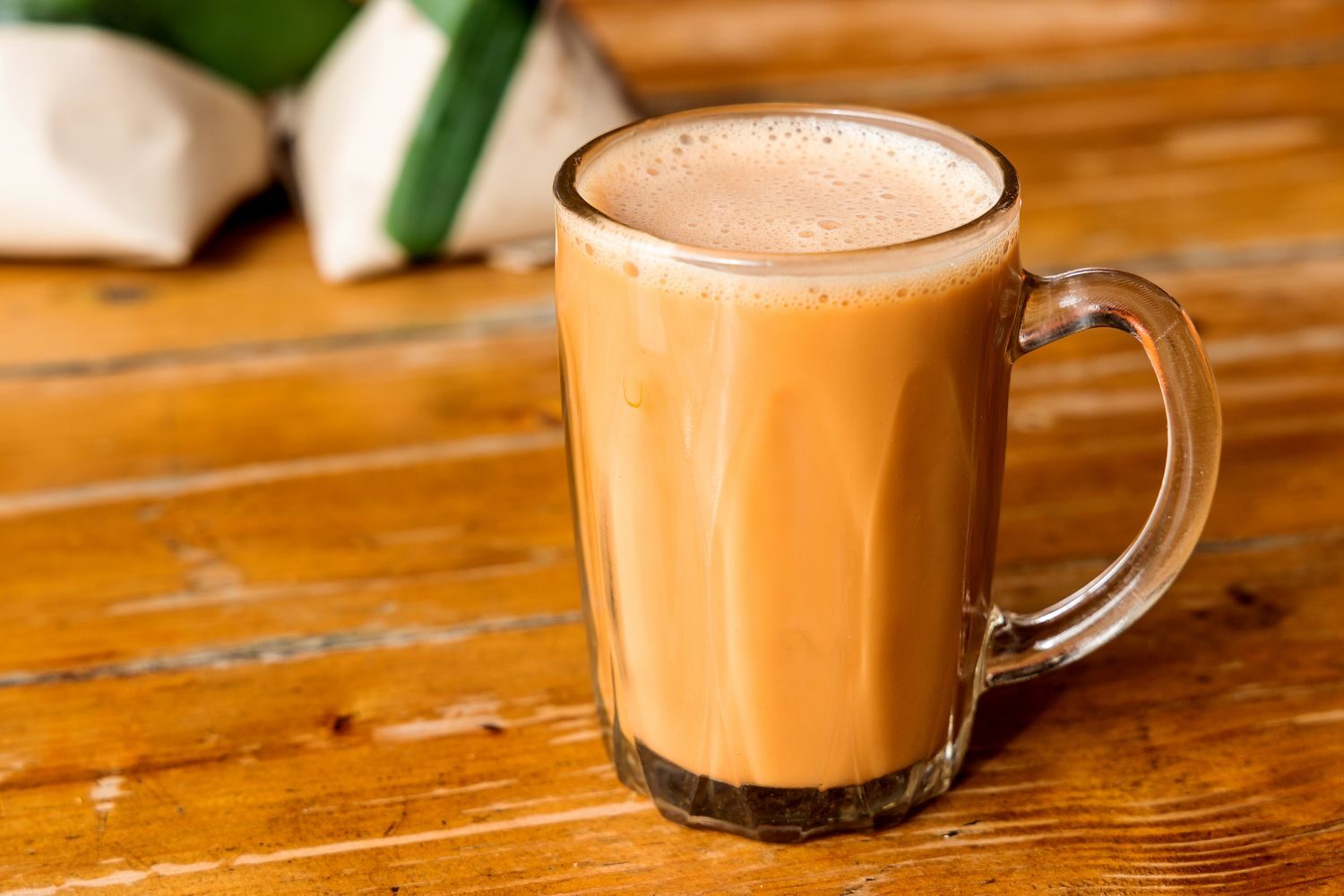
When the plate has been completed in brown, a drink arrives at the table. Sweet tea in a clear glass. Teh tarik. Tea is moved back and forth from a height until foam forms.
In this place, I sometimes see it before water. It is set down less like a drink and more like part of the night air. Customers drink it slowly. Rather than being poured down in haste, it decreases little by little between stretches of conversation. Some stir it with a spoon, but most lift the glass as it is.
The sweetness is strong. Yet after the oil and spices of the plate, it settles oddly well. It does not erase the heat on the tongue so much as overwrite it with sweetness.
Why Mamak Places Do Not Sleep
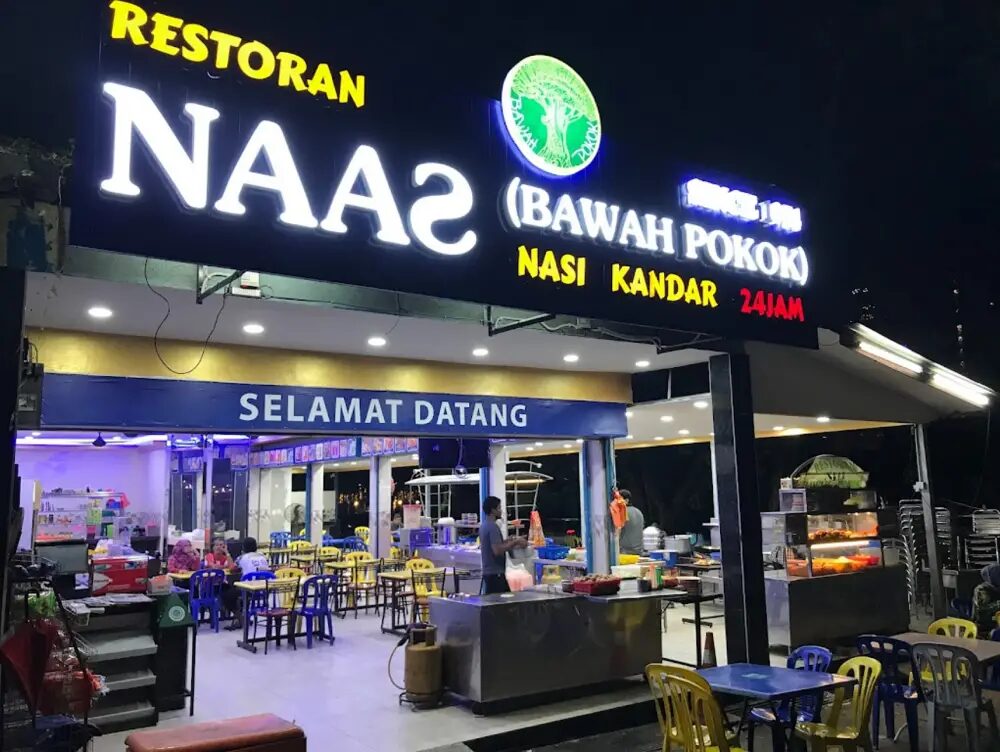
Pelita is open twenty-four hours. Even late at night, seats are filled. Young people, taxi drivers, tourists. They drink teh tarik, watch football on television, and talk in conversations that do not need to mean much.
This is closer to a night gathering place than to a restaurant. Eating is the pretext. The reason people come together lies elsewhere. Around the Twin Towers it is bright and safe even at night. Even so, people gather in an outdoor dining hall. Nights in Kuala Lumpur do not cool down. With only chairs and tables, conversation can begin.
After Eating
The plate is cleared quickly. I take the slip and pay at the register. Outside, the city is still lit. The memory of curry from a moment ago mixes into the lukewarm air and thins out quickly.
Still, the next time I am hungry in this city, what I recall may not be a high-end place, but this mixed taste instead.
Restoran Nasi Kandar Pelita (KLCC)
— 113, Jln Ampang, Kuala Lumpur, 50450 Kuala Lumpur
— Open 24 hours (daily)
— About a 5-minute walk from LRT KLCC Station, near the Twin Towers