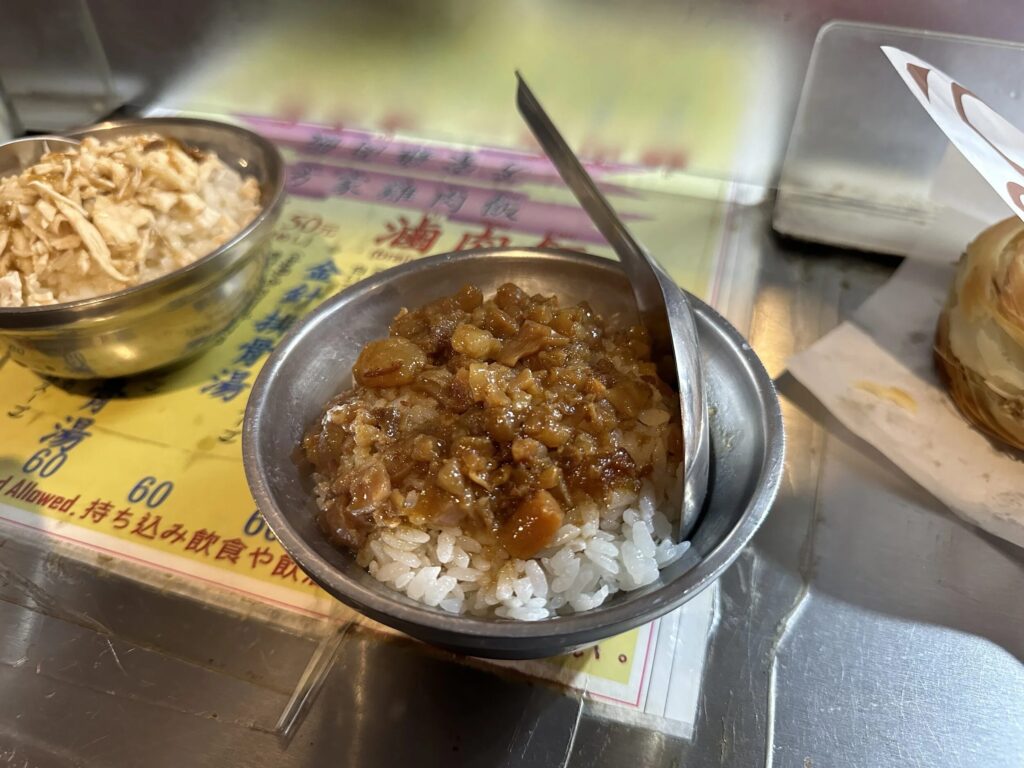
When a Restaurant Spills Into Everyday Space
Walking through the city, a yellow sign enters the field of vision.
A face with a carefully shaped mustache. The logo of Formosa Chang.
Most people understand it simply as a place to eat.
One sits down, receives a bowl, finishes the meal, and leaves.
A restaurant is usually that kind of space.
Yet after observing Taiwan’s living environment a little longer,
it becomes clear that the storefront is only a small part of their outline.
In some ways, their presence spreads more noticeably outside the restaurant than within it.
What the Mustached Logo Signals
There is a restaurant known as Formosa Chang, a nationwide chain built around lu rou fan.
It began in 1960 as a small street stall in Taipei.
Today, it is often treated as a reference point within Taiwanese food culture.
Inside, the lighting is bright.
The floors are dry.
Air-conditioning runs steadily.
Staff move in uniform.
The flow from ordering to serving is clear.
The dish comes from the world of street cooking.
The environment, however, feels corporate.
For many people, the name signals a meal unlikely to deviate far from expectation.
It may be one of the places that gave a stable outline to a dish once defined by variation.
Yet what is notable is this:
The presence of Formosa Chang does not end at the restaurant door.
Lu Rou Fan as Taiwanese Everyday Life
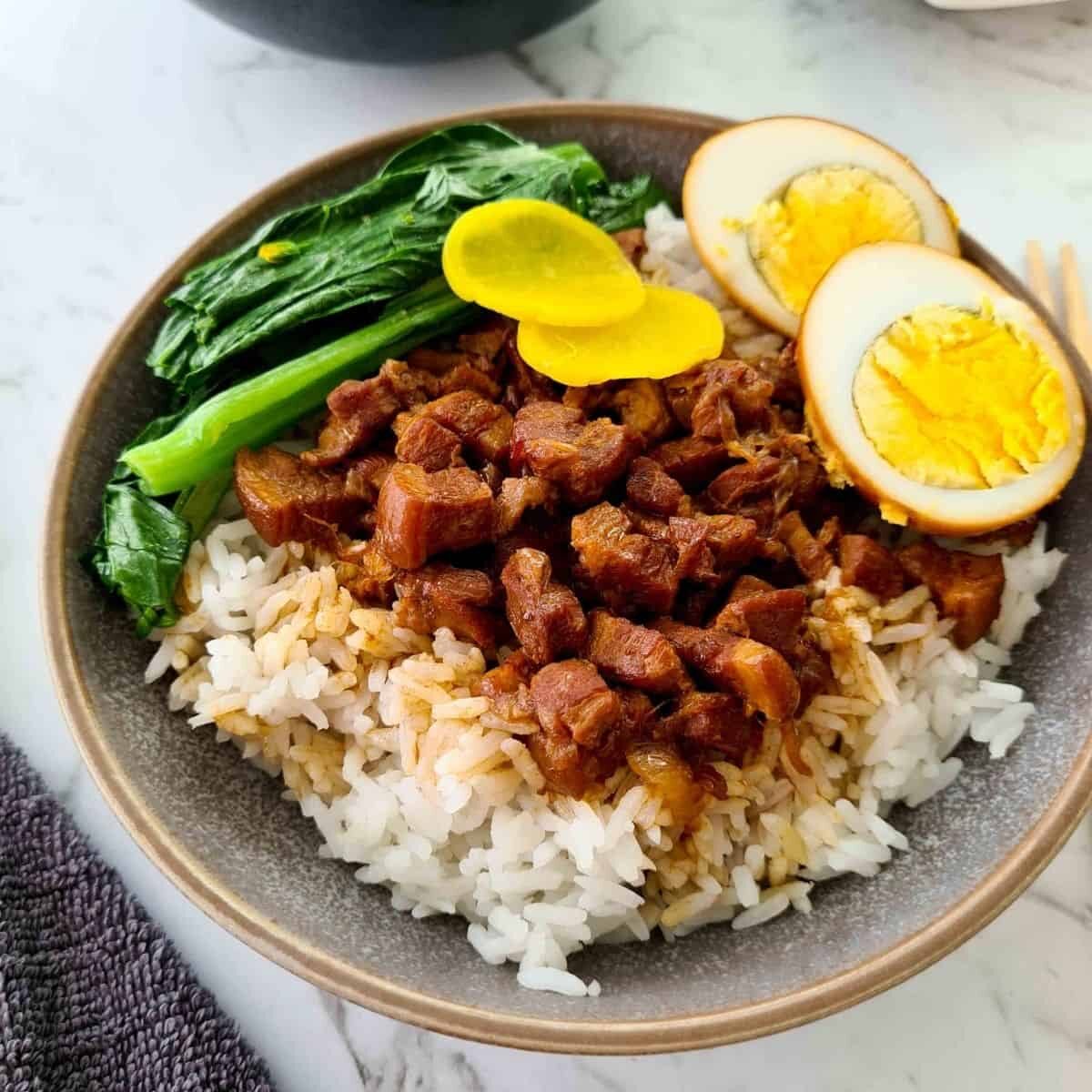
Lu rou fan is often described as a national dish of Taiwan.
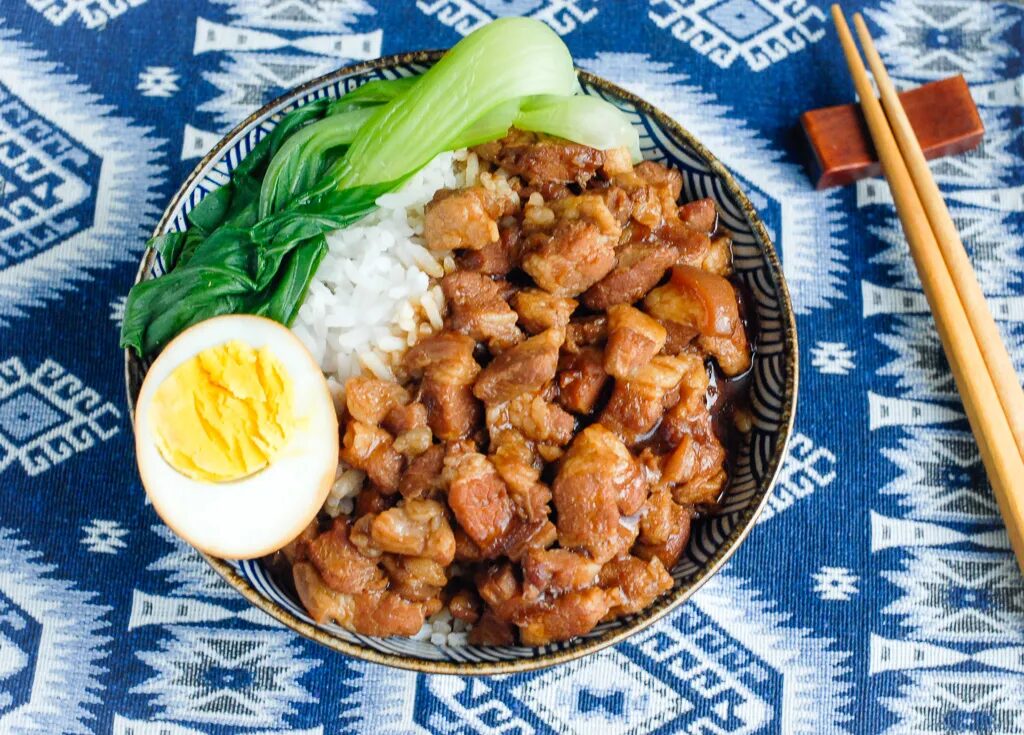
Finely chopped pork is simmered in a soy-based sauce with a restrained sweetness.
It is then poured over white rice.
The structure is simple.
Differences between shops remain visible.
The ratio of fat to lean meat shifts.
Sweetness rises or recedes.
Sometimes star anise lingers at the edge.
Even so, most people picture roughly the same bowl.
The portion is modest.
The price is usually restrained.
Some finish it alone.
Others add greens or soup and let it become a full meal.
In Taiwan, this bowl rarely marks an occasion.
It sits closer to a baseline —
something that quietly supports the rhythm of ordinary days.
Golden Boxes on the Supermarket Shelf
Looking along the aisles of PX Mart, a familiar face appears again —
the mustached logo.
Retort pouches.
Canned chicken rice.
Rows of gold-colored boxes stand in order.
Here, there is no need to visit the restaurant.
All that is required is white rice.
Open the pouch. Heat it. Pour.
The table becomes the restaurant.
This is portability of flavor.
Cooking has detached itself from place
and moved into the home.
Once, this bowl was something to be eaten where it was made.
Now it sits on a shelf, preserved, ready to be recreated at any hour.
The boundary of the dining hall softens slightly.
Nearness to the Convenience Store
The same name appears again on convenience store shelves.
“Supervised by Formosa Chang.”
Printed quietly on rice balls and boxed meals,
the logo functions almost as a marker of reliability.
In a field as competitive as convenience-store food,
whose name appears is not a trivial choice.
Being selected suggests a certain trust.
“I do not have time to go to the restaurant today. I will choose this instead.”
Such decisions slip easily into daily routine.
The hours of the restaurant are no longer a limit.
Access continues around the clock.
A restaurant, while remaining a restaurant,
seems to loosen its ties to time.
Braised Pork Rice at Thirty Thousand Feet
Lifting the gaze further, the setting leaves the ground.
The dish has once been served as an EVA Air in-flight meal.
Airline food is bound by strict conditions —
hygiene, preservation, resistance to reheating.
Taste itself is said to dull at altitude.
A dish must endure such an environment to be included.
For a preparation rooted in street cooking,
reaching this domain is uncommon.
It requires more than flavor.
It must be translated into a form that can travel.
The bowl has become something that moves through the sky.
Its connection to a single place weakens further.
The Mustache as a Gift
During the Lunar New Year season, boxed sets appear near storefronts.
Gift packages.
Pickled vegetables in jars.
Seasonings.
Retort sauces.
What was once everyday food
takes on the structure of a present.
Value is being converted.
A daily meal becomes something handed to another.
Here again, the role of the dish expands.
Not only for eating —
it becomes a medium through which relationships are marked.
Standardization as Foundation
Why has it been able to spread beyond the restaurant so naturally?
The preparation seems to have been laid during the expansion of the stores themselves.
Formosa Chang established a franchise system early on.
Branches at a distance still had to produce the same taste.
This required a large central kitchen
and a cold-chain distribution network.
Standardized sauce is delivered each day
in an identical condition.
Once such capacity exists,
sending it to supermarkets in sealed pouches is not a large step.
Products outside the restaurant feel less like a new challenge
and more like an extension of existing logistics.
The techniques refined for franchising
appear to have found another application.
Restaurant or Manufacturer
At this point, a question emerges.
Is it a restaurant?
In retort form or airline meals,
the texture remains close to what is served in the store.
Not coincidence — design.
The dish is treated not only as cooking
but as a product with composition.
International certifications such as ISO and HACCP,
quality controlled through numbers.
It is a stance somewhat distant from the sentiment of the street stall.
A service face that greets customers,
and a manufacturing face that regulates quality.
This dual nature may be what allows it
to exceed physical constraints.
Toward Something Like Air
Like water or electricity,
available when needed.
Open a pouch, and the flavor appears.
It seems to approach that condition.
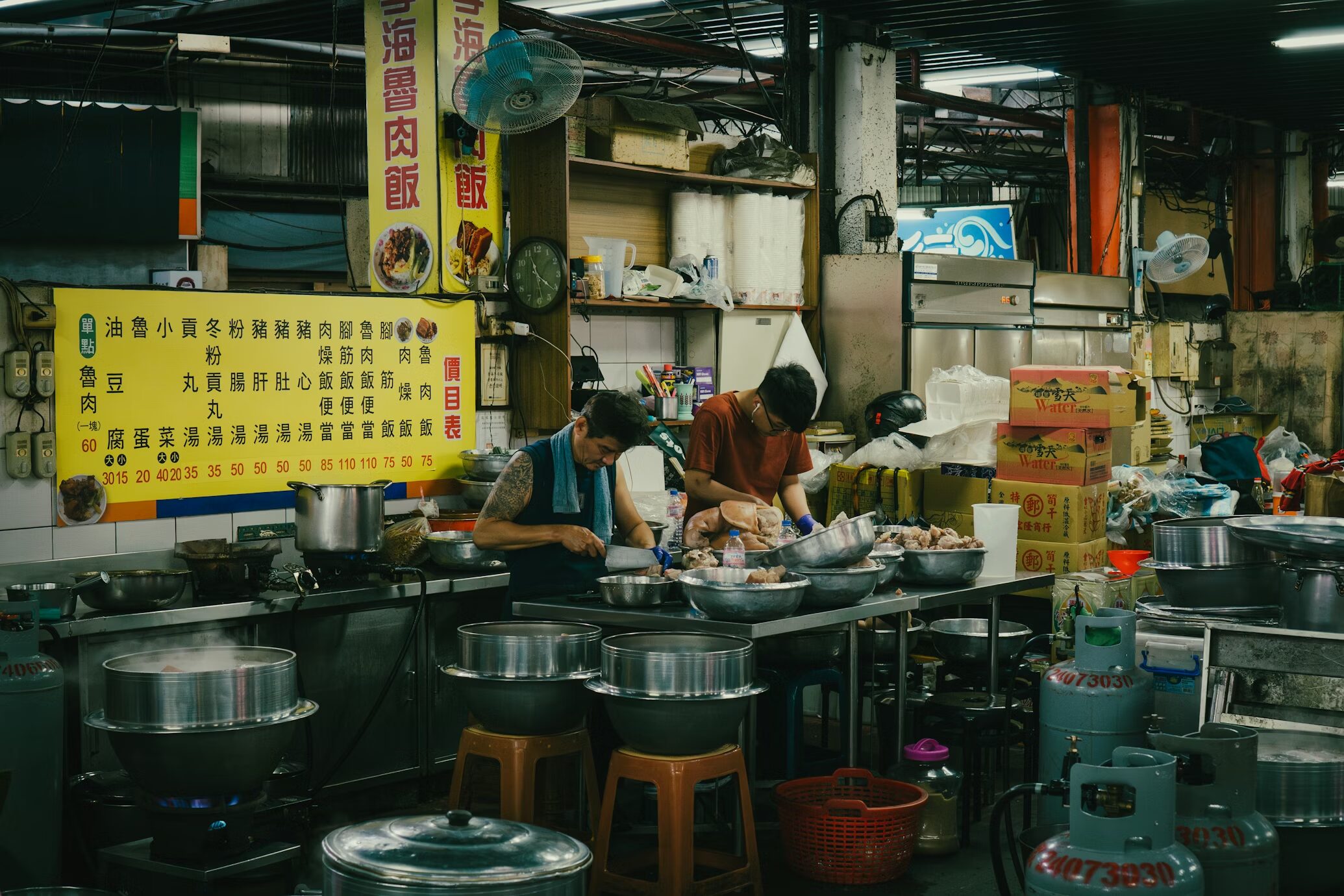
The street-side restaurant may function
as a kind of showroom
for products dispatched from a vast central kitchen.
The mustached logo that began at a stall
now lies scattered quietly throughout daily life.
Rarely noticed in a deliberate way,
yet consistently present.
At times, the entire island feels
like one large dining hall.