Watching heat, not cooking
Taiwanese beef soup, known locally as niurou tang, is prepared without simmering.
I look into the kitchen and feel a brief sense of surprise.
Nothing is simmering. No pot is being watched.
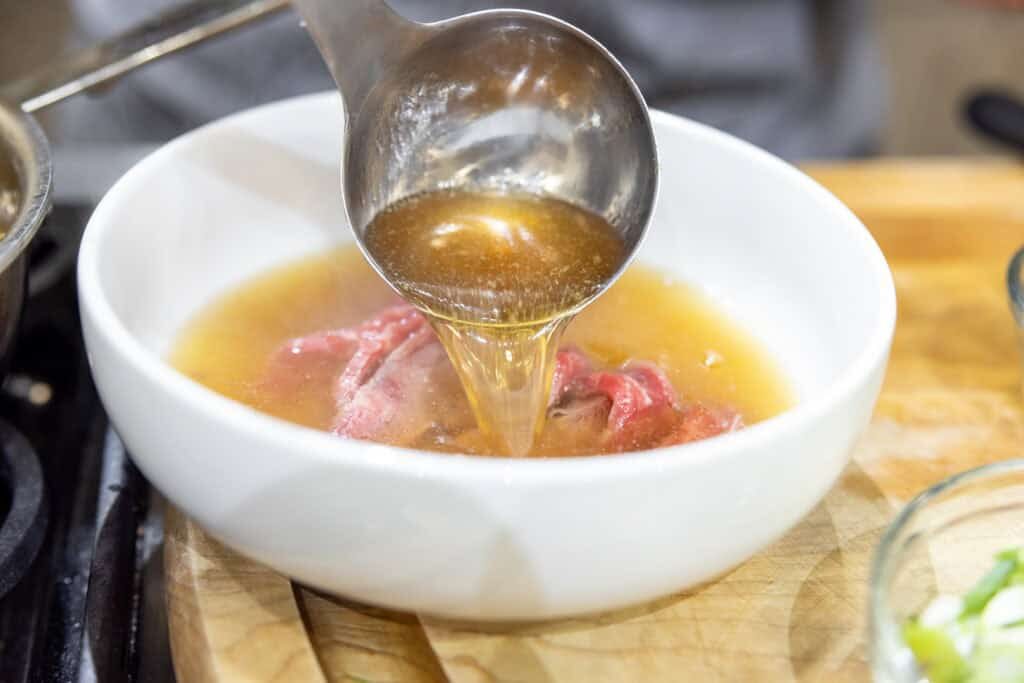
At the bottom of the bowl lie thin slices of raw beef.
Clear, boiling broth is poured over them in one motion.
That is all.
Within a few seconds, the color changes.
Red turns into a pale pink.
Iron and umami dissolve into the soup, and a faint aroma rises.
This feels less like cooking than observing the movement of heat.
The cooking time exists only in the moment of serving.
Beef that never meets a refrigerator
This method works because of the meat itself.
What is used in Tainan is called warm-body beef.
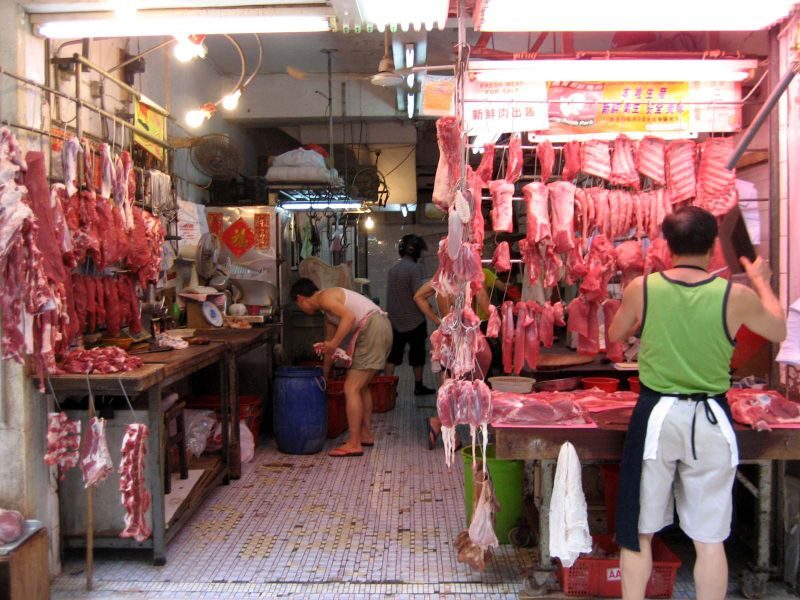
The animal is slaughtered late at night.
The meat is delivered without freezing or refrigeration.
Rigor mortis has not yet set in.
The flesh still holds elasticity and moisture.
Why Tainan?
The answer is geographical.
One of Taiwan’s largest slaughterhouses is in Shanhua, Tainan.
Distances are short. Time is not lost.
Because of this, hot broth can be poured over rare beef without producing odor.
It is not eaten in the morning because it is luxurious.
It is eaten in the morning because that is when the meat is best.
Human routines adjust to the cow, not the other way around.
A memory of not boiling
In rural Taiwan, cattle were long work partners.
They pulled plows. They were not food.
Modernization allowed beef to be eaten,
but that alone does not explain why it is not boiled.
Another memory overlaps here.
The food culture of the Siraya people.
They once relied on deer as their main protein.
Deer meat toughens easily.
It was sliced thin and briefly passed through hot water.
By avoiding prolonged heat, it stayed edible.
Deer disappeared.
Cattle took their place.
The method remained.
Seen this way, beef soup is deer soup wearing a different body.
Its position as an outlier within Chinese cuisine becomes easier to understand.
Sweetness and ginger
The first thing that reaches the tongue is sweetness.
Not sugar.
It comes from beef bones, onions, sometimes apples.
Layered natural sweetness.
This lies even deeper than the reputation of Tainan food being sweet.
A small dish is placed beside the bowl.
Julienned ginger. Sweet soy paste.
The pink beef is lightly dipped.
Ginger sharpens the sweetness at once.
It feels less like chewing than loosening.
A dish with a time limit
This soup has a clear deadline.
For the first few minutes,
the beef stays tender, the color light.
After five minutes, heat goes too far.
Pink turns brown. The moment is gone.
In the dim streets before sunrise,
this dish exists only for a short window.
Taiwanese beef soup is shaped by a place and a time.
A food experience that can exist almost nowhere else.