Taiwan

← Back to Taiwan

Food Culture

Notes on the Taste of Taiwan Before 1949

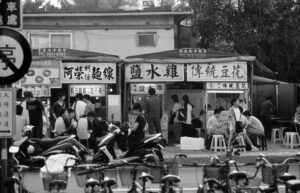
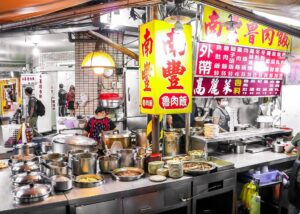
At a Taipei night market, beef noodles, dumplings, and xiaolongbao crowd the signs and steamers. Roll the calendar back before 1949, and the foods filling most stomachs came from roots, rice, coastlines, and mountain stores instead.

Notes on the Five Bowls of Braised Pork Rice in Sanchong

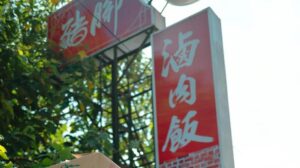
Across Taipei Bridge, a short stretch of crowded streets holds five braised pork rice shops famous enough to be counted together. One piles cubes of fat into the bowl, another serves pork knuckle, while others draw customers with shrimp soup, pickled greens, or an early-morning opening.

Notes on Braised Pork Rice as the Base of a Taiwanese Meal

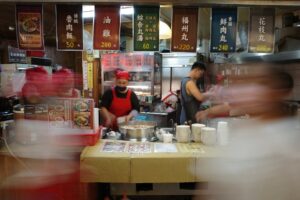
At Maru Lin Lu Rou Fan in Taipei, customers pass a glass case of fish, vegetables, eggs, and tofu before anyone asks whether they want rice or noodles. The braised pork rice arrives at the end, after the rest of the tray has already taken shape.

Notes on the Zhuoshui River as a Culinary Boundary

Cross the Zhuoshui River and a familiar bowl of braised pork rice begins to taste different: salt and soy sauce give way to a more immediate sweetness. The roads and signs barely change, but some restaurant chains stop at the river while others pass through without resistance.

Notes on Lu Rou Fan, Rou Zao Fan, and Kong Rou Fan

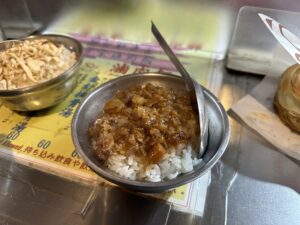
In a northern Taiwanese eatery, lu rou fan usually arrives as a modest bowl of minced pork over rice. South of the Zhuoshui River, the same name can put a thick slice of braised pork in front of you.

Notes on Lu Rou Fan That Flew Over Taiwan

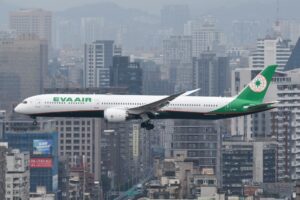
Lu rou fan belongs to humid alleys, metal spoons, and small stools—until it appears on a tray ten thousand meters above the ground. In the dry cabin of an EVA Air flight, the familiar bowl enters a setting built to make ordinary food behave differently.

Notes on Lu Rou Fan and Ji Rou Fan in Taiwan

On the same small-eats menu, lu rou fan and ji rou fan can look almost interchangeable: rice, meat, sauce, and a few pickles. Yet one is readily summoned as a picture of Taiwan, while the other seems to change shape from shop to shop.

Notes on Ghost Chains in Taiwan

In Taipei, the same red Yonghe Doujiang sign can appear several times within a short walk, while each shop has a different owner and its own version of breakfast. The signs look like a chain’s network, but there is no visible organization holding them together.

Notes on Yonghe Soy Milk Shops

In Taipei, red signs reading “Yonghe Doujiang Dawang” appear often enough to suggest a single chain. Yet the storefronts, menus, prices, and logos keep changing from one shop to the next.