A Daily Bowl That Holds the City Together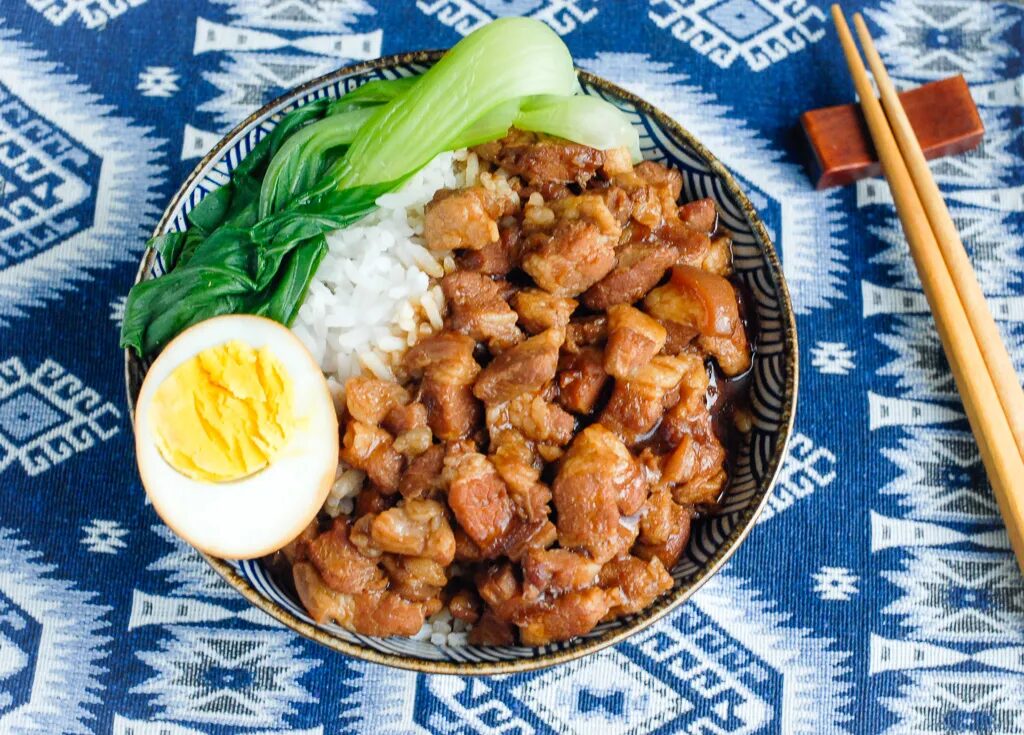
In Taiwan, a sweet and salty smell is often already in the air.
It comes before the bright signs of the night market.
It reaches you through steam, before you see the stall.
Lu rou fan is not a special-occasion dish.
It is closer to infrastructure.
A bowl that feeds the ordinary days.
In tourist areas, in alleys, in office districts, it changes shape and tone.
But the atmosphere around it stays similar.
It is not a “local specialty” so much as a daily form.
Because it is too familiar, it carries a few misunderstandings.
The unstable name.
The confused origin story.
The north–south shift in definition.
And the layered structure inside the bowl.
A Mystery of Names and History
“Lu” and “Lu”: a Small Character War
The original writing is 滷肉飯.
The character 滷 points to braising.
But 滷 is heavy to write.
So many shops began using the simpler 魯.
It stayed.
In Taiwan, practicality often wins without argument.
If the sign says 魯肉飯, nobody is confused.
The small roughness matches the temperature of daily life.
Yet 魯 also points to Shandong, an old name for the region.
That single character brought another misunderstanding.
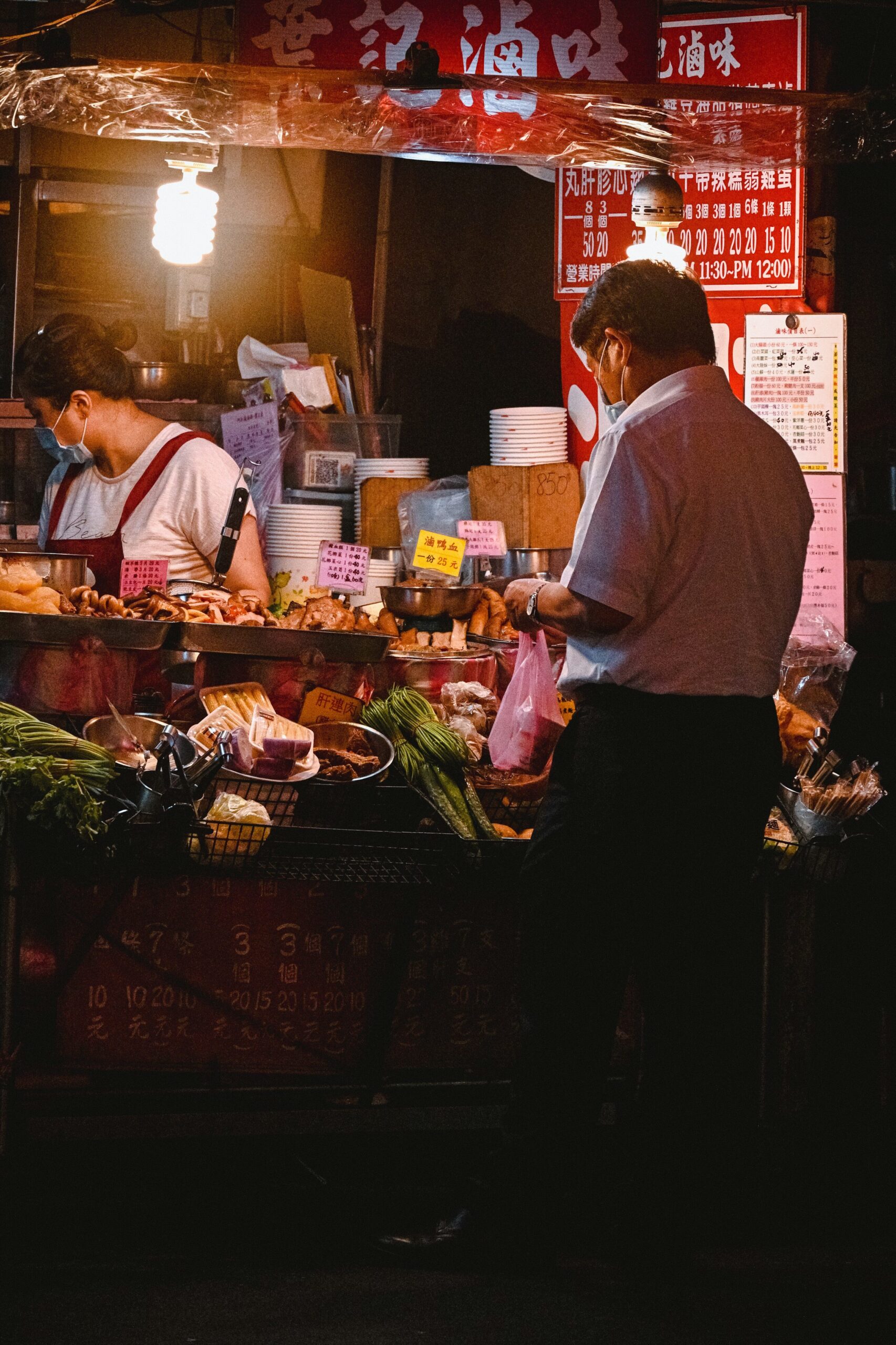
The 2011 “Michelin Incident”
In 2011, the Michelin Guide once wrote that lu rou fan originated in Shandong,
because 魯 can mean Shandong.
Taiwan reacted sharply.
This bowl was not something imported and filed away as a “regional dish.”
It felt closer to something owned.
Later, Taipei City held a lu rou fan festival.
The argument was not about taste.
It was about who gets to name the everyday.

A Long Shadow From Ancient Records
If you dig deep enough, you find older structures.
In ancient Chinese ritual texts, there are records of meat sauces reduced,
then poured over rice with fat layered on top.
The scale of the story becomes too large.
Still, it helps explain why this bowl is treated as more than pork on rice.
It carries a sense of time.
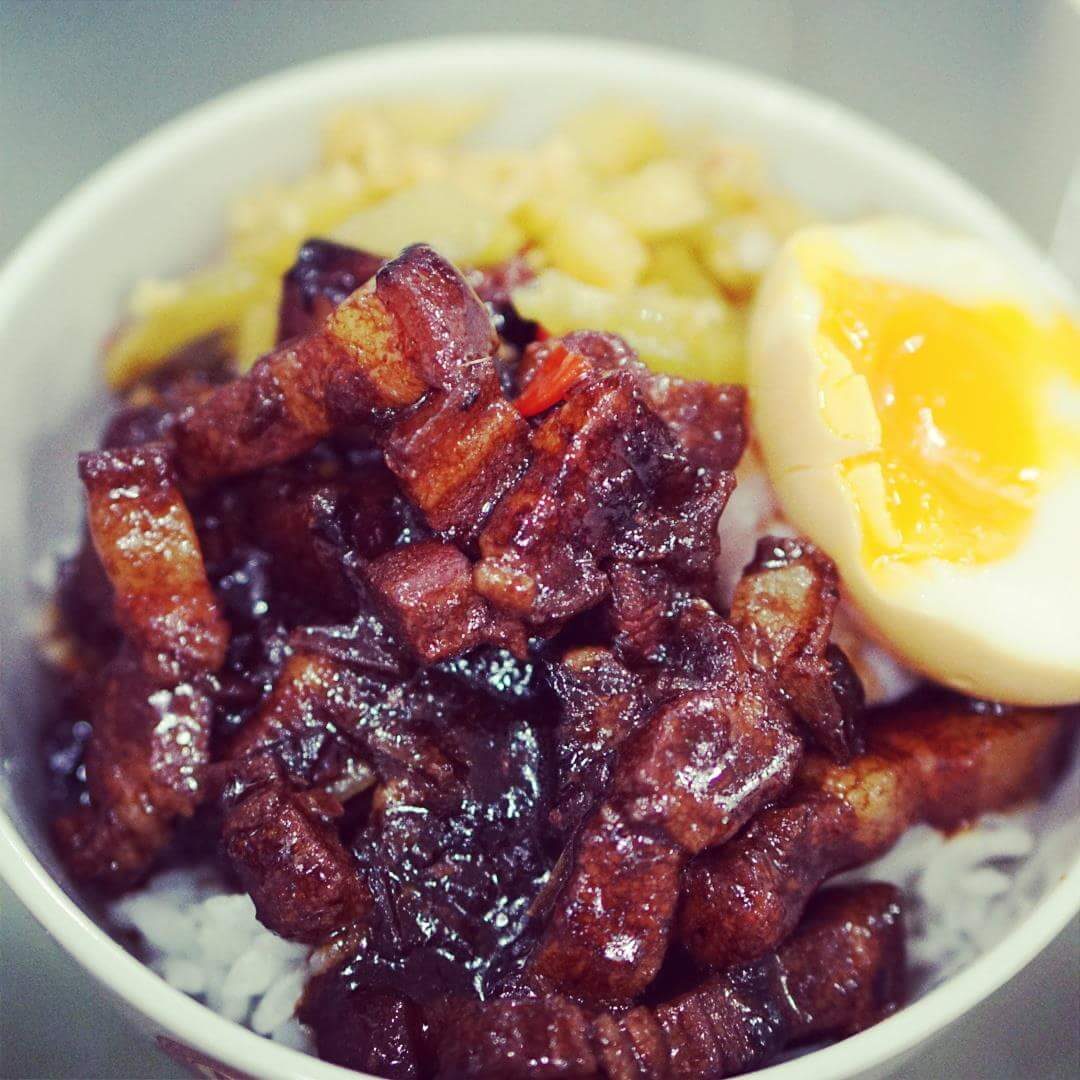
What the Bowl Is Made Of
The appeal is not just soy-braised pork.
Aroma, sweetness, and depth overlap,
and the rice is coated in thin layers.
You step through those layers without noticing.
Aroma: Star Anise as a Marker of Place
When the lid opens, a sweet spice rises first.
Star anise.
Some people avoid it.
But without it, the dish stops feeling like Taiwan.
It blurs the smell of pork fat.
It gives the bowl a clear outline.
A heavy ingredient needs a sharper edge to hold it.

Depth: Fried Shallots in the Background
The pork and sauce are visible.
But in many bowls there is another darker sweetness underneath.
Fried shallots, melted into the base.
They do not show themselves easily.
Yet they often decide the depth.
The soy-sugar profile can become flat.
The shallots make it three-dimensional.
Texture: Eating Skin, Not Lean Meat
The key difference from Japanese minced pork rice is skin and fat.
The center is not lean meat.
Gelatin from long-braised pork skin thickens the sauce.
It leaves a faint stickiness on the lips.
This bowl is closer to eating a reduced liquid than chewing meat.
The pork becomes a carrier of texture.
Seasoning: Soy and Rock Sugar
Lu rou fan is sweet.
Not dessert-sweet, but built sweet.
Thick soy sauce and rock sugar create shine and weight.
The color deepens as it cooks.
Some bowls look heavy and taste heavy.
Others look light, and sweetness arrives later.
The brown surface is a kind of memory.
Rice: The Base That Makes It Possible
The dish looks like pork.
But you are also eating rice.
If the rice is weak, the bowl collapses.
The sauce is too dense.
The structure fails.
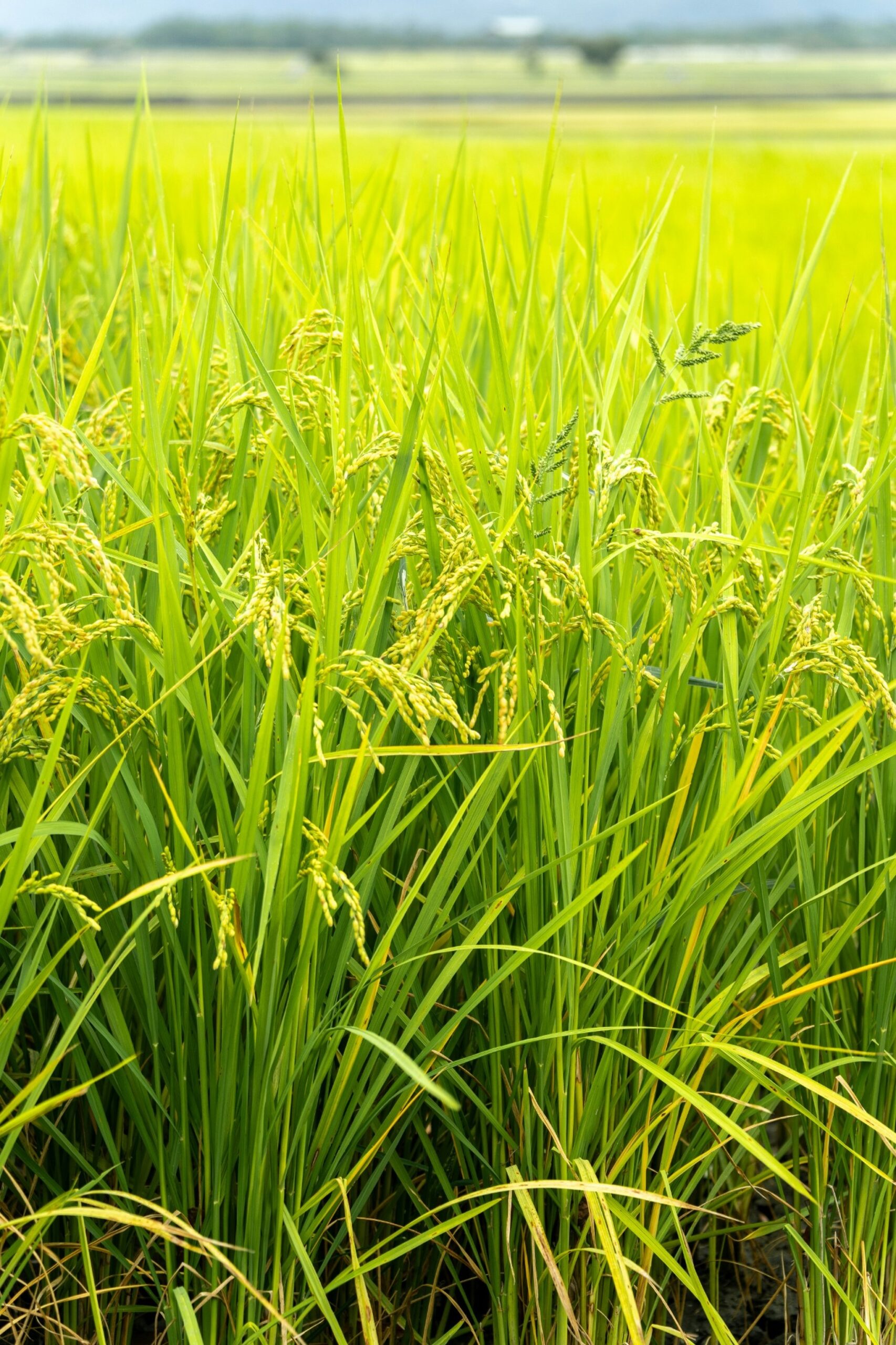
Taiwan’s white rice is close to Japanese rice.
Short-grain, slightly sticky.
Not the long-grain types common in Southeast Asia.
This rice is often called ponlai rice.
It was developed during the Japanese colonial period,
bred to grow in Taiwan’s climate.
The sauce is thick with fat and fried shallots.
It needs rice that can absorb it and still hold shape.
Ponlai rice does that.
It stays together under chopsticks.
It keeps a contrast between white grains and stained grains.
The bowl became daily partly because this rice was already there.
The North–South Twist in Definitions
Travelers get confused when the same characters point to different bowls.
As you move south, the labels shift.
The Taipei Dictionary
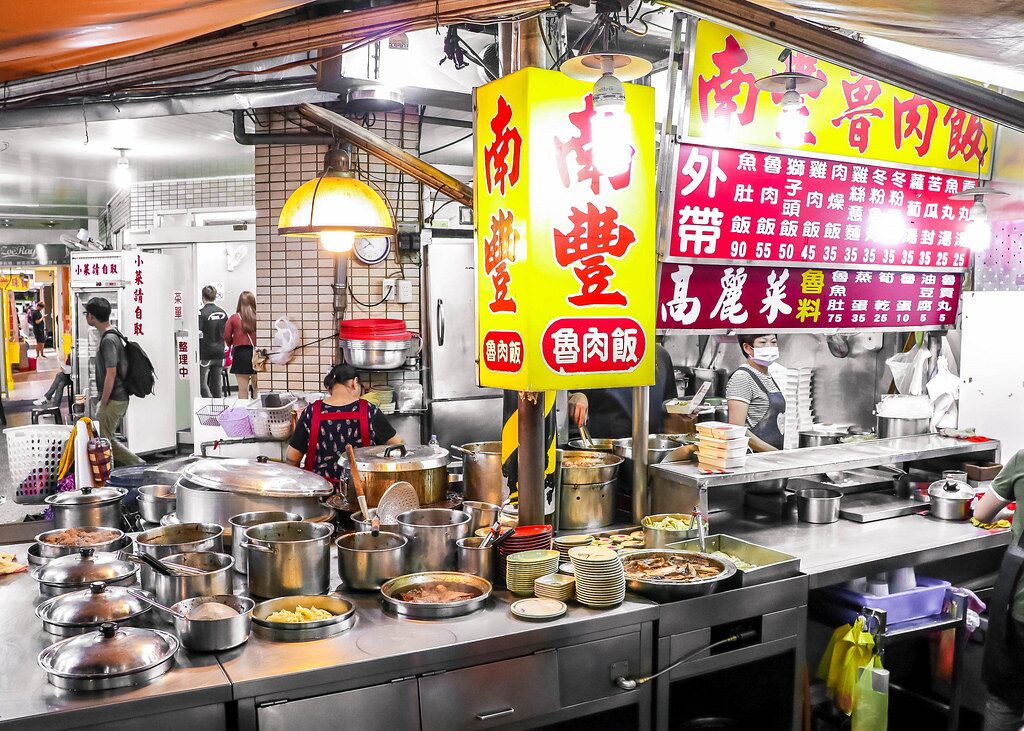
In the north, especially around Taipei, the pattern is often:
Lu rou fan = minced pork with fat
Kong rou fan = braised pork belly chunks
Here, “lu rou” tends to mean chopped meat.
The pork is cut small.
The sauce spreads into the rice.
The Tainan Dictionary
In the south, the labels can swap:
Rou zao fan = minced pork
Lu rou fan = braised pork chunks
In this reading, “lu rou” keeps the sense of a larger braised piece.
If you order it, you may receive a block of pork belly.
The clean dictionary approach breaks down.
On the street, it is simpler.
The shape of the meat explains everything.
A Border of Taste
Not only the names change.
The weight of flavor changes too.
The Northern Pull Toward Salt
Around Taipei, bowls often lean saltier.
The soy note is clearer.
The finish is tighter.
Some places add a small hint of five-spice.
Some hide a touch of curry powder.
The bowl feels adjusted to an urban tempo.
The Southern Gravity of Sweetness
From Taichung down to Tainan, sweetness becomes more direct.
Sugar appears more openly.
Thicker cuts of pork.
A heavier, glossy sauce.
A longer aftertaste.
People explain it through history and climate.
Sugar once meant wealth.
Heat makes the body want calories.
Whether that is the full reason or not,
the sweetness is real.
Three Familiar Names in Taipei
Taipei has many famous bowls.
But they are not all the same type.
Eating them side by side shows how wide “daily” can be.
Huang Ji Lu Rou Fan
Near Qingguang Market, around Zhongshan Elementary School MRT.
The sauce is controlled.
Not too sweet, not too sharp.
A light medicinal aroma stays in the background.
It feels like a standard reference point.
They are also known for pork knuckle.
It is fat-forward, but not exhausting.
Jin Feng Lu Rou Fan
Near Chiang Kai-shek Memorial Hall.
Mushrooms and star anise come forward strongly.
The pork is cut in longer pieces.
The smell arrives before the bite.
There can be a line, but the turnover is fast.
People who want a clear “Taiwan” profile often prefer this type.
Formosa Chang
A chain across Taiwan.
Often described as the company version of lu rou fan.
More expensive than a stall,
but consistent and clean.
The flavor is sweet and heavy,
built to land in a stable place for almost anyone.
When you do not want to miss, it is useful.
The Bowl Needs Its Side Dishes
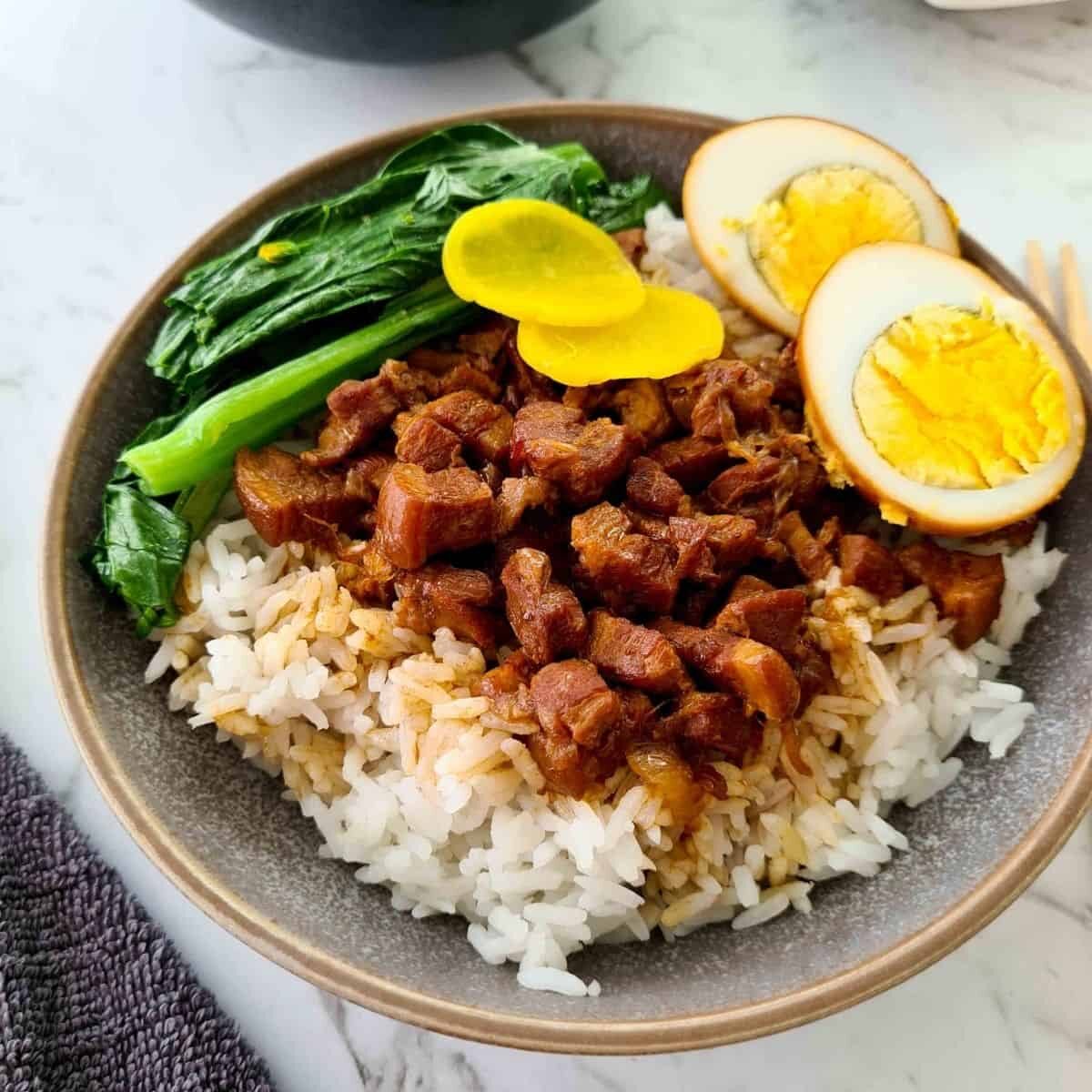
Lu rou fan is rarely eaten alone.
In Taiwan, side dishes line up naturally beside it.
A clear soup.
A braised egg.
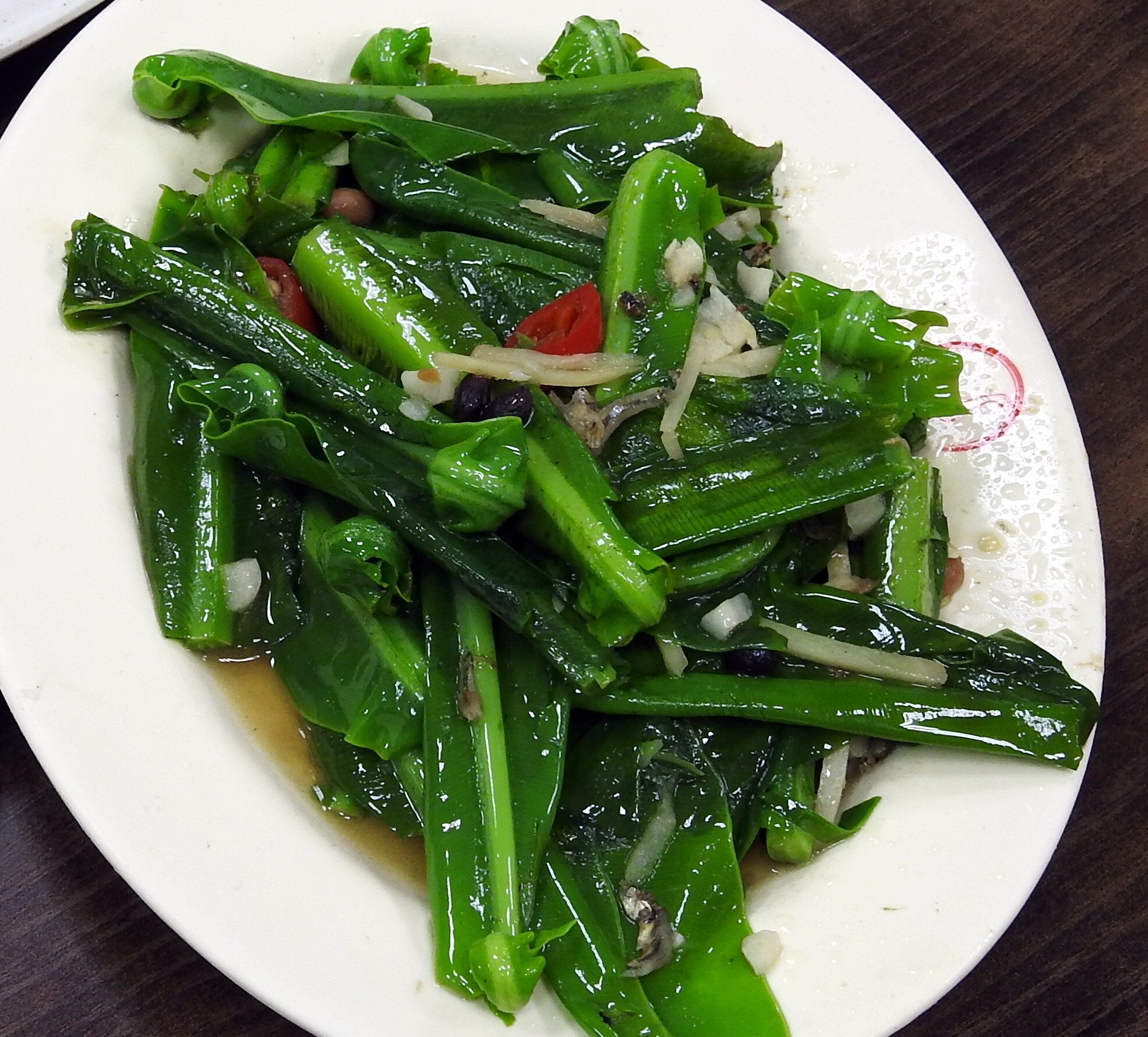
Blanched greens.
They do not compete.
They keep the bowl moving.
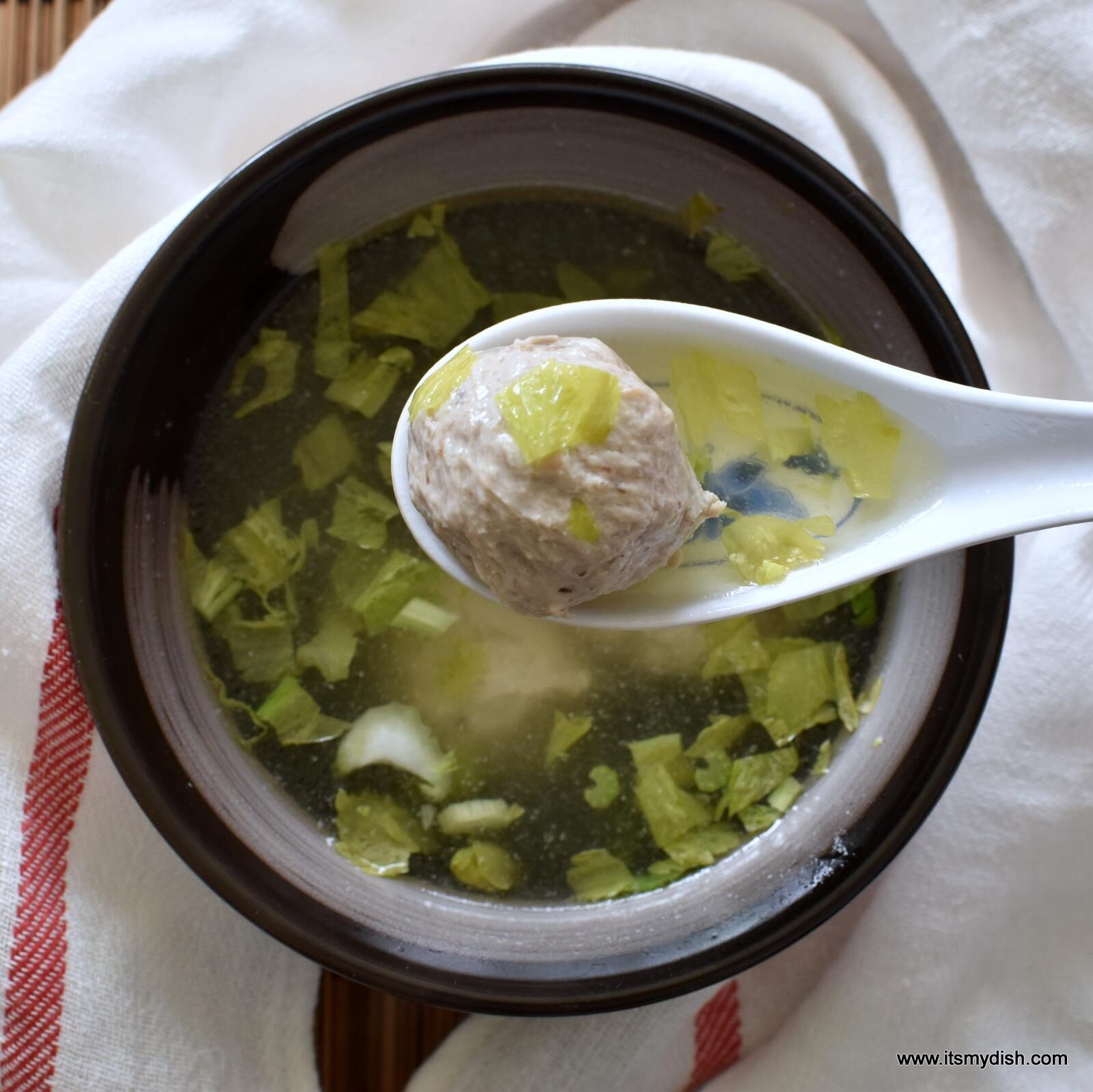
Pork Meatball Soup (Gongwan Soup)
A clear broth resets the mouth.
Heat and salt remain.
The next bite becomes easier.
Braised Egg
The egg rounds the sauce.
The yolk adds weight.
The sweetness loses its corners.
Blanched Greens
Greens insert water.
One sharp green note interrupts the fat.
Then the bowl returns.
People do not mix everything into one uniform mass.
They keep the contrast.
White rice beside stained rice.
The difference stays until the end.
That is how the bowl remains quiet, even when it is heavy.
A Dish That Draws a Map
Lu rou fan is everywhere, but never identical.
Some are sweet.
Some are salty.
Some carry more skin.
Some smell of mushrooms.
Local people keep one bowl inside their own radius of life.
Walking from shop to shop is not tourism.
It is collecting fragments of the city’s daily rhythm.
Sometimes the pork on rice tells you distance more precisely
than a printed map.