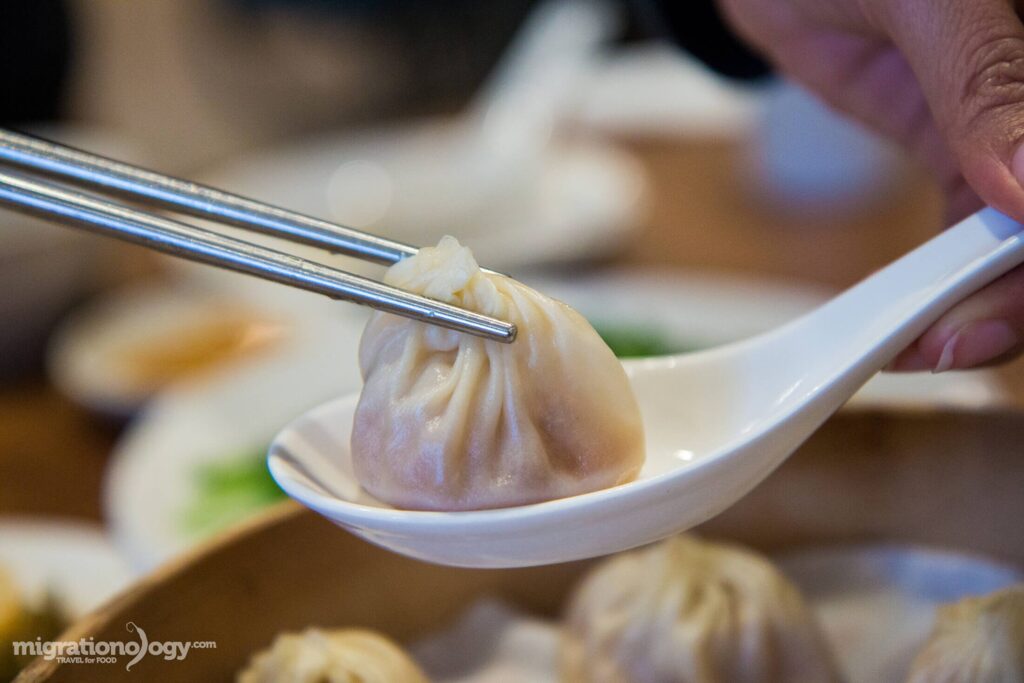
In Taiwan, xiaolongbao may arrive as a delicate dumpling whose skin trembles around hot soup, or as a soft, fermented bun at a breakfast counter. They share a name and a steamer, but not quite the same experience.
Xiaolongbao is a familiar sight in Taiwan.
When I walk through the city, the smell of bamboo steamers mixes into the air.
At the entrance of a market.
At a breakfast counter.
At the corner of a night market.
The steam seems to rise not from one shop, but from the streets themselves.
This dish sits at the center of that steam.
It is not simply a smaller version of a pork bun.
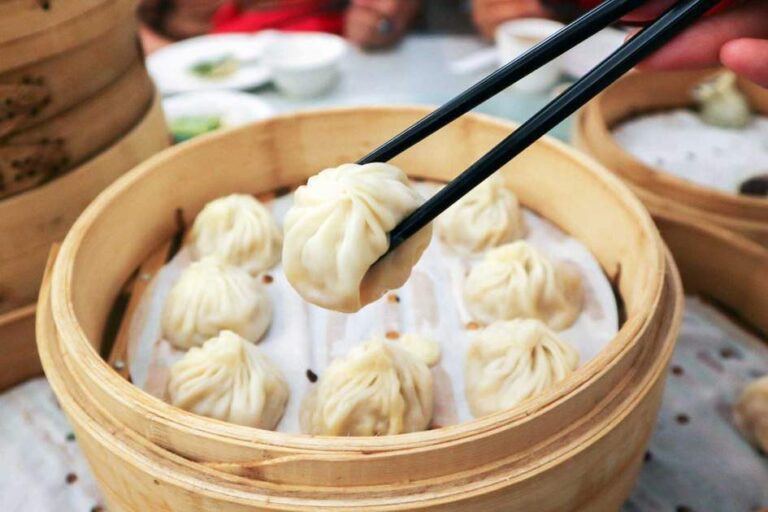
It wraps soup inside a thin, edible skin.
The design is slightly contradictory.
To keep liquid inside, you normally need a container that does not leak.
Here, the container is a membrane you are meant to eat.
It feels closer to a small physics experiment than a recipe.
Heat changes the inside.
Steam completes the structure.
Two kinds of xiaolongbao share the same name
When people say xiaolongbao, it sounds like one thing.
In Taiwan, it often refers to two different lineages.
One is closer to tangbao, soup dumplings in the strict sense.
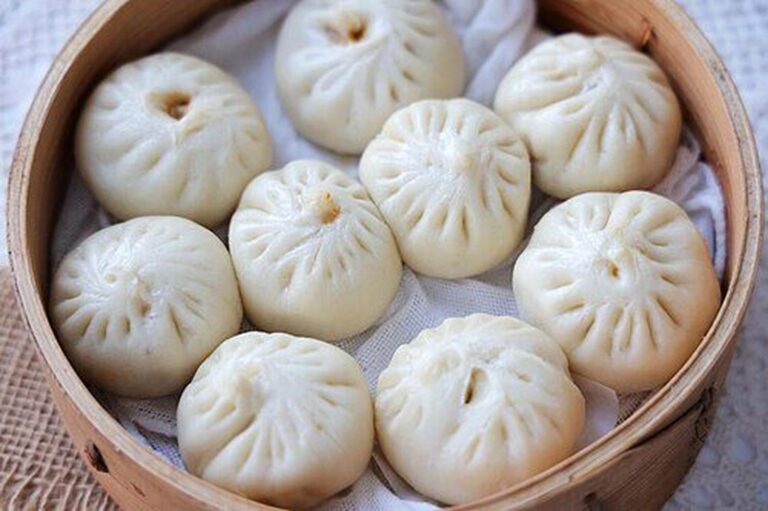
The other is closer to a small steamed bun.
Both live under the same word.
The “tangbao” style
This is the style many visitors picture first.
The dough is unfermented.
Thinness is prioritized, and the skin is pushed to its limit.
The soup becomes the main character.
When you lift one with chopsticks, the inside trembles.
The skin exists as a container, and texture steps back.
This type is easier to meet in specialist shops and restaurants.
It matches the international image of the dish.
The street-corner style
This is closer to what you see at breakfast shops.
The dough is fermented.
It is soft, like bread.
Here, the center shifts.
The wheat flavor comes forward.
The soup is absorbed rather than held.
It stays easy to eat even after it cools.
Stalls, night markets, morning counters.
This is what appears along daily routes.
Many travelers chase the first type.
But the second one seems to carry more of Taiwan’s everyday appetite.

How soup can exist inside a thin skin
The first question is usually the same.
How is the soup put inside?
It is not injected.
A solid is wrapped.
The filling contains aspic, a chilled gel made from stock.
When it is cold, it holds its shape.
When it meets steam, it melts.
Inside the steamer, a phase change happens.
The soup is not liquid at the start.
It becomes liquid later.
A famous ratio is often repeated.
Skin 5 grams.
Filling 16 grams.
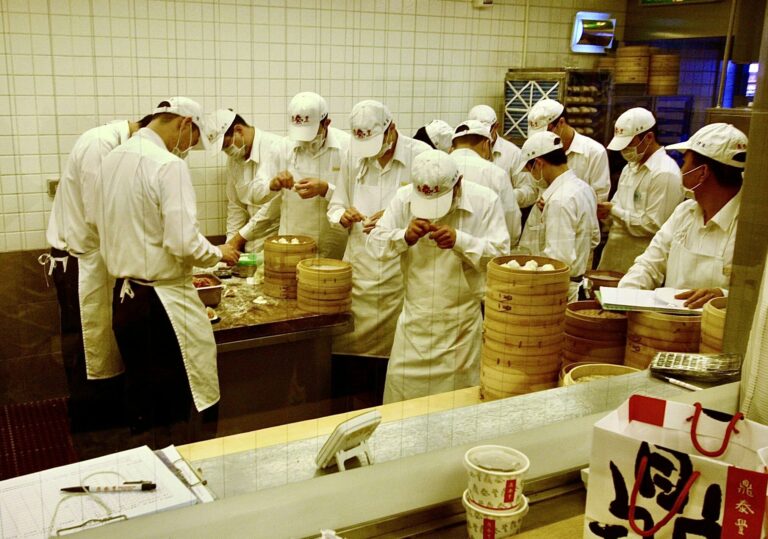
Eighteen pleats.
These numbers are not decoration.
If the skin is too thin, it tears.
If it is too thick, the soup loses its presence.
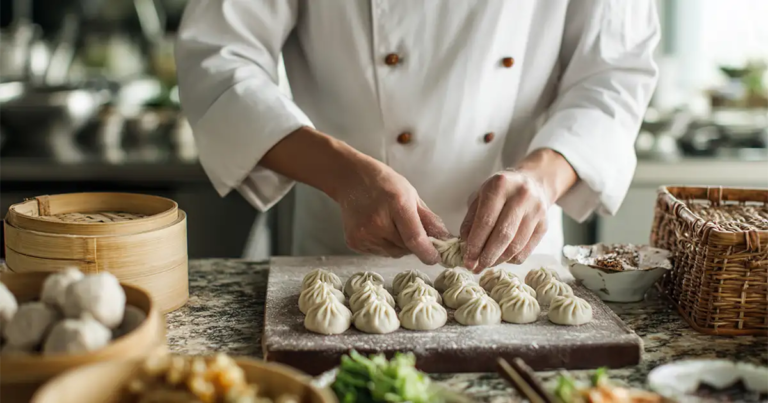
Even the pleats have a job.
They create strength for chopsticks.
They help heat enter evenly.
They are structural material.
Fillings increase quietly
Once the basic form is fixed, variations appear.
This dish accepts change without losing its frame.
The plain version begins with pork.
It carries the relationship between skin and soup with the least noise.
Crab roe leans toward richness.
The soup can look almost golden.
The aroma is strong, and it speaks first.
Luffa gourd is often mentioned as a Taiwan-shaped turn.
It is lighter and wetter.
It gives an exit for those who avoid heavy fat.
Truffle has become a symbol of internationalization.
Its scent arrives before anything else.
Another culinary grammar enters the steamer.
A small ritual to avoid burns
This dish is also a contest with time.
If it cools, the fat stiffens and the soup becomes dull.
If it is too hot, the tongue stops.
So there is a procedure.
Not etiquette, but accident prevention.
Din Tai Fung is also the place that spread this procedure across the world.
With xiaolongbao, knowing how to eat it becomes almost as important as the taste itself.
The restaurant made that assumption feel natural.
A ratio is often repeated: soy sauce one, vinegar three.
Too much soy makes salt lead.
Vinegar is said to be the main tool.
It cuts the fat.
Ginger is not decoration.
It resets the mouth.
It works like a wiper.
The movements are mostly fixed.
Dip.
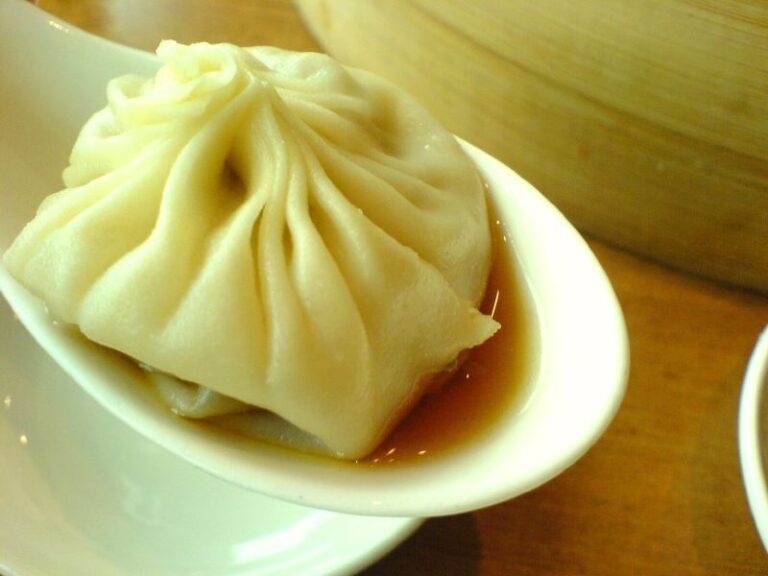
Place it on a spoon.
Break the skin slightly.
Drink the soup first.
Then add ginger and finish it in one bite.
Keeping everything on the spoon prevents spills.
It also controls temperature.
From street steam to a global format
It is often said that the dish began near Shanghai, in Nanxiang, and crossed to Taiwan, where it changed shape.
The original form was a practical structure.
Soup sealed inside skin, finished by steam.
Heat and time became flavor.
It looks like a design built for speed and ease rather than luxury.
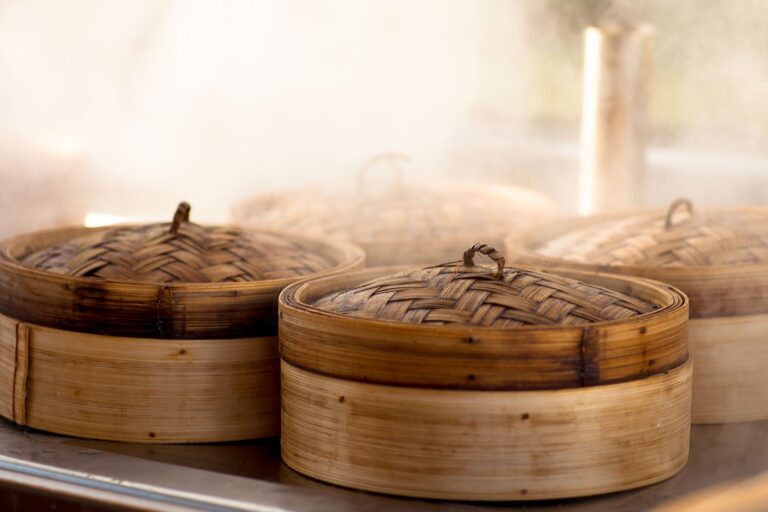
Then it stopped staying in one place.
Multilingual menus. Uniform operations. Overseas branches.
Aroma and fat were adjusted to travel.
It became food that could move.
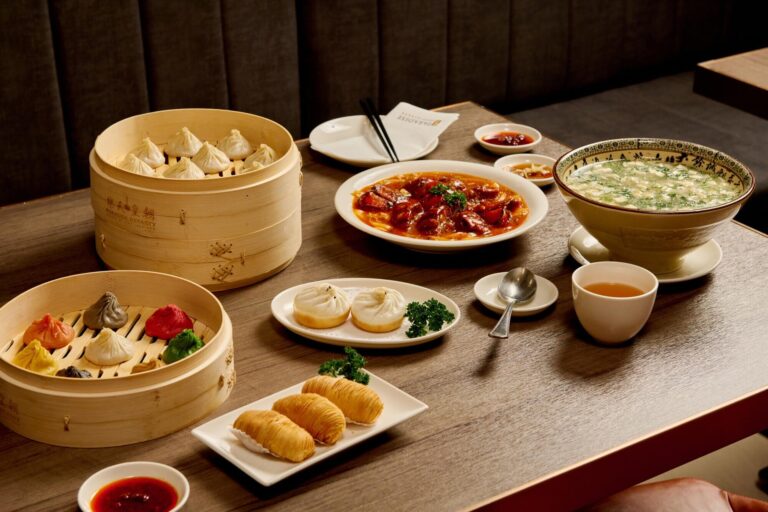
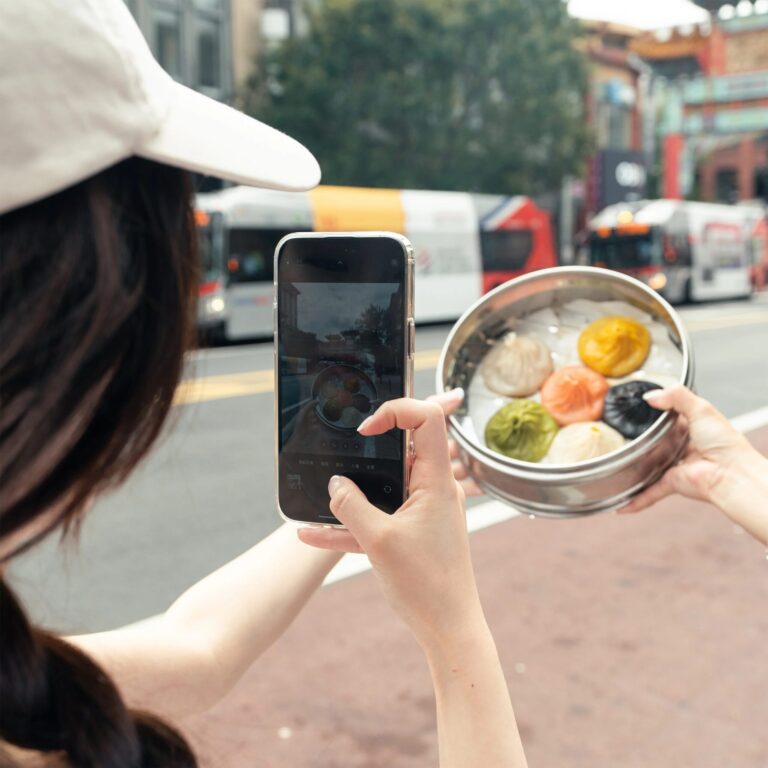
Now it is moving again.
Bigger dumplings. Brighter colors.
Dumplings made to be photographed before they are eaten.
Time spent holding a camera becomes part of the meal.
Still, when the lid opens, the first rush of steam remains the same.
That moment has not changed much.
A spoonful that holds structure
A delicate piece in Taipei,
and a plain piece eaten at a morning market in Taichung,
both sit on the same logic of steamers and heat.
This dish asks something from the person eating it.
Not just chewing, but handling temperature and liquid.
The next time I eat one in Taiwan,
I try to notice not only the taste,
but the structure and the time behind the pleats.
That is enough to make the same small piece look slightly different.

— Detour —
a little further to walk
- Notes on Xiaolongbao and the History Taiwan Inherited
- Notes on the Fluffy Xiaolongbao of Taiwan’s Breakfast Shops
- Notes on the Globalization of Taiwan’s Xiaolongbao