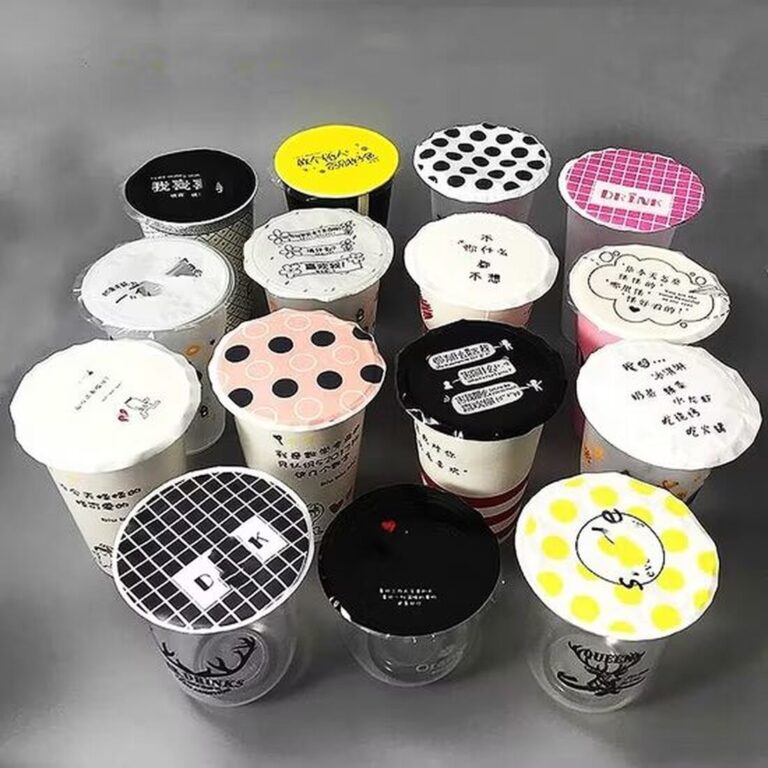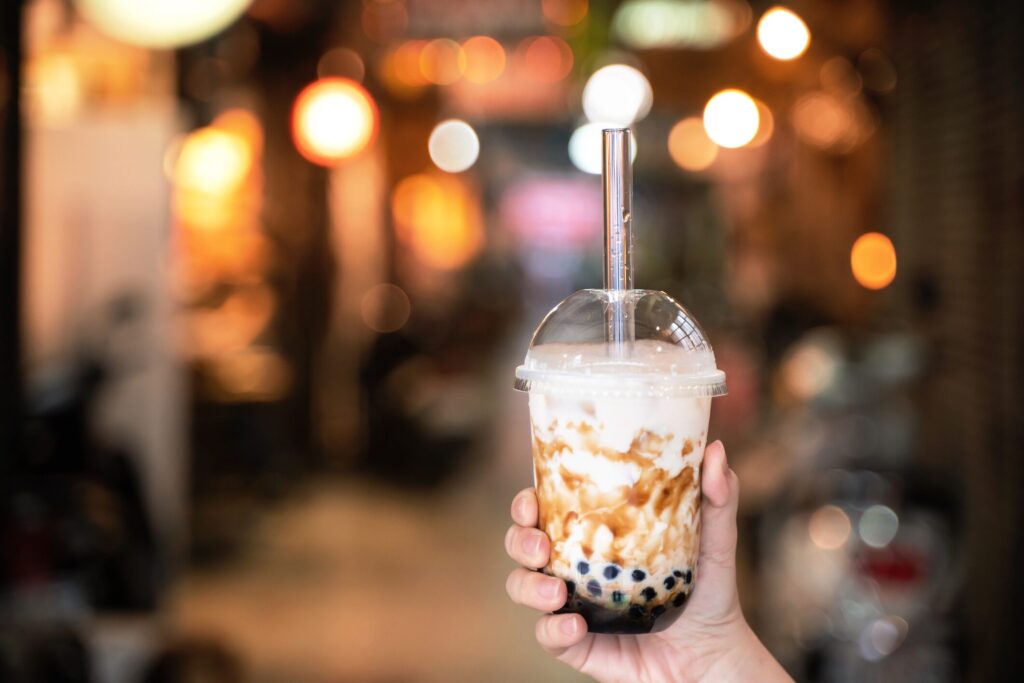
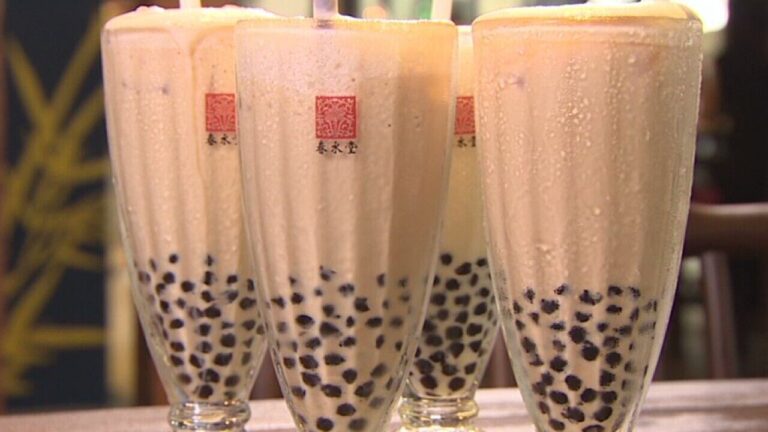
At the end of a night market, empty bubble-tea cups gather beside the bins, their remaining pearls hidden under melting ice. A single drink makes them easy to overlook; multiplied across Taiwan, the beads become a different kind of object.
On almost any street in Taiwan, a cup of bubble milk tea appears somewhere.
Beside trash bins.
At the feet of parked scooters.
In the corner of a night market.
It is so ordinary that it stops being noticed.
One day a question formed instead.
How many tapioca pearls do people here actually drink in a year.
To answer that, the unit has to become a single black bead.
It feels excessive, but it is the only way the scale can be seen.
What is being counted
The target is Taiwan as a whole.
The unit is one tapioca pearl.
Only drinks sold at beverage stands, convenience stores, and cafés are included.
Pearls eaten in shaved ice or tofu pudding are left out.
Those are scooped, not sucked.
This is a count of what passes through a straw.


Counting from the shops
According to Taiwan’s Ministry of Economic Affairs, there are about 28,000 drink shops.
Walking through any city, this number does not feel inflated.
The four major convenience store chains operate around 13,000 branches.
Not all sell tapioca in meaningful volume, so they are treated here as 2,000 drink shops.
Cafés are counted the same way, as another 2,000.
That gives a total of 32,000 outlets supplying these drinks.
In a medium cup, about three pearls arrive with each pull of the straw.
If it takes around twenty pulls to finish a cup, that becomes sixty.
With what remains at the bottom, seventy per cup seems reasonable.
Assume each shop sells 300 drinks per day.
Assume one quarter of those contain tapioca.
32,000 × 300 × 0.25 = 2.4 million cups per day
2.4 million × 70 = 168 million pearls per day
Over a year:
168 million × 365 ≈ 61.3 billion
That is one estimate.
Counting from the people
Taiwan’s population is about 23 million.
How many of them buy a drink in a cup on a typical day.
Office workers in the morning.
Students after school.
Families at night markets.
If one in three people does so, that gives:
23 million × 1⁄3 ≈ 7.66 million
If one quarter of them choose tapioca:
7.66 million × 0.25 ≈ 1.91 million cups per day
Multiply by seventy pearls:
1.91 million × 70 ≈ 133.7 million pearls per day
Over a year:
133.7 million × 365 ≈ 48.8 billion
This is the second estimate.

Where the numbers meet
From shops: about 61 billion.
From people: about 49 billion.
Different assumptions, but the same scale.
Hundreds of billions.
It suggests that Taiwan drinks somewhere between fifty and sixty billion tapioca pearls each year.
Whether that is a lot or a little is unclear.
It is only large.
A comparison
Astronomers estimate that the Milky Way contains roughly two to four hundred billion stars.
Taiwan’s annual consumption of tapioca, at fifty to sixty billion beads, sits at about one fifth to one quarter of that number.
The black pearls that vanish into cups here belong to the same numerical order as the stars above.
That is all it means.
Near the exit of a night market, empty cups line up beside a bin.
I walk past them without stopping.

— Detour —
a little further to walk
- Notes on the Birth of Taiwanese Tapioca
- Notes on Bubble Milk Tea and Its Quiet Revolutions in Taiwan
- Notes on the Global Spread of Bubble Milk Tea from Taiwan