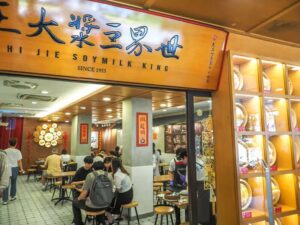
Notes on Yonghe Soy Milk Shops
In Taipei, red signs reading “Yonghe Doujiang Dawang” appear often enough to suggest a single chain. Yet the storefronts, menus, prices, and logos keep changing from one shop to the next.
In Taipei, red signs reading “Yonghe Doujiang Dawang” appear often enough to suggest a single chain. Yet the storefronts, menus, prices, and logos keep changing from one shop to the next.
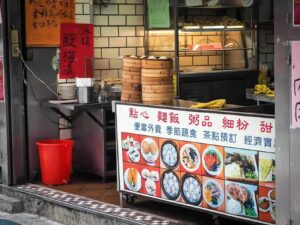
At a Taiwanese lunch table, boiled dumplings can sit beside braised-pork rice, while beef noodles arrive from the next stall. The combinations feel ordinary now, even though one half of that meal belongs to a crop the island was never well suited to grow.
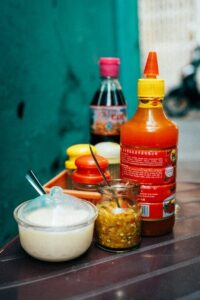
At a small Taiwanese eatery, a seasoning bottle has to be tilted and held before its black contents begin to move. The sauce lands on breakfast cakes, boiled greens, meat, and even sliced tomatoes with the slow weight of syrup, more like a coating than a seasoning.
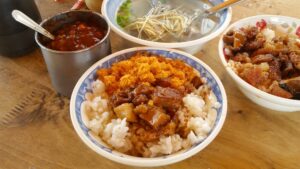
A sweet, faintly medicinal smell can follow you through Taiwan without leading to any particular shop: it hangs at a convenience-store entrance, along a residential lane, and over a night-market stall. The same aroma turns up in a cracked tea egg, a bowl of beef noodles, and a face-sized fried chicken cutlet, each time in a different guise.

At a Taiwanese convenience-store counter, tea eggs simmer in dark liquid while a sweet, faintly medicinal aroma fills the shop. The same note rises from braised pork, night-market stalls, and train-station kiosks, turning up often enough to feel less like a spice than part of the air.
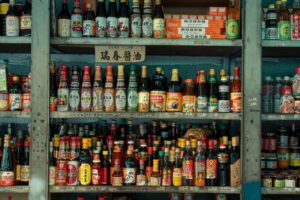
Braised pork rice, beef noodles, and blanched greens arrive as different dishes, but the steam rising from them seems to point in the same direction. The same warm, sweet aroma follows you from a night-market stall to a convenience-store display case.

A Taiwan breakfast can place soy milk and a layered shaobing beside rice balls, while the same streets later fill with beef noodles, dumplings, and steamed buns. Foods associated with far-flung regions of China have become ordinary fixtures of one island’s daily meals.
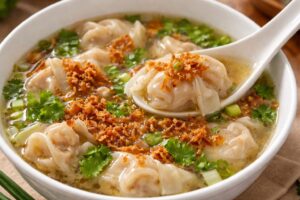
At a Taiwanese eatery, a bowl may arrive with only a few brown crumbs scattered over its surface. They can vanish into braising sauce, soften in clear soup, or stay crisp on rice and greens, while the smell of shallot oil reaches the table first.
In Taiwanese diners, a cloudy brown paste sits beside the plates, looking more unfinished than appetizing. It gathers on white rice, clings to water spinach stems, and turns up wherever a plain meal needs more weight.
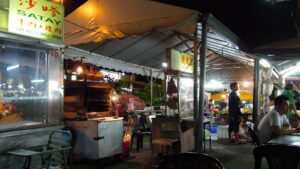
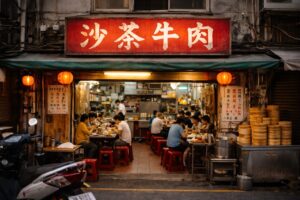
At Taiwanese eateries, a silver tin of brown sha cha sauce often sits beside the soy sauce, ready for hot pot, stir-fries, or a taste straight from the spoon. Its rough, sandy texture is as recognizable as its seafood aroma, and the same gritty paste keeps appearing in dishes that otherwise have little in common.