The Quiet Sovereign Behind a Pork Empire
Walking through Taipei, I often encounter the same face.
Rounded cheeks. A carefully trimmed mustache.
An expression that suggests reassurance rather than excitement.
It is the sign of Formosa Chang Lu Rou Fan.
Near stations. Along major roads. Sometimes on the corner of a residential block.
The logo repeats itself across the cityscape.
The price is more than double that of a street stall.
Yet the flow of customers rarely stops.
Inside, the air conditioning is steady.
The floor is dry.
Uniformed staff move without urgency.
What is offered here is not merely braised pork over rice (lu rou fan).
It is an environment shaped by quality, service, and cleanliness — what is often called QSC.
Folk dishes are, by nature, uncertain.
Flavor and hygiene can shift from moment to moment.
Formosa Chang removed much of that fluctuation.
It moved the dish from accident toward reproducibility.
People seem to be purchasing the assurance that they will be able to eat without hesitation.
The restaurant begins to resemble part of the modern food infrastructure of Taiwan.
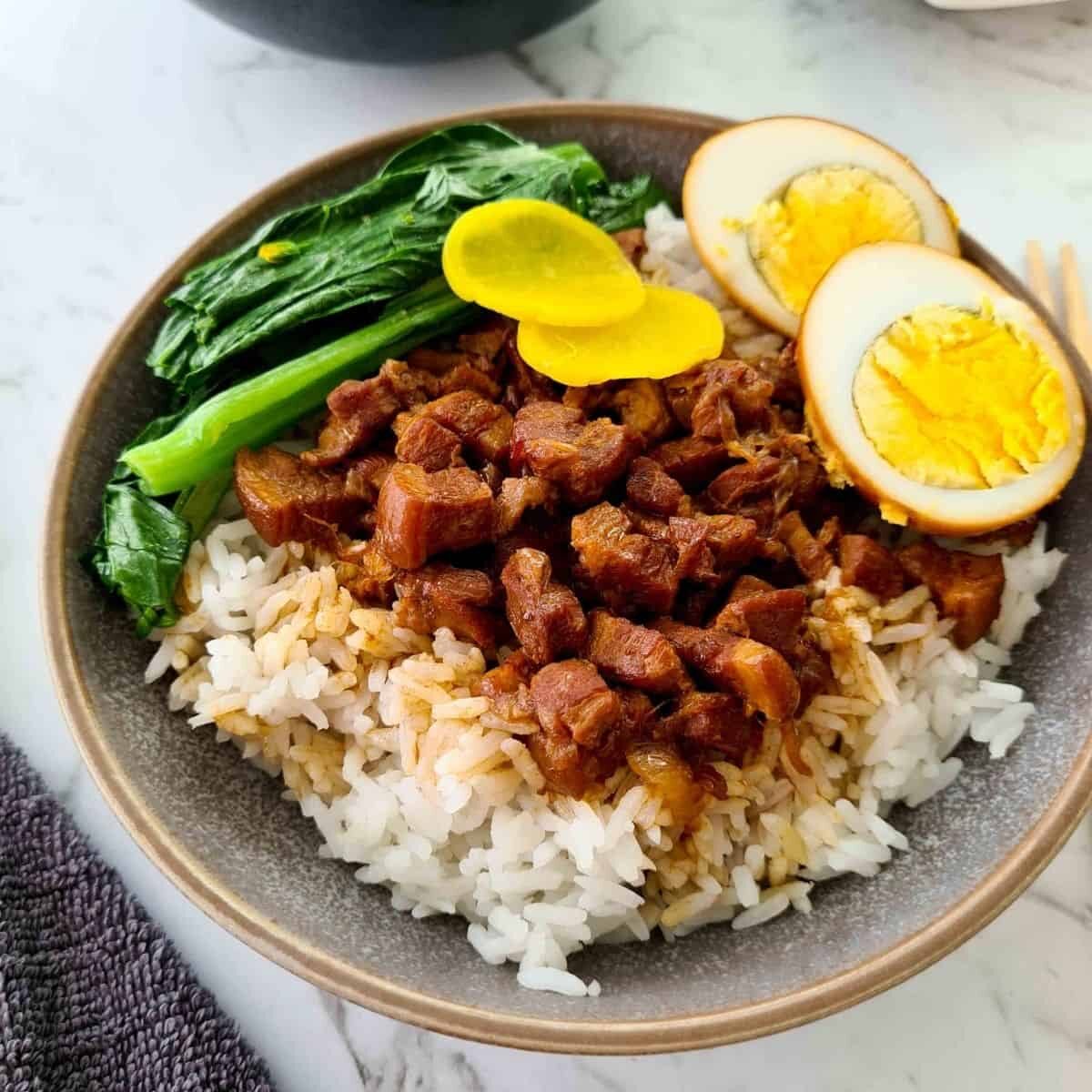
Quiet Support Behind the Second Choice
Looking around the dining room, however, reveals a slightly curious scene.
Many customers are eating chicken rice (ji rou fan).
In a restaurant known for pork.
On the menu, it appears secondary.
Yet it does not feel like a side offering.
Beside those ordering the signature bowl, another arrives with equal frequency.
Some avoid heavier fat.
Some are mindful of their condition.
Some simply prefer the version served here.
The support is not dramatic.
But it persists.
A question emerges.
Why is chicken chosen so often in the house of the pork king?
A Market Without a Monarch
Braised pork over rice has a symbol.
A name that most people can recall.
Chicken rice does not.
Across Taiwan, there is no nationwide chain devoted solely to it.
It is a national dish, yet the market is divided among countless independent shops.
Every city has it.
Few represent it.
A landscape without a king.
And it has remained that way for decades.
The Illusion of Chiayi Turkey Rice
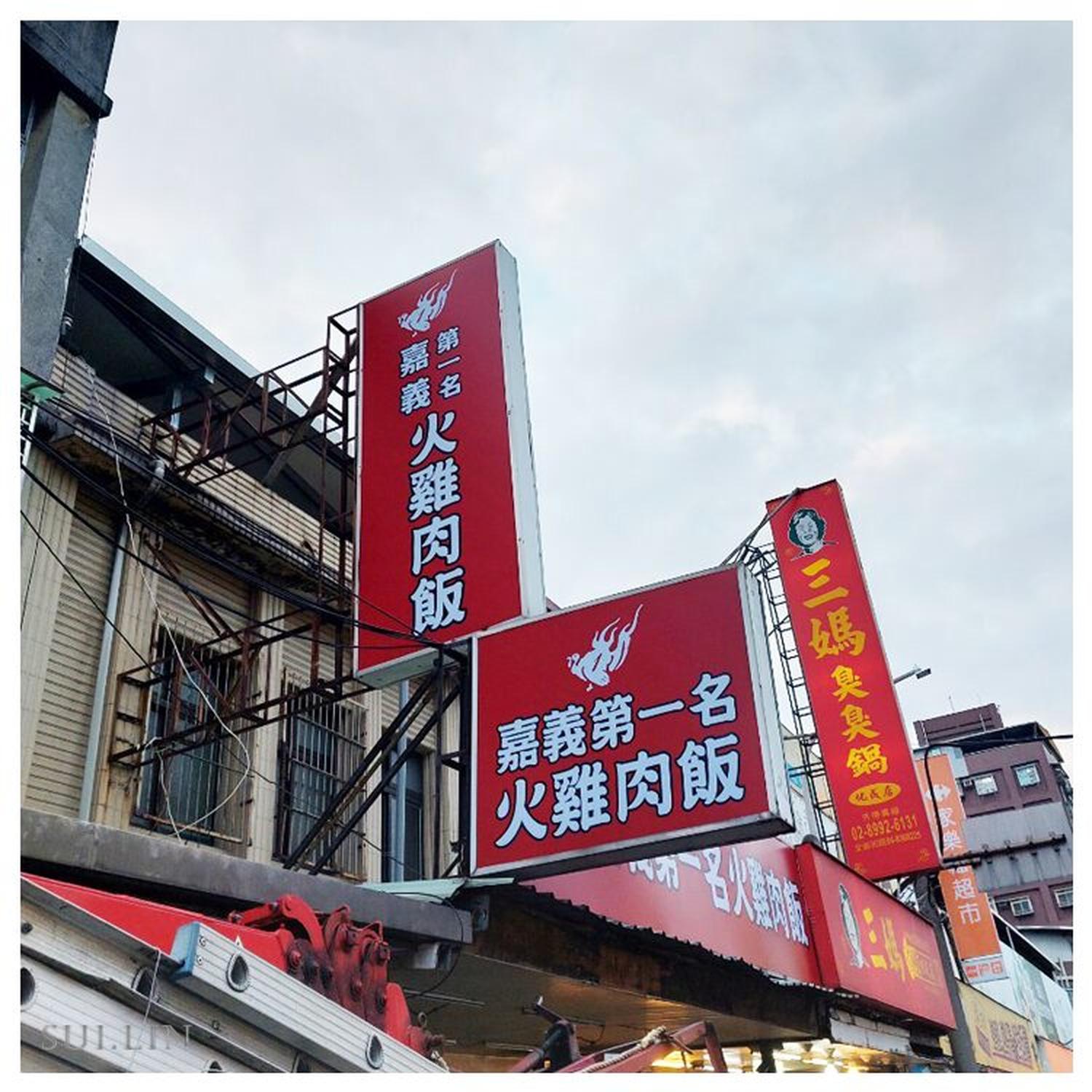
Walking the streets, one repeatedly encounters signs reading Chiayi turkey rice.
Red lettering. Familiar storefronts.
From a distance, they appear related.
But they are not.
No shared headquarters. No unified recipe.
Only individual shops presenting a regional style.
The structure resembles labels such as Sanuki udon or Hakata ramen —
markers of direction rather than ownership.
This pattern is not unusual in Taiwan.
Yonghe doujiang suggests a soy milk breakfast shop, yet rarely indicates a single chain.
Mei Er Mei appears in red and yellow across neighborhoods, often through imitation or loose lineage rather than corporate unity.
These so-called ghost chains occupy much of the visual field.
In such an environment, strongly centralized brands may find it harder to emerge.
Who Sells the Most Chicken Rice?
A hypothesis forms.
If no dedicated chain dominates the field, who sells the most under a single name?
The answer may point in an unexpected direction.
Not a chicken specialist.
Perhaps Formosa Chang itself.
Its network of directly managed stores and franchises.
The steady turnover from noon into night.
The quiet popularity of the second bowl.
Placed together, they suggest that this mustached giant might be the largest distributor of chicken rice without intending to be.
While specialty shops remain visually unified only by their signage,
a structured chain spreads quietly across the market.
There is something faintly ironic in this arrangement.
A Systematized Taste
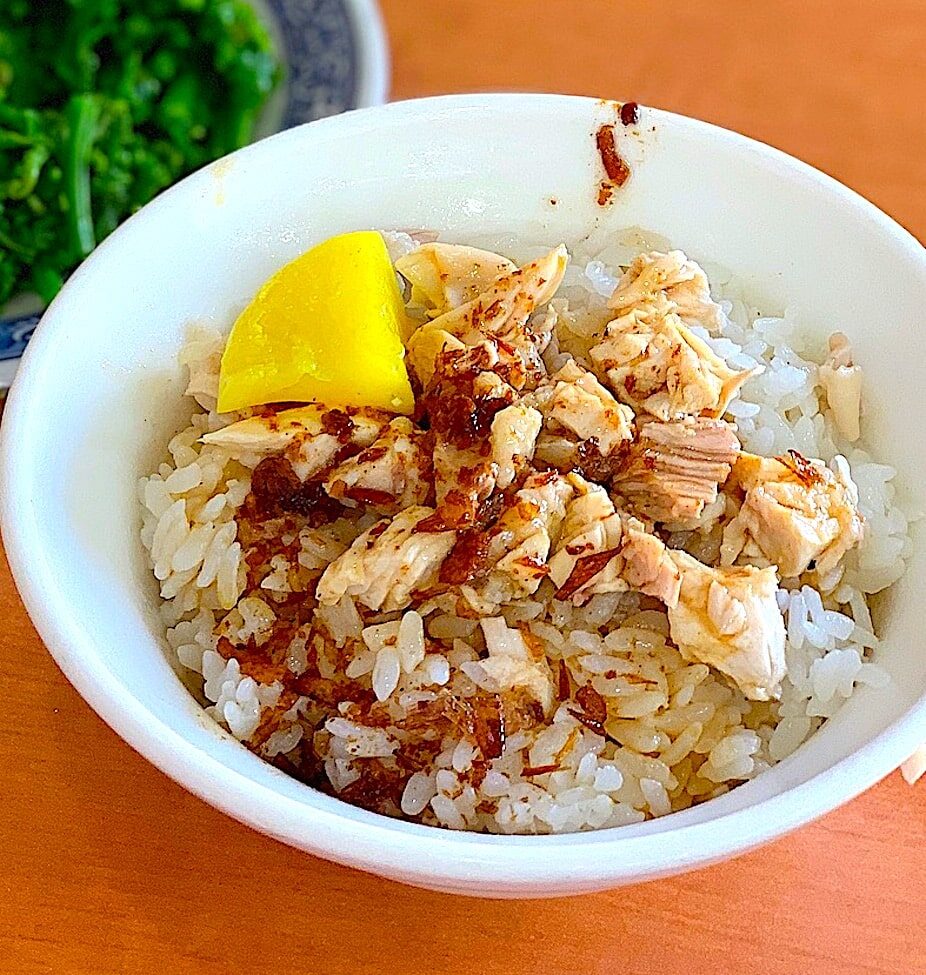
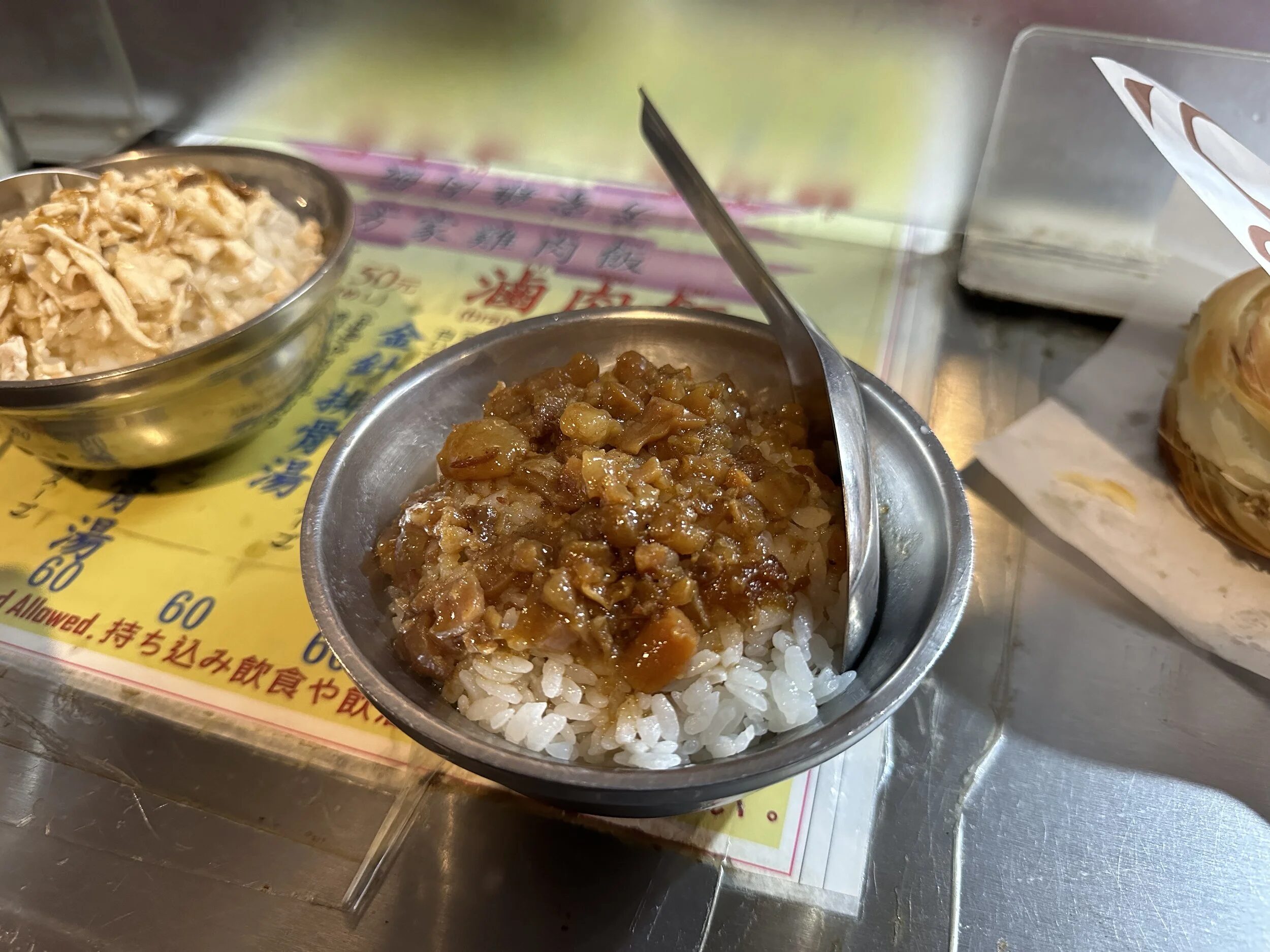
The bowl arrives small, identical in shape to its pork counterpart.
White rice. Finely shredded meat.
A sheen of golden chicken fat.
It is likely chicken rather than turkey.
The aroma is light.
The oil restrained.
If the pork carries gravity, this feels closer to buoyancy.
The handmade impression of a stall is faint.
Salt, oil, and moisture are aligned.
Not accidental deliciousness.
Managed deliciousness.
One can encounter the same flavor in any branch.
Reproducibility is part of the identity here.
Infrastructure With an Exit
The strength of Formosa Chang does not rest on a single dish.
Those who want pork are received.
Those who prefer chicken are received as well.
Weight and lightness.
Two options placed side by side.
At a street stall, this is less common.
Many depend on the specialty of the cook.
Here, the system absorbs the mood of the customer.
If a restaurant that is not a specialist ultimately reaches the highest sales within a category,
perhaps something essential about chains becomes visible.
It is not conquest.
It is quiet permeation.
Each time the mustached logo appears in the city,
people seem to understand without thinking.
If one steps inside, something will be available to eat.
And it is unlikely to go far wrong.