A morning shaped by rice, wheat, and soy milk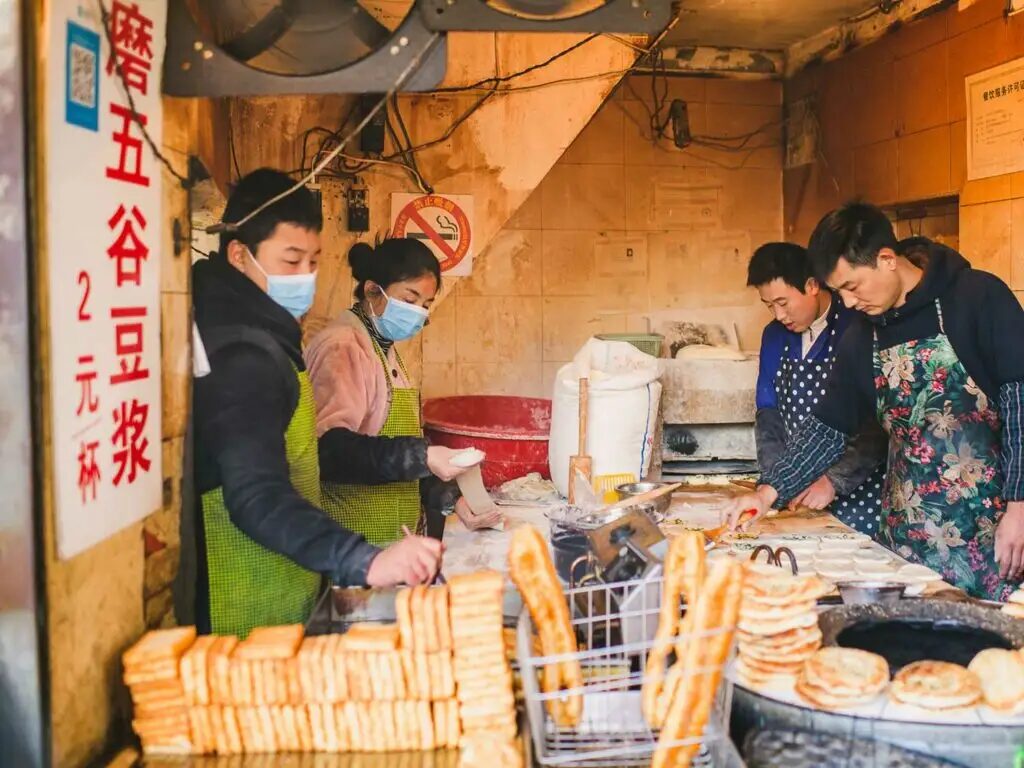
In the early hours of Taipei, each street carries several rhythms at once.
Eggs crack onto hot metal.
Noodles rise from boiling water.
Large pots of soy milk sway quietly with heat.
A sandwich stall stands beside a noodle shop.
Next to them, a soy milk counter releases steam.
Unlike Japanese mornings, where streets often divide into Western or local styles,
everything here occupies the same space.
There is no single format.
Yet nothing feels disordered.
The mixture looks less like coincidence and more like accumulation.
Food cultures from different eras remain side by side, never erased.
Taiwanese mornings are built in layers.
The open face of breakfast shops
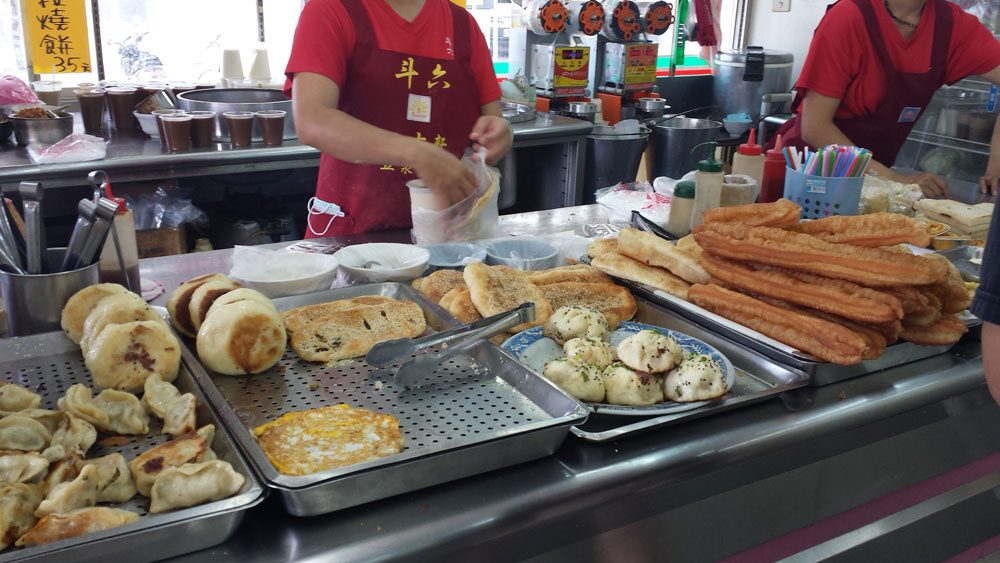
In Taiwanese breakfast shops, very little is hidden.
The kitchen sits at the front, facing the street.
Eggs hiss on flat grills.
Steam rises from bamboo baskets.
Toasters snap dryly.
Sound itself becomes invitation.
Orders usually follow a simple structure.
A drink and a main item.
Soy milk comes with chosen sweetness.
Or sweet black tea.
Or milk tea.
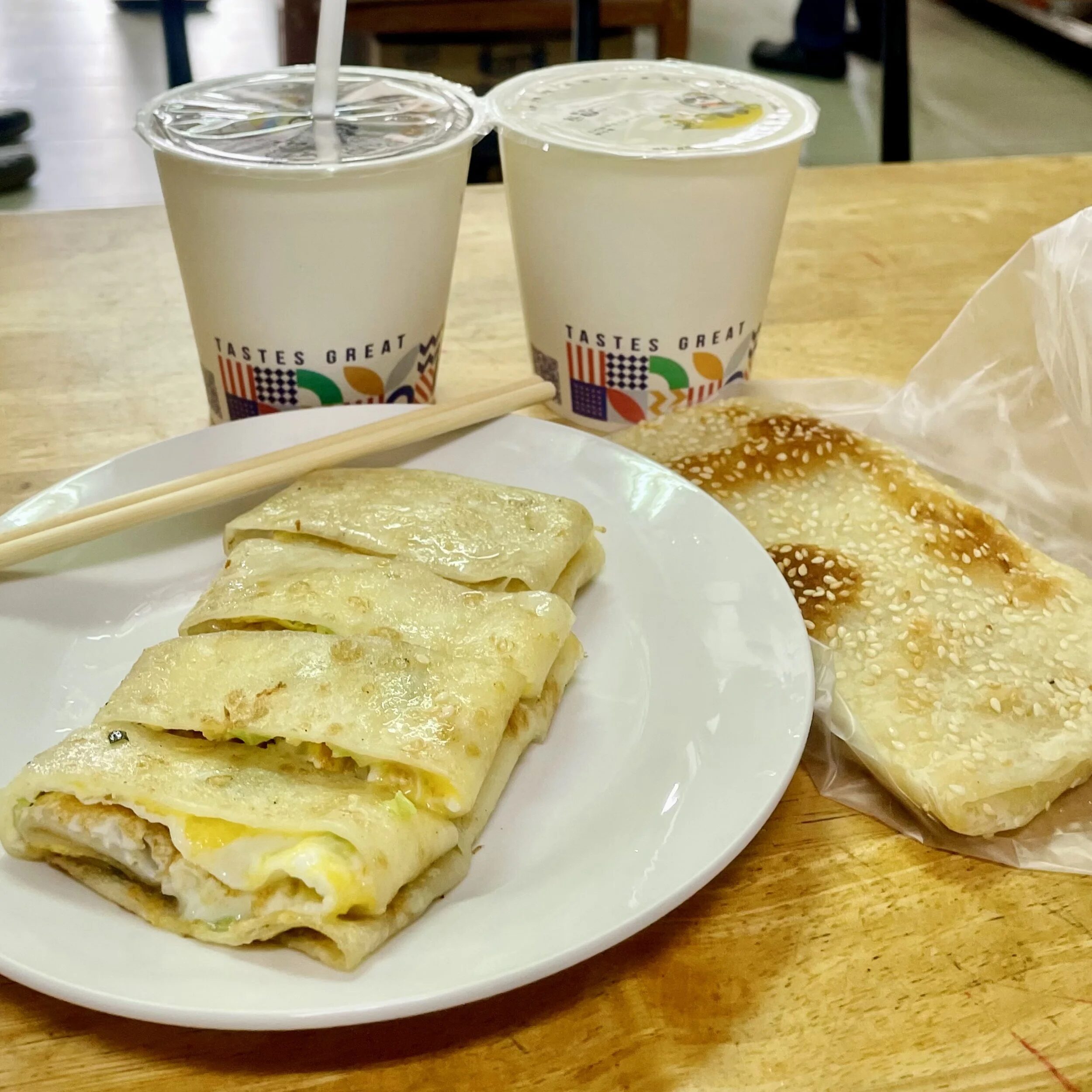
Alongside them appear rolled egg pancakes, sandwiches, radish cakes.
Chinese and Western elements share one menu without comment.
Small stools and metal tables sit outside.
Some people sit.
Most take away.
Scooters stop.
Helmets stay on.
Plastic bags exchange hands.
Engines fade down the street.
Rice as the foundation of working mornings
For a long time, mornings rested on rice.
Thin rice porridge with side dishes.
Braised pork rice (lu rou fan).
These were not light meals.
They were fuel.
In an agricultural society, eating well in the morning made physical work possible.
Fat and carbohydrates were practical choices.
During the Japanese colonial period, bread and coffee entered Taiwan.
But mostly within schools, offices, and privileged households.
What spread more widely was a different change.
Life began to follow the clock.
Factory start times.
School bells.
Morning shifted from slow preparation to quick movement.
This new speed would later shape the breakfast economy.
1949 and the sudden arrival of wheat
In 1949, a massive migration reshaped daily life.
Around two million people arrived from mainland China with the Nationalist government.
They brought not only politics.
They brought kitchens.
Wheat dishes flooded the table.
Flat breads.
Fried dough sticks.
Steamed buns.
Where rice had dominated mornings, flour now surged in.
In mainland cities these foods were ordinary.
In Taiwan they were new.
Hot dough dipped into soy milk.
Bread folded around fillings.
They were filling.
Easy to prepare.
Well suited to fast mornings.
The rice layer remained.
The wheat layer simply settled on top.
Nothing was replaced.
Everything accumulated.
When soy milk moved from night to morning
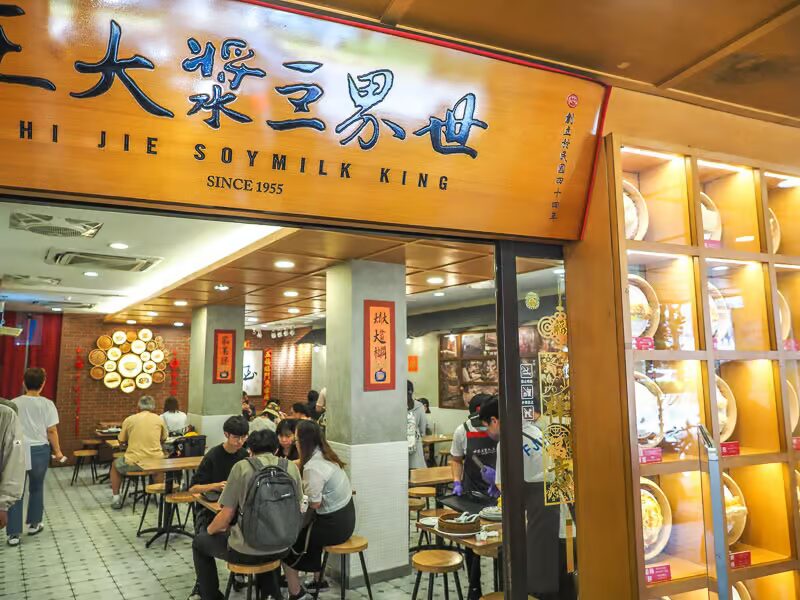
The symbol of this wheat culture was Yonghe Soy Milk.
In Taipei’s Yonghe district, former soldiers began selling familiar foods from home.
Originally, soy milk with fried dough was a late-night meal.
Something eaten after work.
Quiet food for dark hours.
But in Taiwan’s climate and rhythm, its position shifted.
Warm soy milk felt better in moving mornings than humid nights.
Preparation was quick.
Cleanup was simple.
Workers drank before heading out.
Bellies filled without delay.
Slowly, the meal slid from night into morning.
Here, rice traditions and wheat traditions finally met in the same time slot.
Porridge steamed beside soy milk.
Taiwanese mornings began to blend.
The arrival of sweet mayonnaise mornings
In 1981, Lin Kun-bin opened Mei Er Mei.
What appeared was not Western breakfast itself.
It was a translated version.
Sweet, translucent mayonnaise.
Soft bread that sank when pressed.
Processed pork patties.
Salt was gentle.
Sugar and oil stood forward.
This was not imitation.
It was adaptation.
At the time, McDonald’s remained a special outing.
Too expensive for daily breakfast.
Mei Er Mei filled the gap.
Cheap.
Slightly modern.
Immediately accessible.
A new movement entered mornings.
Hands joined chopsticks and spoons.
On top of rice and wheat, a third layer settled quietly.
When kitchens left the home
Taste alone did not create this culture.
During Taiwan’s rapid economic growth, dual-income households became normal.
Morning stopped being a time for cooking.
Urban apartments reinforced this.
Kitchens were small.
Poorly suited for serious preparation.
Then there was the trash system.
Garbage trucks came at fixed times.
Sorting was required.
Cooking meant waste.
Washing.
Morning labor.
Standing at the stove before work became unrealistic.
Breakfast shops replaced the home kitchen.
They became shared urban cooking spaces.
Food moved outside.
People focused only on eating.
Efficiency stacked upon efficiency.
A morning built by accumulation
What makes Taiwanese mornings distinctive is the absence of replacement.
When burgers arrived, porridge stayed.
When soy milk spread, sandwich stalls followed.
Nothing disappeared.
Everything layered.
Today’s breakfast streets display this openly.
Egg pancakes filled with cheese.
Fried dough dipped into soy milk.
Sweet tea beside Western sandwiches.
Each belongs to a different era.
None were cleared away.
Taiwan absorbed new habits without erasing old ones.
It stacked rather than overwrote.
This refusal to subtract created the morning’s chaos.
And that chaos appears to power the island itself.
Taipei mornings are lively not because of volume alone.
History stands there, side by side, still steaming.