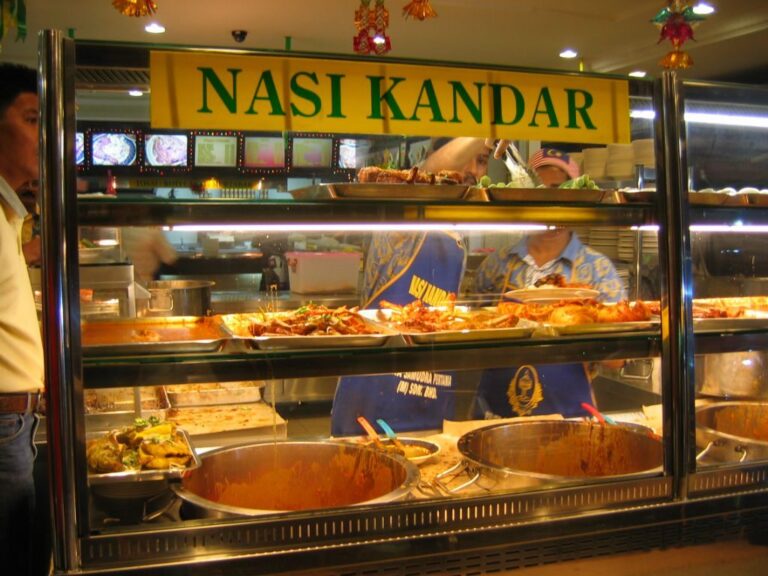
Outside SOGO on Jalan TAR, a curry-scented queue gathers beneath a sign bearing the name Nasi Kandar Saddam. From the pavement, the counter, steaming pots, fried chicken, and the movement of each plate are all on display.
At the corners of Kuala Lumpur, lines of people appear. Around SOGO on Jalan TAR in particular, pedestrians stop and the line stretches out. Among the sound of traffic and the smell of exhaust, only the scent of curry stands out with unusual strength. When people look at the sign, almost everyone does a double take. It reads Nasi Kandar Saddam.
The name recalls the former Middle Eastern president. This is not a coincidence. It is said that the founder sensed that business needed a catchy name and deliberately chose a strong one. Yet the reason this place draws a line is not the curiosity of the name alone. The flavor is stronger than the name itself.

A Shop Built to Be Entered Easily
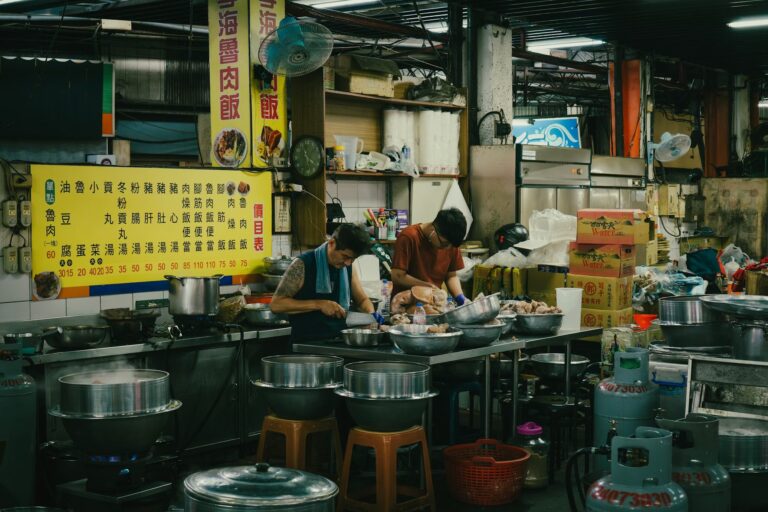
From outside, the interior of Saddam is visible. The boundary of the entrance is thin. Rather than a restaurant enclosed in glass, it feels like half an extension of the street. The seating can be seen. The movement of the counter can be seen. The steam from pots and the piles of fried food are visible even from a distance.
Some nasi kandar shops feel difficult to enter on a first visit. Not knowing what or how to order makes people pause. Saddam moves in the opposite direction, reducing that hesitation. The open structure functions as advertisement. It shows what is happening here without explanation.
From a Stall in Segambut
While many established names trace back to Penang, Saddam’s base is in Segambut, a working-class area of Kuala Lumpur. It did not begin as a polished restaurant but as a small roadside stall where laborers gathered. The phrase “you do not need to go to Penang for real nasi kandar” spread not through social media but through the real networks of taxi drivers and construction workers.
A rough, ground-up history lies beneath the strength of this brand. Even when the shop appears orderly in the city center, its origin is close to the street.
The Flow Until the Plate Is Finished
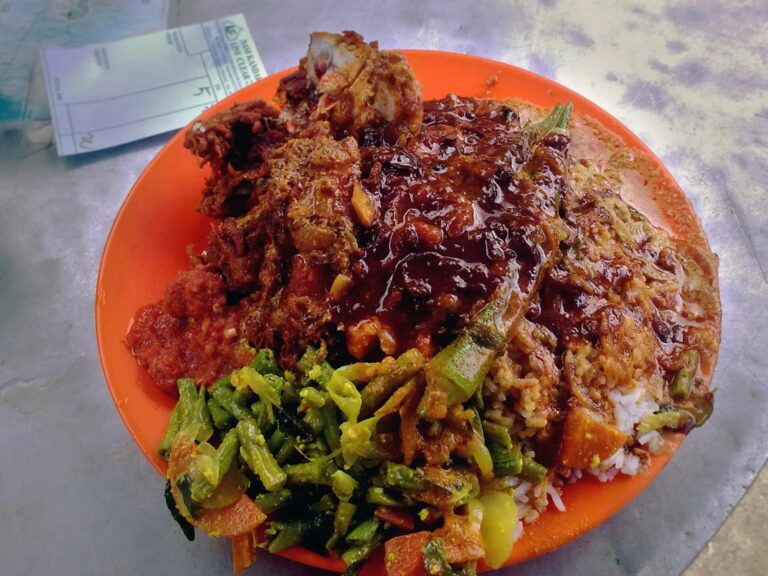
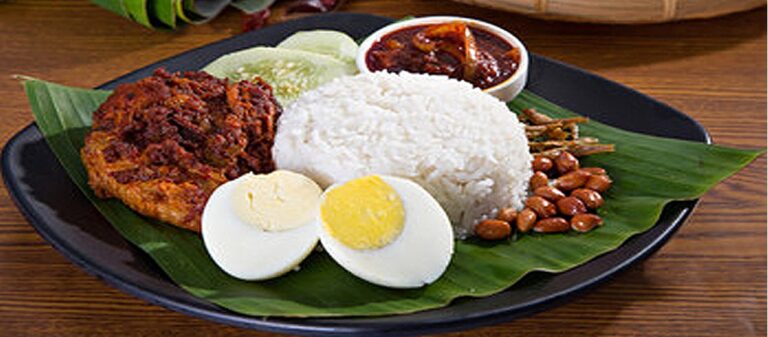
I join the line. When my turn comes, I step forward. When the staff’s eyes meet mine, that becomes the signal. The first choice is rice. White rice is placed on the plate. The amount is rarely asked in detail. The shop’s standard arrives as it is.
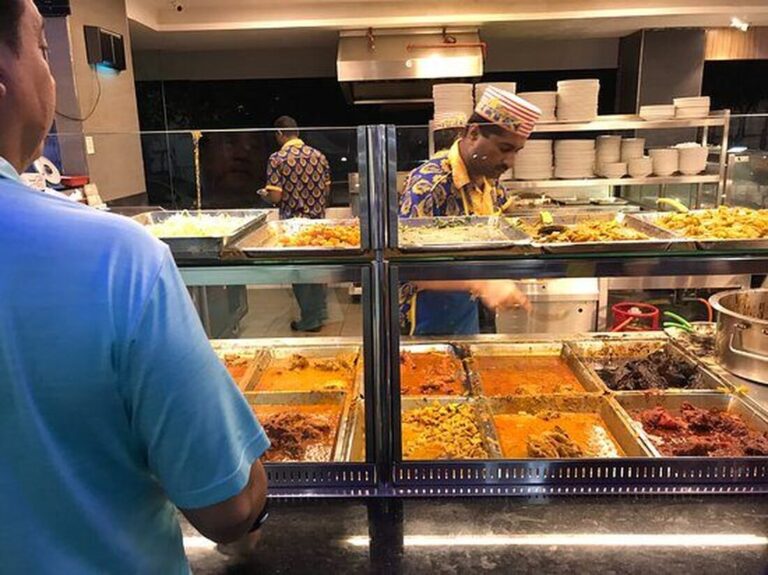
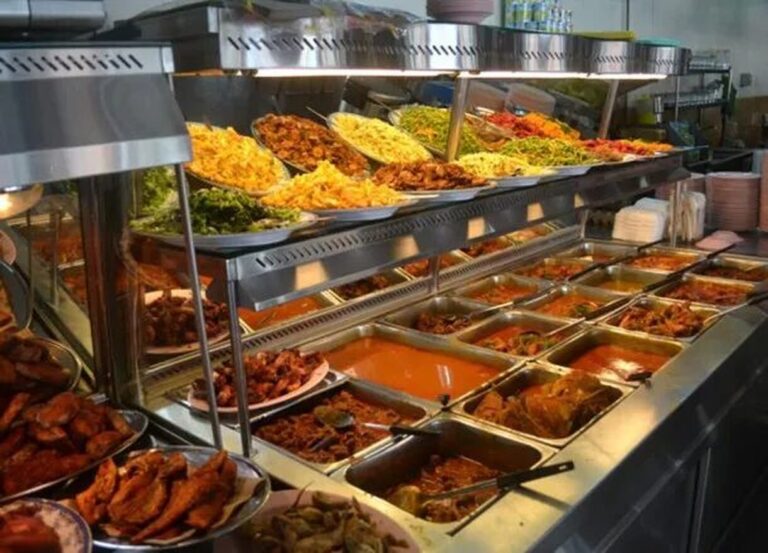
Next come the side dishes. Behind the display glass are fried items, stews, fish, and vegetables. From here, fingers move faster than words. I point to the chicken. It is placed on the plate. I point to the fish and signal for one more. It is added without a word.
If I hesitate, the presence of the customer behind me moves a little closer. Yet the feeling of being rushed is weak. The staff wait, their expressions unchanged.
At the end, curry is poured. There is a phrase worth remembering here. Kuah Campur. When I say it, several curries are layered in small amounts over the rice. Fish, chicken, beef. Without caring which pot held which meat, only flavor builds in layers.
If I want it more soaked, I say Banjir. The rice drowns completely. It becomes less about a single taste and more about eating layers of spice. At Saddam, this entire process moves quickly. Even when the line is long, its forward motion rarely slows. The ordering sequence is fixed as part of the shop’s operation.
The Creation Called Ayam Saddam
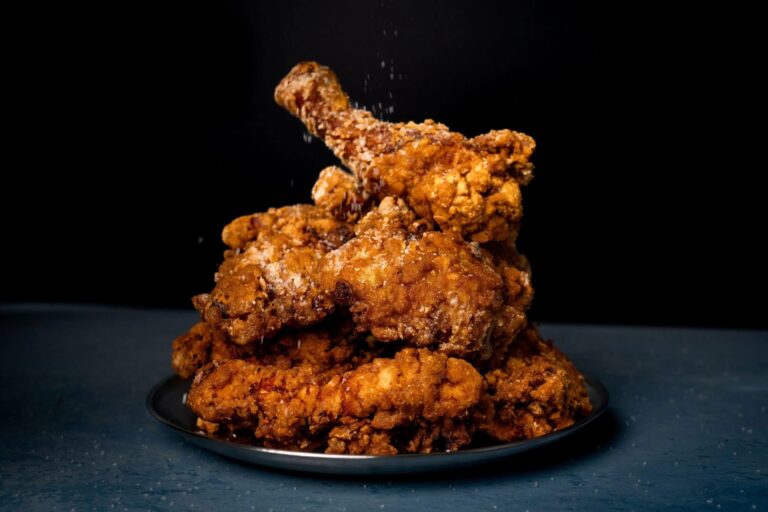
There is one item that nearly everyone orders here. It carries the shop’s name: Ayam Saddam. It is something like a hybrid between the usual fried chicken found at nasi kandar shops and honey-glazed chicken. It is not simply fried chicken but treated as a special piece with a slight sweetness.
The outside is crisp and aromatic. When bitten, caramel-like sweetness spreads together with spice. The coating is not heavy. Only the surface carries strength. Over this comes the sea of spicy curry sauce. The sweet chicken is chased by hot curry. Different directions of stimulation alternate on the tongue.
This sweet and spicy contrast has become Saddam’s signature move. Sweetness exists inside intensity. Heat returns inside sweetness. As I eat, the outline of the plate blurs, while the sense of fullness grows.
Speed and Standardization
Saddam is now expanding rapidly around Kuala Lumpur. Chow Kit. Shah Alam. Sungai Buloh. Signs with similar names appear on other street corners. It is often said that flavor declines when places become chains, but Saddam uses speed as its strength. Even the long lunchtime lines move forward with surprising speed, handled by skilled staff known as joki who plate food at high pace.
The interior is bright. It looks clean. The menu is easy to understand. By removing the intimidation of old establishments, the shop creates an environment where anyone can eat heavily without hesitation. This can be seen as the fast-foodization of nasi kandar. It is a modern direction of evolution.
The Shadow of Pelita and the Roughness of the Street
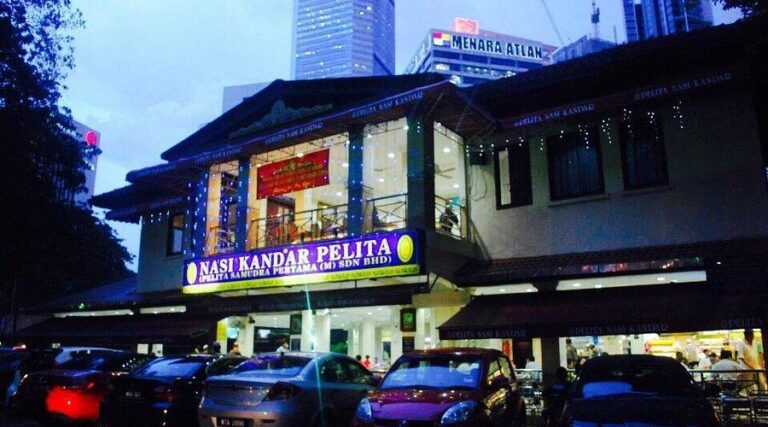
Looking at this expansion and the shop’s structure, some people think of Nasi Kandar Pelita. Bright lighting. Floors that look clean. Standardized service. The form of “nasi kandar that anyone can enter easily,” established by Pelita, seems to be adopted here as well. The entrance boundary is thin. Confusion in ordering is reduced. The steps until a plate is finished are fixed.
Yet the flavor moves in a slightly different direction. Pelita leans toward a balanced, widely acceptable taste. Saddam, by contrast, still holds onto some of the roughness of its stall days. The system feels Pelita-like, but the core of the taste remains close to the street. That balance may be what draws today’s KL customers.
A Name That Holds Its Weight
Many customers come first because the name feels amusing. By the time they leave, they have forgotten the name entirely. What remains in the mouth is the aftertaste of dense spice and sweet chicken.
Saddam is not an empty name.
Nasi Kandar Saddam (Jalan TAR)
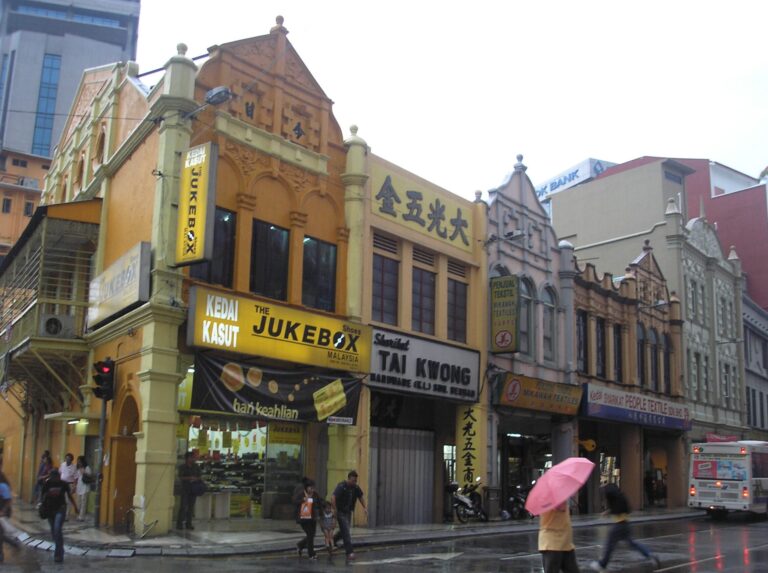
— 279–281, Jalan Tuanku Abdul Rahman, Chow Kit, 50100 Kuala Lumpur
— Daily 7:00–23:00 (may pause on Fridays for prayer)
— Near SOGO. Lines form at meal times.
— Detour —
a little further to walk
- Notes on Nasi Kandar Pelita at KLCC
- Notes on Nasi Kandar in Malaysia
- Notes on Nasi Kandar Kudu on Jalan TAR in Kuala Lumpur