Notes on Sugarcane Straws in Taiwan
In a Taiwanese café, a straw with a slightly rough surface slips into an iced bubble tea. It looks neither like paper nor plastic, yet stays firm as tapioca pearls pass through it.
Notes on the corners
of the world
In a Taiwanese café, a straw with a slightly rough surface slips into an iced bubble tea. It looks neither like paper nor plastic, yet stays firm as tapioca pearls pass through it.
In Kuala Lumpur, nasi lemak arrives as a small triangle of rice, anchovies, sambal, and fried chicken—the kind of breakfast people joke about as a shortcut to weight gain. In London, the same combination can appear as a £15 brunch plate, described with the calm language of health food.
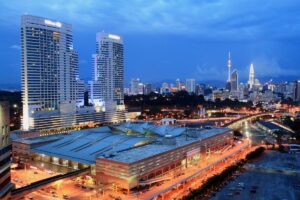
In 1997, Kaohsiung’s new tower stood alone beside an industrial waterfront, its upper floors rising above a city that still expected to grow richer. It had become Taiwan’s tallest building just as the celebration around it was disappearing.
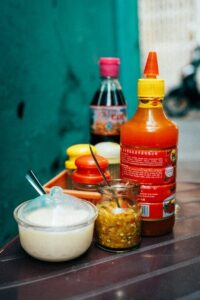
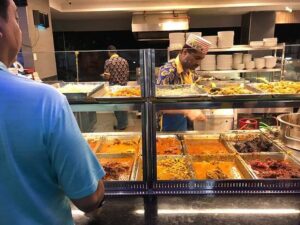
At a nasi kandar counter, the food is arranged less like a menu than a brown range of curries, fried chicken, fish, and vegetables. A customer points, and the plate only takes shape when several sauces are poured over it.
At Taipei’s airports, department stores, and tourist streets, xiaolongbao arrive in nearly identical bamboo baskets, their thin wrappers holding the same small pool of broth. The dish most readily read as a symbol of Taiwan is usually traced to Nanxiang, outside Shanghai.
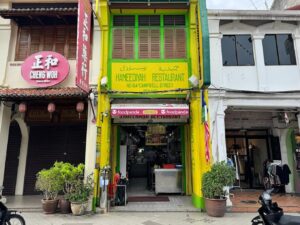
At a Malaysian mamak stall, the chicken arrives yellow and blistered, its spice paste pressed straight onto the skin rather than hidden under a thick coat of flour. Nearby, the wok keeps turning out pieces fast enough that the tray seems less like storage than a pause.
At the end of a night market, empty bubble-tea cups gather beside the bins, their remaining pearls hidden under melting ice. A single drink makes them easy to overlook; multiplied across Taiwan, the beads become a different kind of object.
At a Taiwanese night market, the oyster omelet arrives with plump oysters, soft starch, and a pink glaze already spread across its surface. Brown sauce and mayonnaise sit nearby on other foods, but this plate is left exactly as it is.
A Tainan oyster omelet looks like a fragile night-market snack: oysters, egg, starch, and sauce set over a hot griddle. Put that plate beside the 1661 siege of Fort Zeelandia, and its ingredients begin to look less like a recipe than a list of things available outside the walls.