In Taipei, a bowl labeled lu rou fan usually arrives with finely chopped pork spooned over the rice. In Tainan or Kaohsiung, the same words may bring a large braised piece instead, while the familiar chopped version appears under another name.
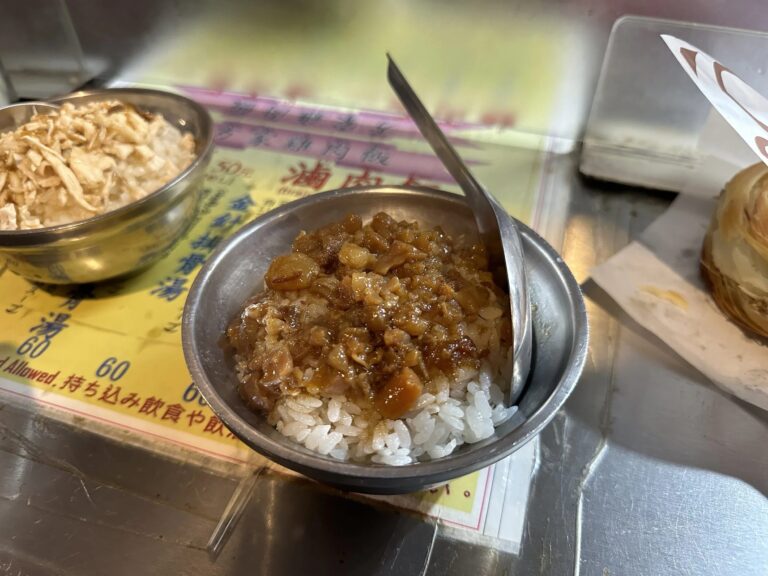
Lu rou fan (魯肉飯) is a small bowl of rice topped with pork and a dark, soy-based braising liquid. Mention “lu rou fan” to someone who’s eaten it in Taipei, and they’ll likely picture something specific: finely chopped pork spooned over rice. Order it in Taipei, and that’s usually what shows up.
Head south, and the picture shifts. Look for that same finely chopped pork in Tainan or Kaohsiung, and the menu is more likely to read rou zao fan (肉燥飯). Meanwhile, a dish labeled “lu rou fan” might arrive with a large piece of pork on top.
This isn’t simply a case of one dish picking up a different regional name. There are two broad forms of pork, and the names attached to them shift depending on where you are.
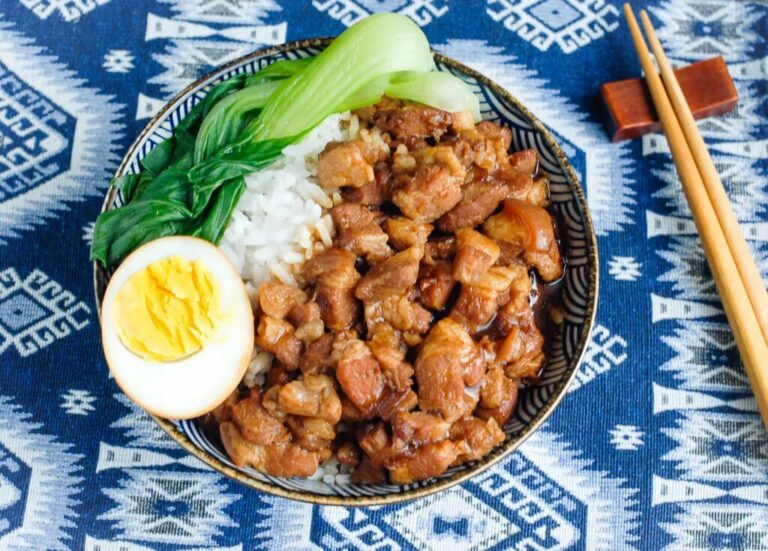

Two forms, not one dish
Taiwan’s pork-and-rice dishes fall into two broad shapes.
One is pork chopped fine, braised in liquid, and spooned over rice. How fine varies by shop — some grind it close to mince, others leave small cubes or strips. The ratio of fat to lean meat varies too, and some shops work in pork skin for extra body.
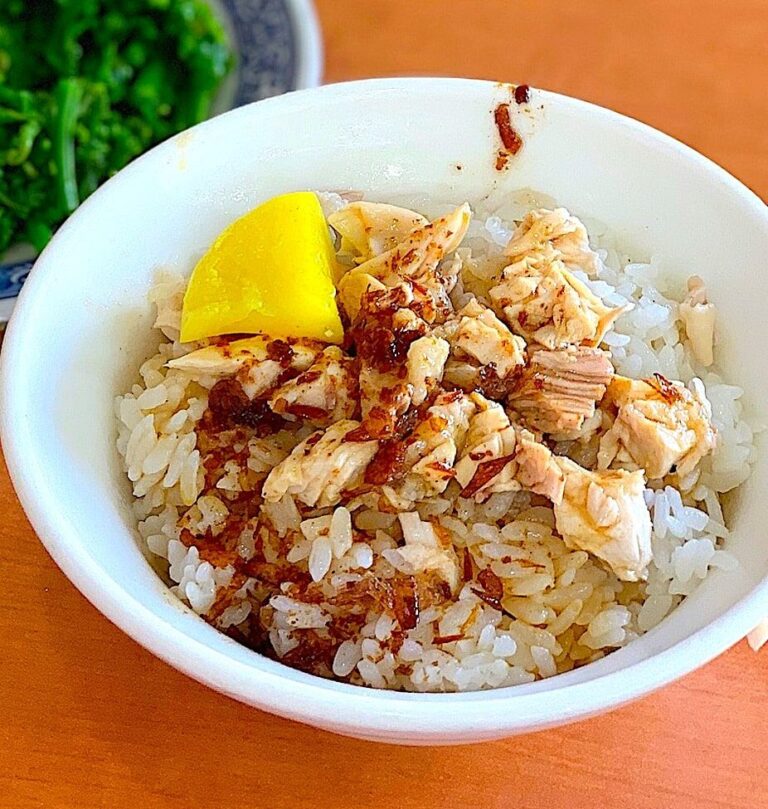
The other uses a larger cut — pork belly, tui ku (腿庫, pork hock), or similar — braised whole or in large pieces and set on top of the rice. Visually, the two shapes are easy to tell apart.
The complication isn’t the food. It’s the naming. These two shapes don’t carry the same names everywhere in Taiwan.
In Taipei, the fine cut is lu rou fan
Order lu rou fan in Taipei, and the fine-cut version is what typically arrives. Formosa Chang is a familiar example.
Even within Taipei, no two bowls are identical. Some shops lean fatty, others lean lean. Some chop the pork almost to a paste; others leave small pieces intact. The amount of sauce and the sweetness vary too. Still, this whole range of finely cut pork gets grouped under one name: lu rou fan.
The large-cut version usually goes by a different name — kong rou fan (爌肉飯) among others. Taipei’s menus can mostly be read along these two names.
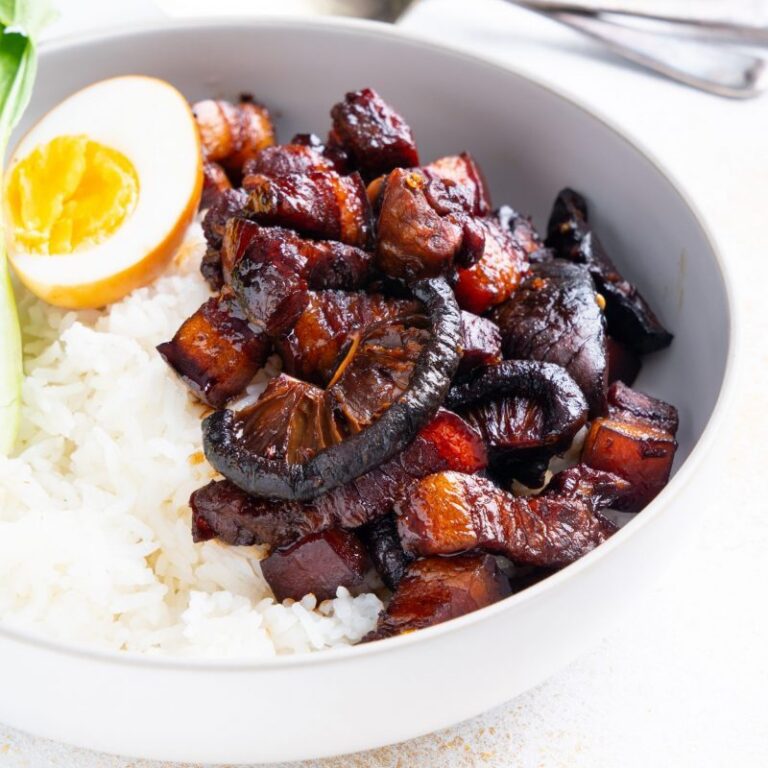
Head south, and the fine cut becomes rou zao fan
Go to Tainan or Kaohsiung, and the mapping shifts. What Taipei calls lu rou fan — the fine-cut version — is more often sold as rou zao fan. Rou zao (肉燥) just means pork cooked down fine; put it on rice, and it’s rou zao fan.
Bai Hong Rou Zao in Kaohsiung is a straightforward example. It started as a street stall at Qingnian (青年) Night Market in 1969 and is now run by the third generation. Rou zao fan is the shop’s core dish — pork braised down fine, ladled over rice.
In Tainan, too, rou zao fan is an everyday name. Look for it the way you’d look for lu rou fan in Taipei, and the familiar fine-cut bowl turns up.
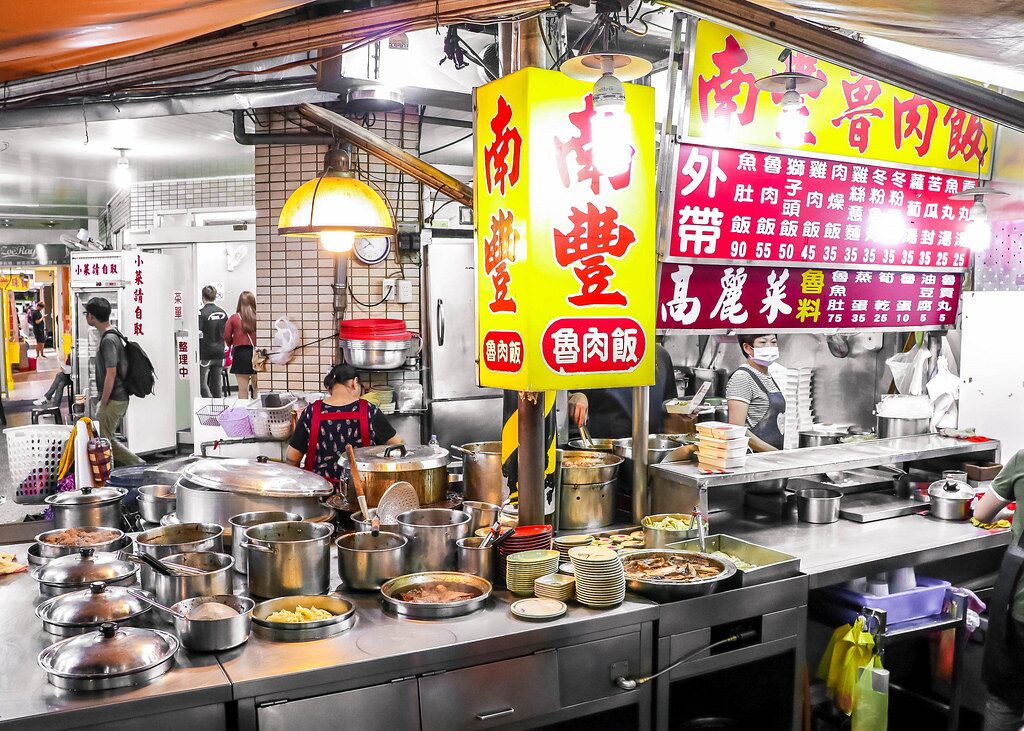
So what happens when you order lu rou fan in the south? At Nanfeng Lu Rou Fan (南豐魯肉飯) in Kaohsiung’s Lingya Market, ordering “lu rou fan” gets you a large piece of pork over rice. In other words:
Taipei fine cut → lu rou fan large cut → kong rou fan, among others
Tainan / Kaohsiung fine cut → rou zao fan large cut → lu rou fan, in some cases
This isn’t universal. Some southern shops still call the large cut kong rou fan. Others use tui ku fan or other names entirely.
Rather than treating north and south as exact opposites, it helps to think of it this way: heading south, the name for the fine cut shifts from lu rou fan to rou zao fan, and lu rou fan sometimes gets reused for the large cut instead. That’s closer to how the menus actually read.
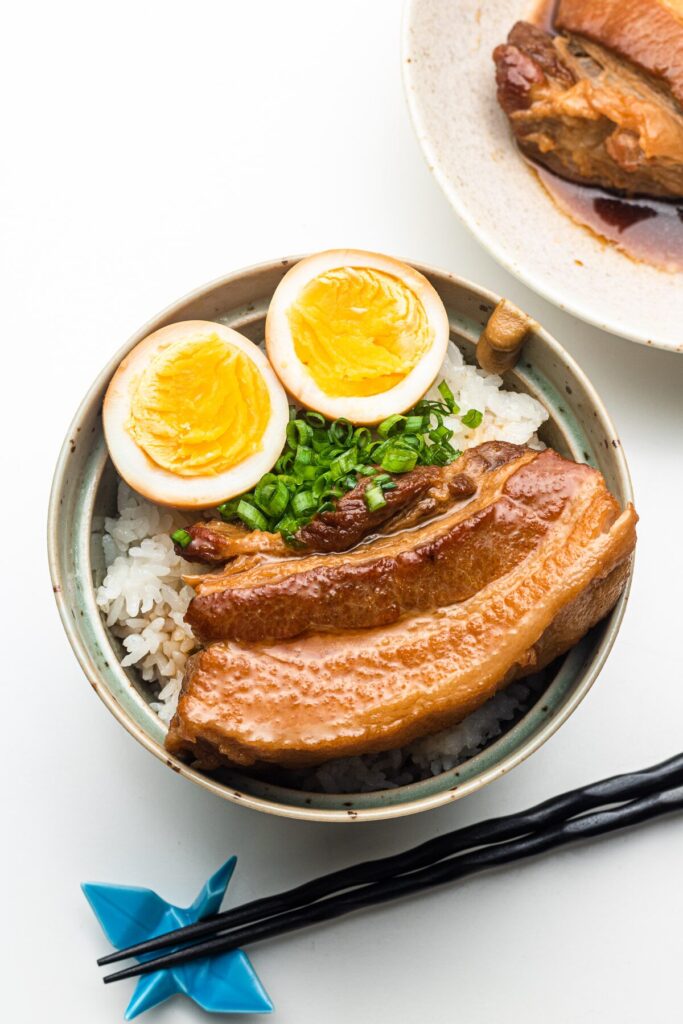
In Taichung, a southern pattern shows up
In Taichung, the naming looks a little different from Taipei’s. Around Taichung’s Second Market (第二市場), the difference is easy to see.
At Li Hai Lu Rou Fan (李海魯肉飯), lu rou fan and rou zao fan are sold as separate items. Here, lu rou fan means a large cut of pork belly; rou zao fan is the finely chopped version. Using “lu rou fan” for the large cut lines up with the southern pattern.
At Shan He Lu Rou Fan (山河魯肉飯), also in the Second Market, the menu lists san ceng lu rou fan (三層魯肉飯) and tui ku lu rou fan (腿庫魯肉飯) — again, large cuts sold under the name lu rou fan.
At both shops, the fine cut goes by rou zao fan and the large cut by lu rou fan. Around this stretch of the Second Market, at least, the naming leans closer to the south than to Taipei.

How to order
Trying to pin down one exact definition for each name makes ordering harder, not easier. It’s simpler to start with the cut: fine or large.
In Taipei, “lu rou fan” usually gets you the fine cut. For the large cut, look for kong rou fan. In Tainan or Kaohsiung, if you want the fine cut you know from Taipei, look for rou zao fan — “lu rou fan” there might bring a large cut instead.
In Taichung, shops also use the fine-cut/rou zao fan and large-cut/lu rou fan pattern, particularly around the Second Market. Still, when in doubt, check the photo, glance at the pot behind the counter, or look at what the person next to you is eating.
Lu rou fan doesn’t mean the same thing everywhere in Taiwan. In the north, the fine cut carries the name. In the south, that fine cut more often goes by rou zao fan, and lu rou fan sometimes shifts to the large cut instead. In Taichung, the southern pattern also shows up, especially around the Second Market.
So eating your way through Taiwan’s lu rou fan means pairing the name with the meat.
Learn them together.
That’s usually enough to guess what’s coming in the next bowl.

— Detour —
a little further to walk
- Notes on Lu Rou Fan in Taiwan
- Notes on the Zhuoshui River Border in Taiwan
- Notes on the Long Memory Inside a Bowl of Braised Pork Rice